


Traditional Nature Landscape Oil
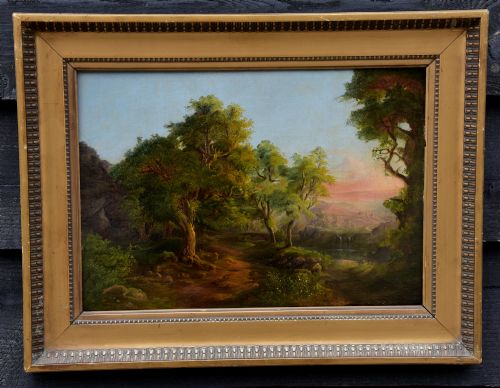
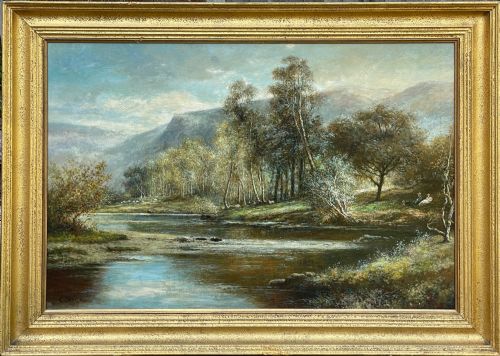
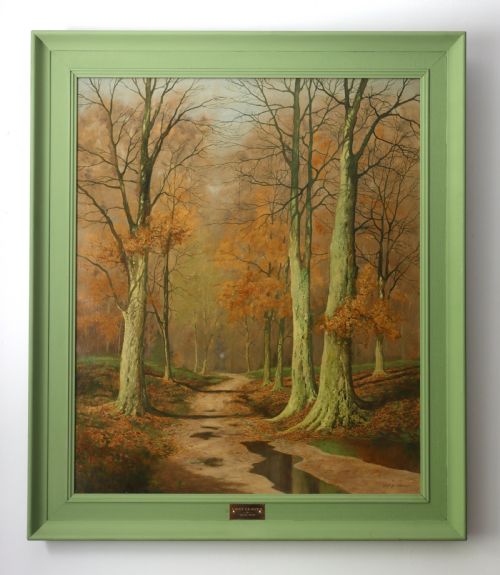
Traditional nature landscape oil paintings capture rural scenes, woodlands and river valleys using oil paint on canvas or board.
Traditional Nature Landscape Oil
Traditional nature landscape oil works span the nineteenth century through the early twentieth century, showing British countryside scenes, Scottish highlands, and woodland rivers.
The pieces on this page are predominantly oil paintings executed on canvas or wood panels, capturing rural vistas and quiet watercourses.
Victorian romanticism and British impressionism shape the visual language of these works, ranging from intimate board studies to large framed canvases.
How they were made
Artists built up these scenes using oil paint applied to prepared canvas surfaces or wooden boards, often framed in moulded giltwood with plaster embellishments and gold leaf.
Brushwork varies from the tight control seen in nineteenth century naturalist works to looser, atmospheric handling in later impressionist interpretations.
Listings feature works from the nineteenth century through the 1960s, executed in oil on canvas or board.
What varies in quality
Depth of composition and handling of light distinguish the stronger works from simpler decorative pieces, particularly in the rendering of water, foliage and atmospheric distance.
The integrity of the original canvas support, the stability of the pigment layer, and the quality of the associated giltwood frame contribute significantly to the standing of each painting.
Thomas W Lascelles·William Mellor·William Langley·George F Wetherbee·Owen Bowen
The Traditional Nature Landscape Oil Glossary
- Oil Paint
- A slow-drying paint made by combining pigments with a drying oil such as linseed. This medium allows for rich colour blending and subtle tonal gradations.
- Canvas
- A heavy woven fabric stretched across a wooden frame to serve as a durable painting surface. It remains the standard support for traditional landscape works.
- Giltwood
- Wood carved and covered with a thin layer of gold leaf or metallic powder. Frames finished in this manner frequently accompany Victorian and Edwardian canvases.
- Board
- A rigid flat panel, often wood or millboard, used as a painting support instead of stretched fabric. Smaller nineteenth century plein air studies frequently employ this surface.
Traditional Nature Landscape Oil: Frequently Asked Questions
How do I date a landscape oil painting?
Dating relies on stylistic clues, canvas stamps, framing methods, and the signatures of recorded artists active in specific periods.
Examining the reverse of the canvas or board often reveals historical inscriptions or labels that narrow down the exact decade of creation.
Where should I hang a landscape oil?
These works suit traditional reception rooms, studies, or hallways where natural light complements the warm tones of the giltwood frame.
Avoid placing oil paintings in areas subject to direct sunlight or damp conditions to preserve the integrity of the paint surface.
Are these paintings signed by the artist?
Many works feature artist signatures or monograms, while others remain unsigned or attributed based on style and subject matter.
Signatures are typically located in the lower corners of the canvas or inscribed on the reverse wooden support.
What is the difference between canvas and board?
Canvas offers a flexible woven texture stretched over a wooden stretcher frame, whereas board provides a rigid and compact flat support.
Artists often utilised boards for smaller outdoor studies, while larger finished exhibition landscapes were typically executed on canvas.