



Traditional Mountain Landscape Art
Traditional mountain landscape art captures rugged terrain and lofty peaks, offering buyers a timeless connection to the grandeur of the natural world.
Traditional Mountain Landscape Art
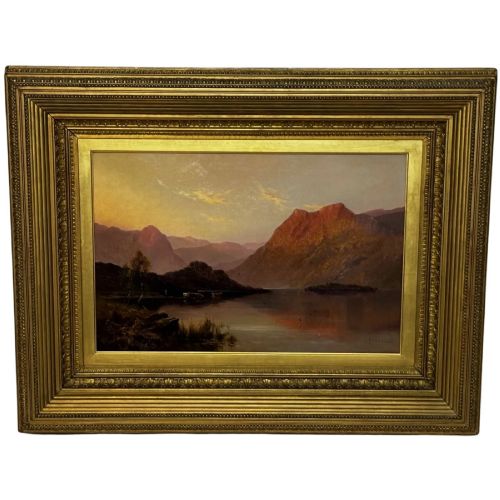
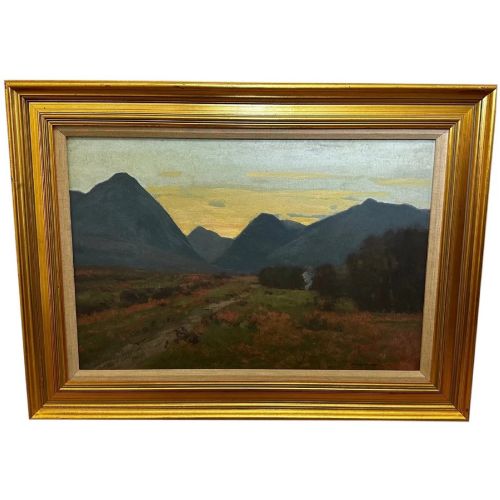
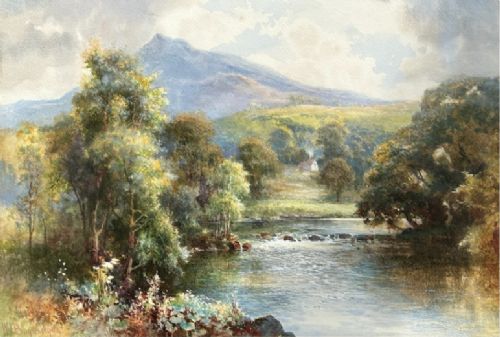
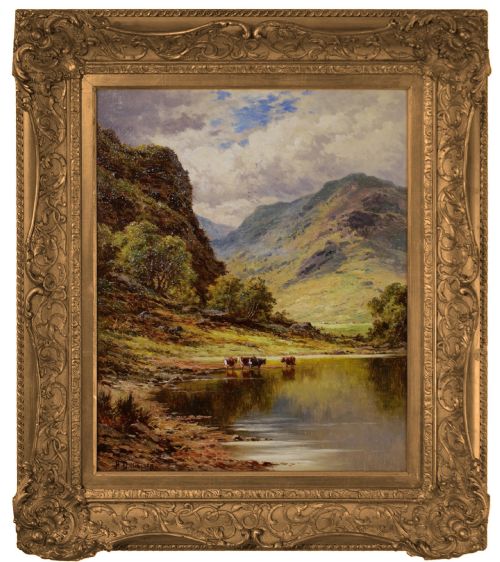
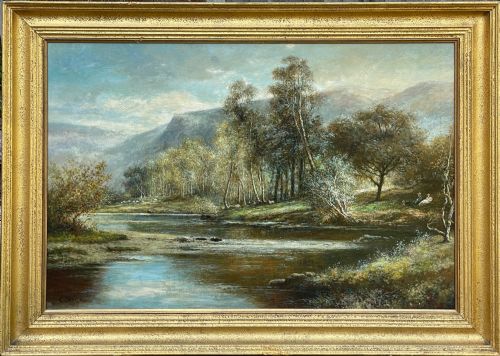
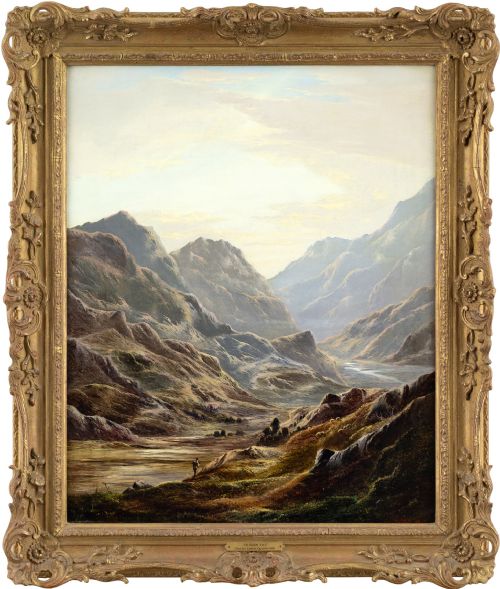
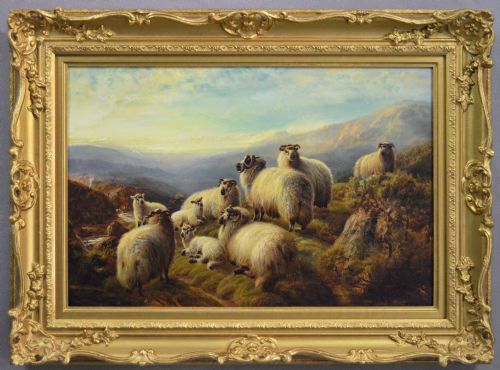
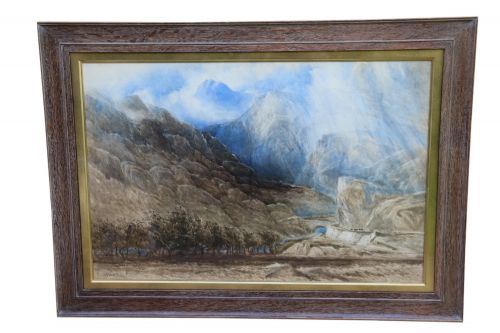
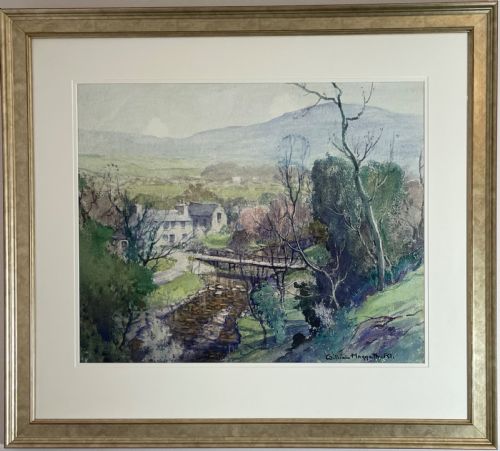
Traditional mountain landscape art encompasses oil paintings, watercolours, and carved sculptures depicting highland ranges, rivers, and crags from the nineteenth and twentieth centuries. Buyers seeking traditional mountain landscape art encounter British, Scottish, and Continental views, often featuring detailed depictions of peaks like Snowdon or the Scottish Highlands.
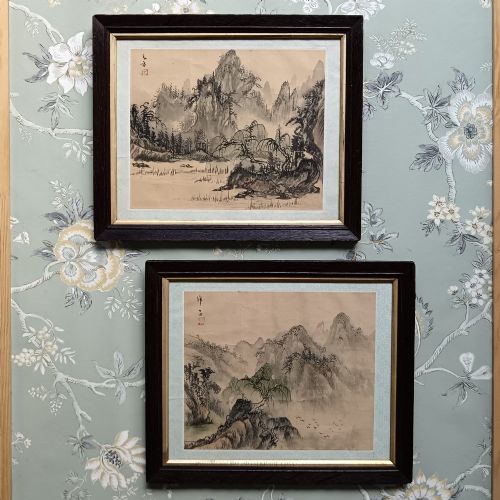
The works span Victorian watercolours and oils on canvas, alongside mid-century ink and silk pieces or carved jade sculptures on hardwood stands. These regional pieces record topography through academic technique and atmospheric weather effects.
Materials and Construction
Artists painted these works primarily with oil on canvas or panel, and watercolour on paper, utilising traditional brushes to build up depth and luminosity. Frames were fashioned from wood, often finished in giltwood and gesso to complement the painted scenes.
Sculptural variants utilise carved jade mounted upon fitted hardwood stands, displaying meticulous hand-carving techniques. Pigments and inks were applied directly to canvas, paper, wood, or silk surfaces.
Listings feature works executed in oil on canvas, oil on panel, watercolour on paper, and ink on silk.
Judging Quality and Execution
Quality rests in the precision of brushwork, the handling of atmospheric light, and the anatomical accuracy of geological forms and cattle or figures. Superior examples capture transient weather, such as mist over a loch or sunlight striking a crag, with convincing depth.
Original frames and signed provenance elevate an artwork, demonstrating that the piece survives intact from its period of creation. Weaker examples show stiff composition, muddy tones, or lack the atmospheric perspective characteristic of accomplished hands.
William Beattie Brown·Alfred Fontville de Breanski·George Houston·William Joseph Boyes·Henry H Parker·Charles Leslie·Robert Watson·Henry Martin Pope·William Henry Mander·William Hoggatt·Sidney Richard Percy·Thomas Spinks·Frank Hider·Walter J Watson·William Grant Murray·J Barclay·John Douglas Perrett·Stephen Enoch Hogley·George Melvin Rennie·George Turner
The Traditional Mountain Landscape Art Glossary
- Oil on Canvas
- A painting medium where pigments suspended in drying oils are applied to stretched woven fabric. This technique allows for rich colour blending and textured impasto application.
- Giltwood
- Wood that has been coated with a thin layer of gold leaf or powder. It frequently frames nineteenth-century paintings to enhance the visual impact of the artwork.
- Gesso
- A paint mixture consisting of a binder mixed with chalk, gypsum, or pigment. It serves as a smooth base for gilding or painting on wood panels.
- Watercolour
- A paint where the colour pigments are suspended in a water-based solution. Applied to paper, it creates translucent washes of colour.
- Shan Shui
- A style of traditional Chinese painting that represents scenery or natural landscapes. It uses brush and ink rather than conventional paints.
Traditional Mountain Landscape Art: Frequently Asked Questions
What periods do these pieces date from?
The works span from the seventeenth century through the Victorian era up to the mid-twentieth century. Most examples date across the nineteenth and early twentieth centuries.
During these periods, artists frequently toured mountainous regions in Britain and Europe to capture dramatic topography on canvas and paper.
How should I care for an antique oil painting?
Keep paintings away from direct sunlight, high humidity, and rapid temperature fluctuations to prevent cracking of the canvas and pigment. Dust the surface and frame gently with a dry, soft brush.
Avoid using water or chemical cleaners on the paint surface or antique giltwood frames.
Are these artworks signed by the artists?
Many pieces bear signatures, monograms, or artist seals from the original creators. Inscriptions on the reverse often note specific locations such as Welsh rivers or Scottish peaks.
Unsigned works are generally attributed to period schools based on technique, palette, and style.
What subjects do these landscapes feature?
The compositions focus on mountainous terrain, including Welsh valleys, Scottish highlands, Alpine snowcaps, and lakes. Artists frequently included local elements like cattle, rivers, and small figures to establish scale.
Eastern traditions also appear through detailed depictions of mountain ranges and natural scenery on silk and jade.