




Traditional Male Portrait
A traditional male portrait captures the likeness of a gentleman in oil paint or watercolour across centuries of British and continental art.
Traditional Male Portrait
A traditional male portrait depicts sitters ranging from physicians and mayors to peers and merchants, recorded with varying degrees of formality. These works span the seventeenth century through to the mid-twentieth century, capturing shifts in attire from stiff frocks and cravats to black tie. The most common pieces encountered here are nineteenth-century oil paintings on canvas depicting distinguished gentlemen.
Subjects often include identifiable figures such as dukes, physicians, and artists recorded by notable painters, alongside anonymous sitters whose names are lost to time. Works may be original oils, period watercolours, or later interpretations after historical masters like Sir Joshua Reynolds and Hans Holbein. Scale varies from intimate cabinet studies to large gilt-framed works intended for prominent wall display.
Materials and Construction
Painters applied oil paint or watercolour onto stretched canvas, wood panels, or paper supports using traditional brushwork techniques. Canvases are frequently secured within heavy giltwood and gold leaf frames that reflect the aesthetic tastes of their respective periods, from Regency moulding to ornate Victorian surrounds.
Pigments were worked in layers to build depth in clothing, flesh tones, and background shadows, sometimes accompanied by inscriptions on the reverse detailing the sitter or artist. Supporting wooden stretchers and backboards often bear the marks of age, including maker stamps, wax seals, and exhibition labels.
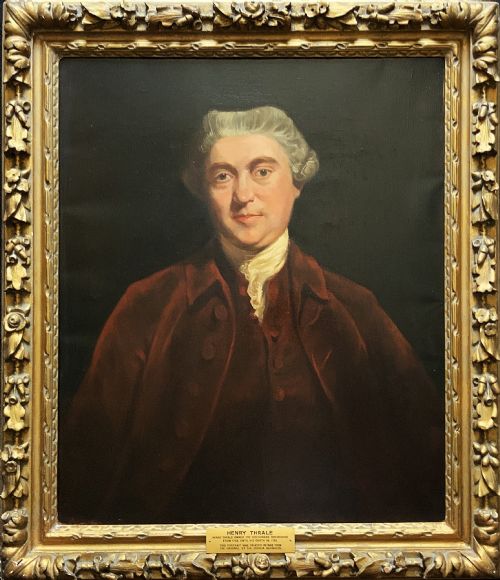
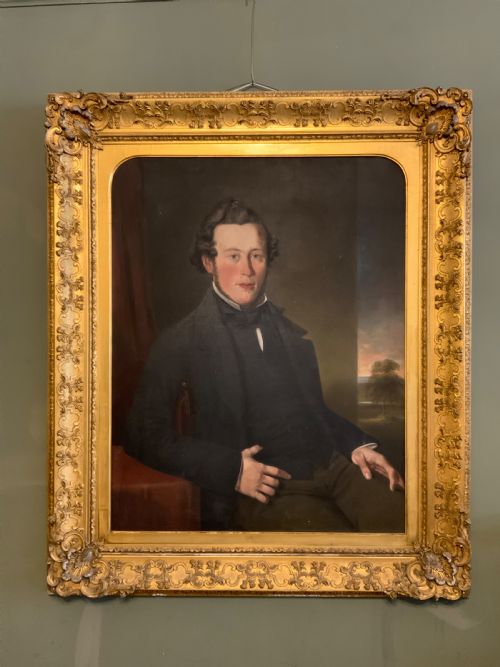
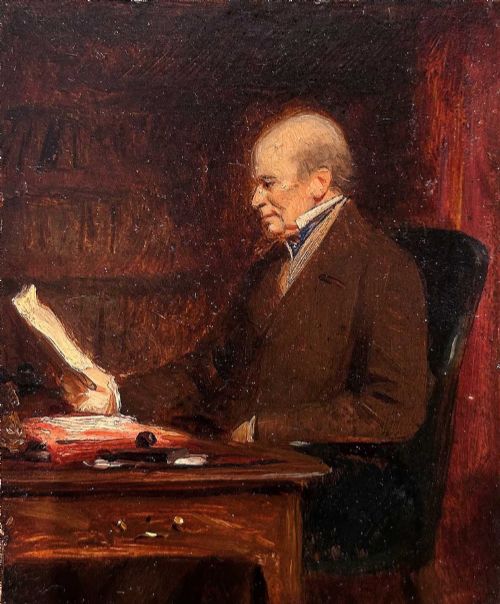
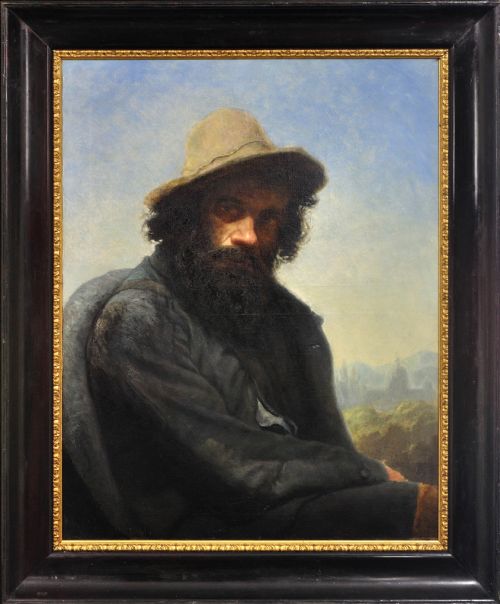
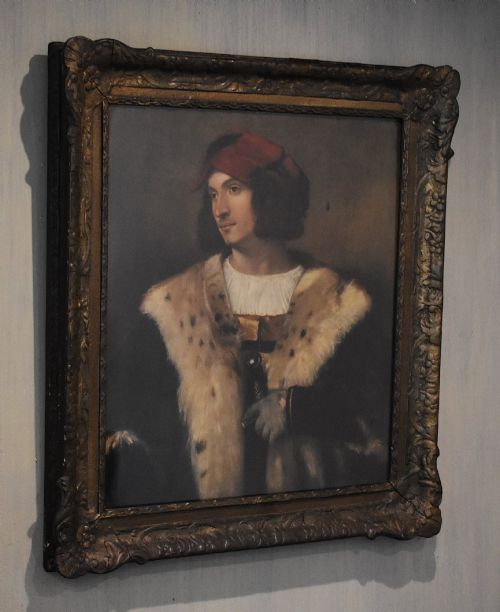
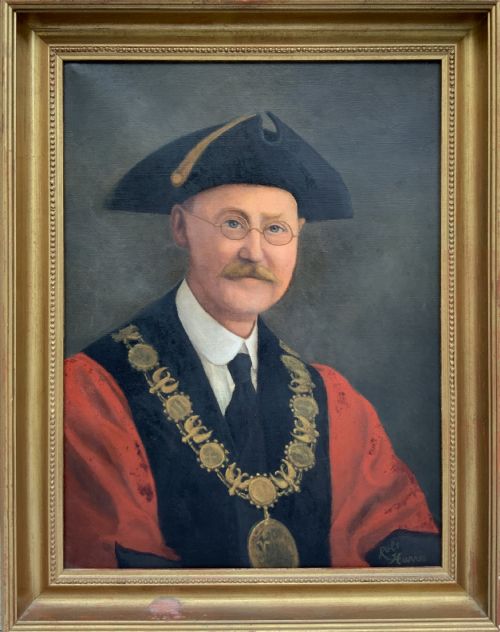
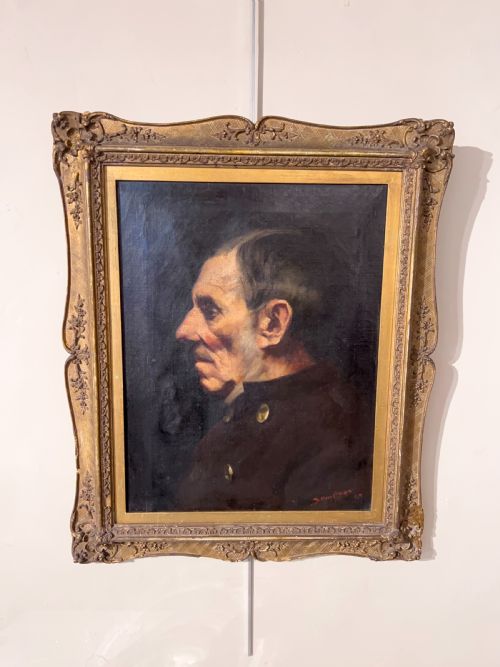
Several gentlemen stare out wearing striking red caps, black ties, and frock coats across the centuries.
Evaluating Execution
Quality rests upon the confidence of the brushwork, the psychological depth captured in the sitter's expression, and the anatomical accuracy of the hands and face. Superior examples reveal subtle tonal gradations in skin and fabric that elevate a mere record of appearance into a compelling psychological study.
The integrity of the original canvas surface, the stability of the paint layers, and the preservation of the period frame contribute significantly to the standing of a piece. Works by documented painters or those with exhibition history carry greater historical weight than anonymous workshop productions.
Stephen Pearce·Albin Mattenheimer·John Hamilton Mortimer·Michael Dahl·George Hayter·John Opie·John Phillip
The Traditional Male Portrait Glossary
- Oil on Canvas
- Pigment suspended in a drying oil applied to a woven fabric support. This combination allowed artists to blend tones smoothly and achieve rich textures.
- Giltwood
- Wood carved and coated with gold leaf or gold paint. Frames utilising this finish were designed to catch light and complement the tones within the painting.
- Regency
- A period in British history spanning the early nineteenth century defined by neoclassical elegance. Portraits from this era often feature softer lighting and simplified attire.
- Watercolour
- Pigment ground in a water-soluble binder applied to paper. This medium produces translucent washes favoured for intimate studies and detailed sketches.
- Provenance
- The documented history of ownership of an artwork. A clear lineage helps confirm the identity of the sitter and the attribution of the painter.
Traditional Male Portrait: Frequently Asked Questions
How do I identify the sitter?
Many paintings bear handwritten inscriptions on the reverse canvas, stretcher bars, or accompanying paper labels naming the individual.
Clues to profession, such as clerical bands, medical instruments, or mayoral chains, often help narrow down the identity when names are absent.
Where should I hang these portraits?
These works suit traditional reception rooms, libraries, or hallways where they can be displayed at eye level against neutral wall colours.
Direct sunlight and damp environments should be avoided to protect the delicate oil paint layers and wooden frames.
What is the difference between an original and an after piece?
An original painting is a primary work created directly from life or imagination by the artist during the sitter's lifetime.
An after piece is a later study or copy painted by a different artist referencing a well-known historical portrait.
How do I date a nineteenth-century portrait?
Clothing styles, hairstyles, and framing techniques provide the most reliable chronological markers for narrowing down the decade of creation.
Collar shapes, cravat styles, and facial hair trends evolved rapidly throughout the Victorian and Edwardian eras.