




Traditional Mahogany Ottoman
Traditional mahogany ottoman designs bring enduring timber frames and comfortable upholstered seating together for versatile placement in any room.
Traditional Mahogany Ottoman
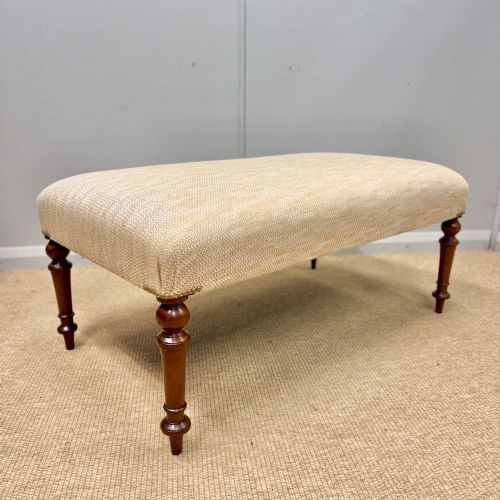
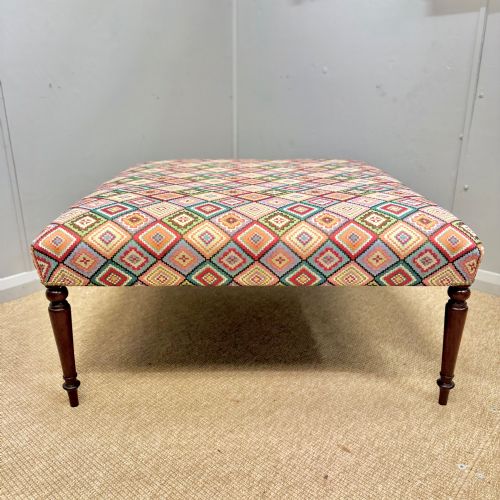
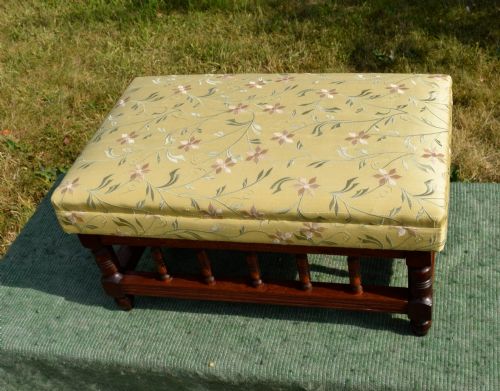
The assortment on this page ranges from compact square footstools to expansive window seats and large centre stools. Most examples combine a sturdy mahogany frame with soft top surfaces upholstered in fabric, leather, or tapestry.
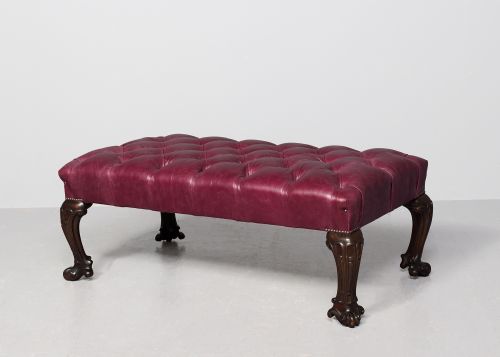
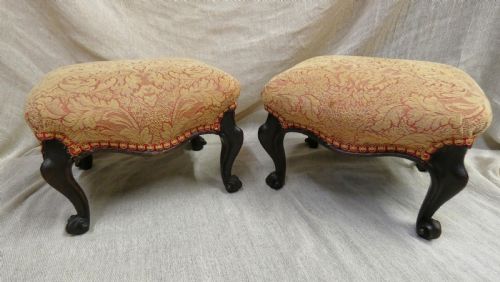
Revival styles feature prominently among these listings, including Chippendale, George II, and Regency interpretations. These historic design influences manifest in carved cabriole legs, ball and claw details, and fluted supports.
Materials and construction methods
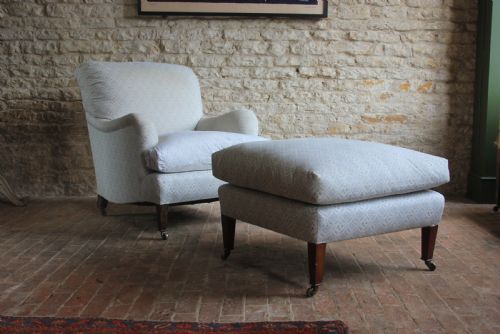
Makers utilised rich mahogany for structural frames, relying on its stability and deep grain to support intricate carving. This dark hardwood pairs with secondary woods and brass castors on larger floor-standing models.
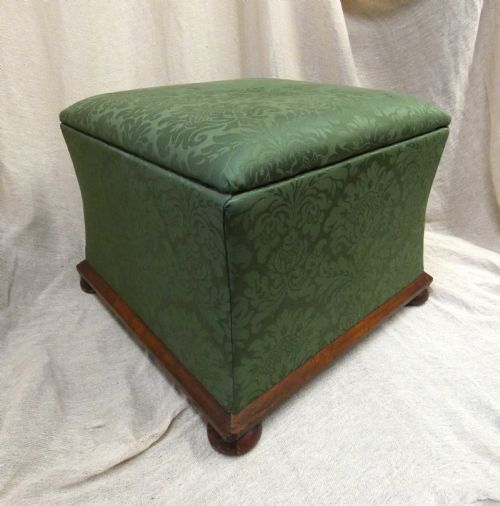
Upholstery methods varied from simple drop-in pads to complex deep buttoning and tight hide coverings. Textiles include wool, velvet, Kilim, and patterned tapestry fabric secured over traditional stuffing.
Listings feature mahogany frames paired with materials like brass, leather, wool, and tapestry across the Victorian, Edwardian, and nineteenth-century periods.
Factors that separate the finer examples
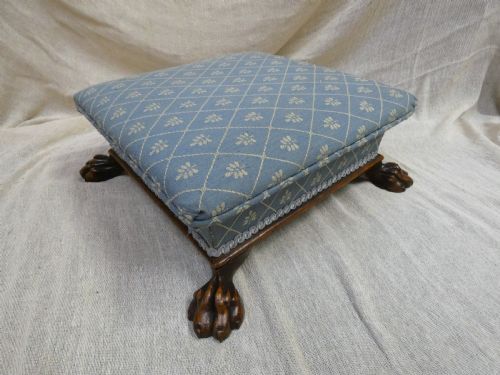
Quality rests in the crispness of timber carving and the integrity of the frame construction. Superior pieces display refined proportions, hand-carved details such as ball and claw feet, and heavy solid mahogany timbers.
The standard of upholstery and the choice of covering material greatly influence the character of each stool. Retaining original leather, Kilim, or period tapestry elevates the authenticity of the piece.
Howard and Sons·Whytock and Reid
The Traditional Mahogany Ottoman Glossary
- Mahogany
- A durable, reddish-brown tropical hardwood prized for furniture framing since the eighteenth century. It takes a fine polish and resists warping.
- Cabriole leg
- A furniture leg that curves out and then in, mimicking animal limbs. It often terminates in a claw and ball foot.
- Kilim
- A flatwoven wool carpet or textile frequently repurposed as upholstery. It provides a distinct geometric pattern.
- Buttoning
- An upholstery technique where depressions are formed in the padding by pulling twine tightly through to the frame. This secures the filling and creates a tufted surface.
- Castor
- A small wheel mounted on a swivel attached to the base of furniture legs. They allowed heavy nineteenth-century stools to move across carpets easily.
Traditional Mahogany Ottoman: Frequently Asked Questions
What is a traditional mahogany ottoman?
It is a low upholstered seat or footstool built around a dark mahogany wooden frame. These pieces often draw on eighteenth-century revival styles like Chippendale or George II.
They serve as functional furniture for resting feet or providing extra seating in reception rooms and bedrooms.
How do I date a mahogany footstool?
Dating relies on examining the timber grain, construction joints, and stylistic revival cues. Victorian pieces frequently feature heavy proportions, deep buttoning, or brass castors.
Earlier nineteenth-century examples might show Regency fluting or Georgian-style carved cabriole legs.
Are these ottomans comfortable to use?
Many examples are designed with padded tops suitable for resting feet or sitting. Some feature deep upholstery or sprung interiors depending on the period of manufacture.
Revival pieces built in the Edwardian era or late nineteenth century often prioritise soft cushioning alongside firm wooden supports.
Where should I place an ottoman?
These versatile stools suit placement in front of sofas, beside armchairs, or beneath windows. Long benches work effectively at the foot of a bed or in wide hallways.
Their compact footprint allows them to move easily around living spaces as needed.