
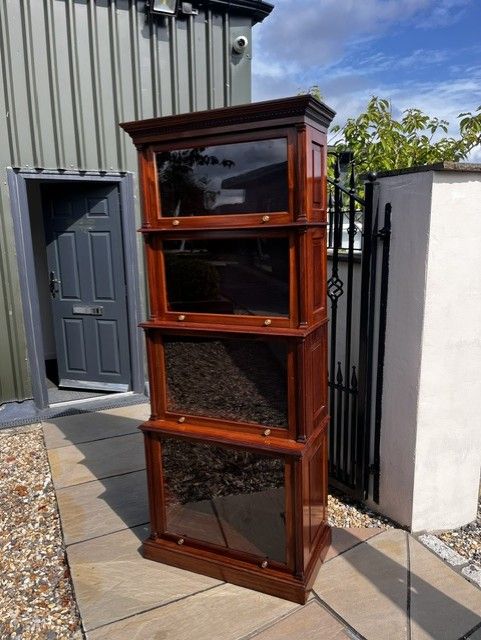
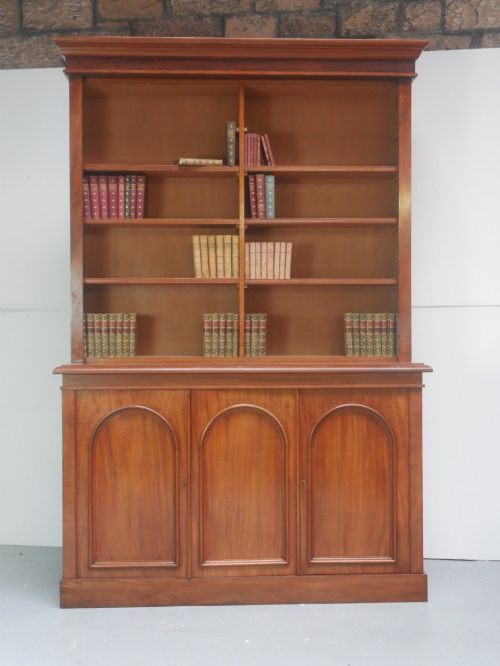
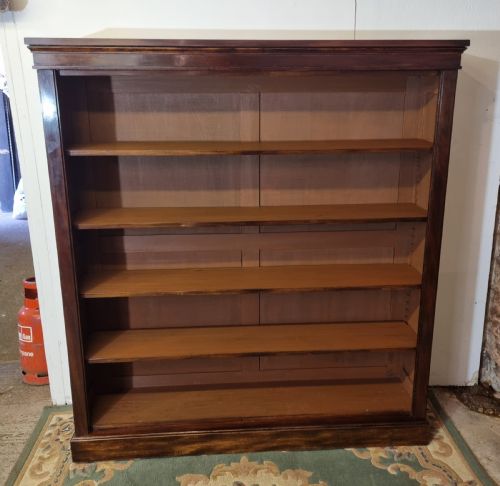
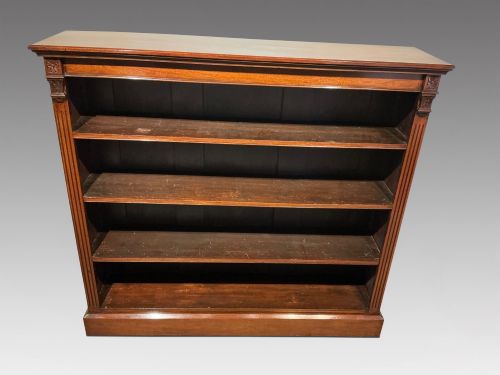
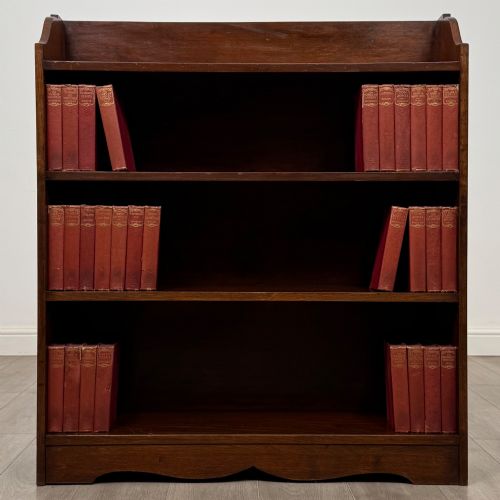
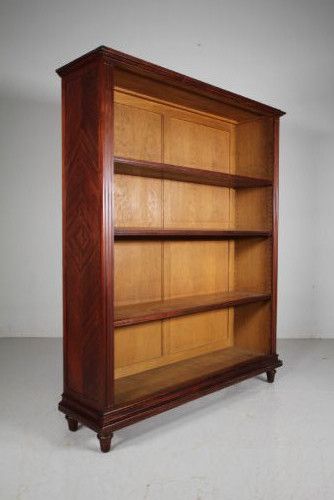
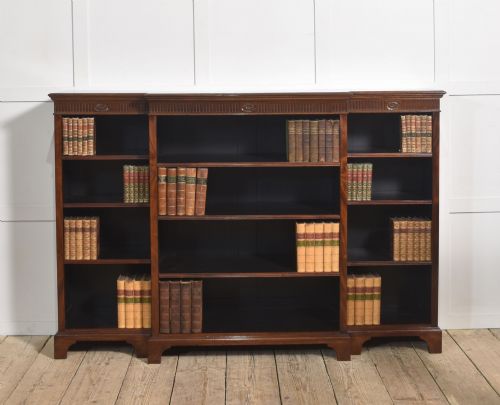
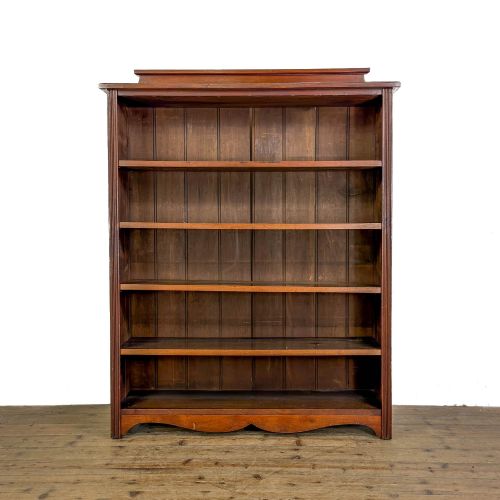
Traditional Mahogany Library Bookcase
A traditional mahogany library bookcase anchors a room with deep timber tones and stately proportion, holding volumes behind glass or within open shelves.
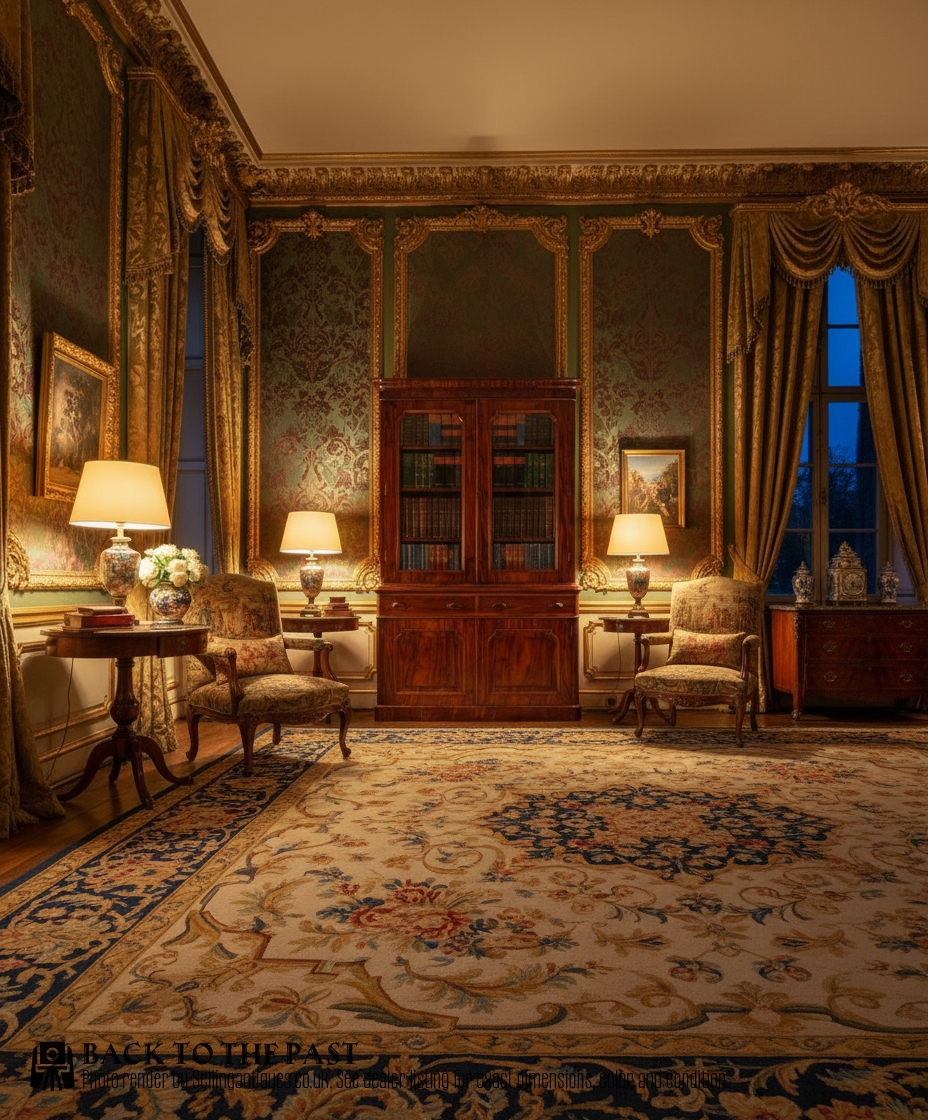
Traditional Mahogany Library Bookcase
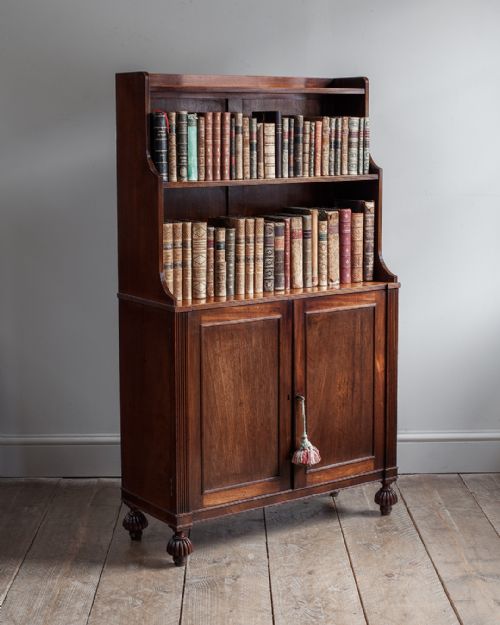
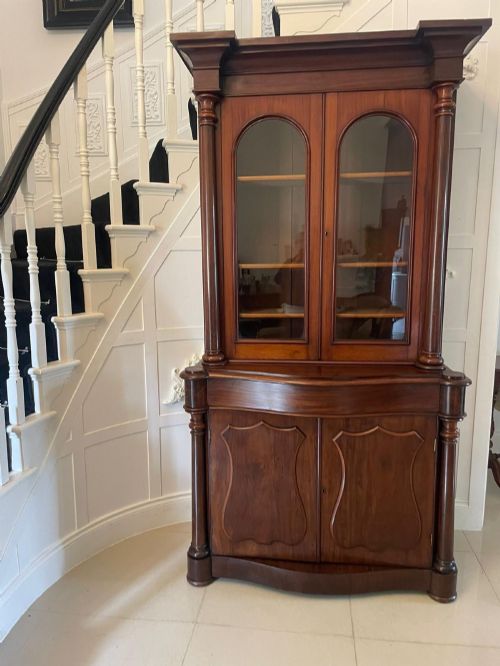
When you search for a traditional mahogany library bookcase, you look at substantial storage furniture built to house private collections. The pieces on this page span the Victorian, Edwardian, and Regency eras alongside Georgian and later revival styles, reflecting generations of domestic study and reading rooms.
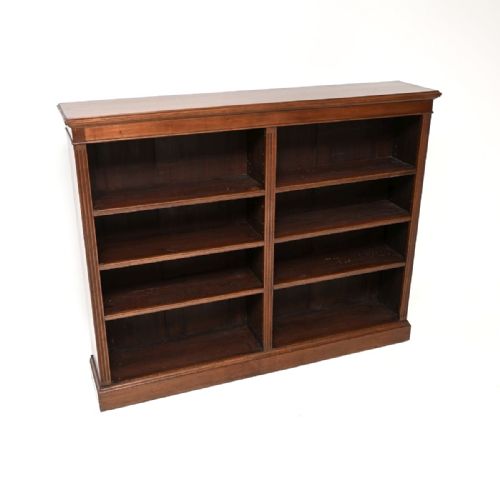
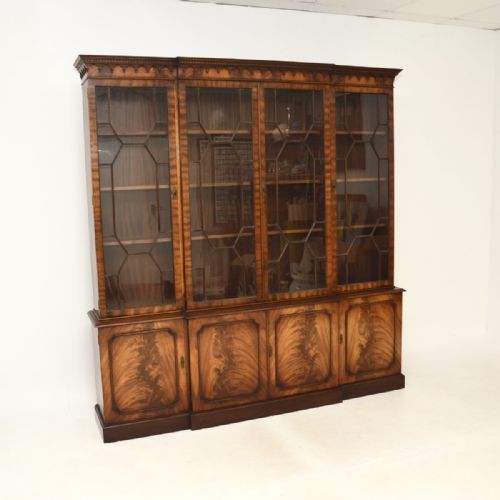
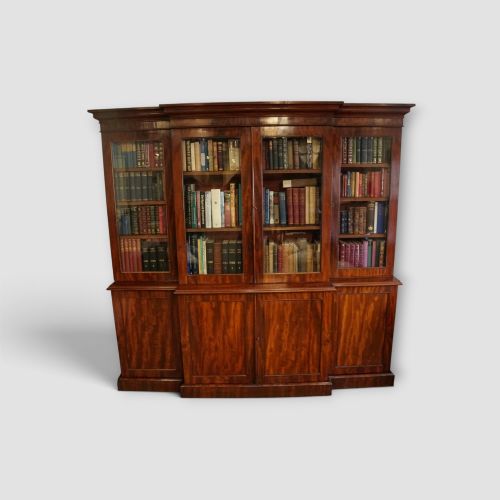
You meet several distinct forms within these listings, ranging from tall breakfront cabinets and glazed double-door presses to open shelving units and secretaire models with fitted writing desks. Many examples incorporate adjustable shelves, brass hardware, and flame mahogany veneers over secondary timbers like pine or oak.
Origins stretch from the late eighteenth century through the early twentieth century, showing shifts in taste from classical Georgian symmetry to heavier Victorian proportions and lighter Edwardian or revival interpretations. These pieces served scholars, solicitors, and country house owners who required functional storage with architectural presence.
How they were made
Cabinet makers constructed these large pieces using solid timber frames and applied flame mahogany veneers to drawer fronts and door panels, supported by secondary structural woods such as pine and oak. The wood was selected for grain movement and depth of colour, then polished to a warm finish that highlighted the natural figure.
Glazing bars divided the upper door panels into geometric panes of glass, whilst brass handles, hinges, and library hardware provided durable mechanical function. Joinery relied on traditional hand-cut joints, rebated backboards, and substantial plinths to bear the heavy weight of leather-bound volumes.
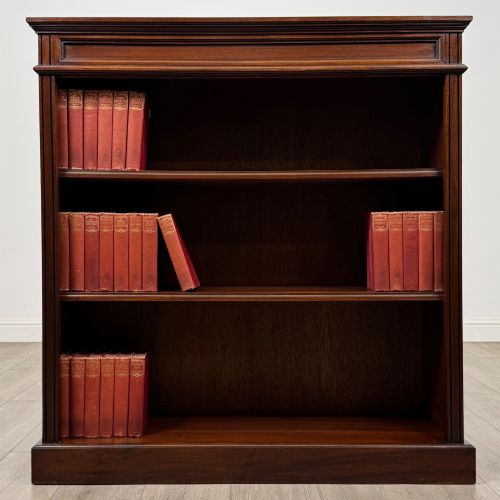
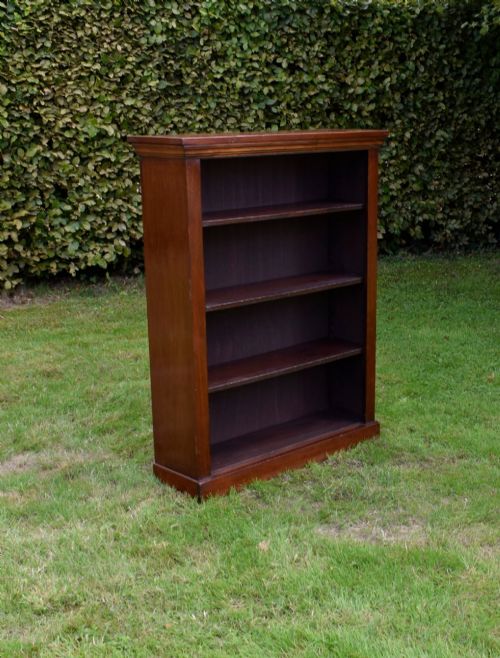
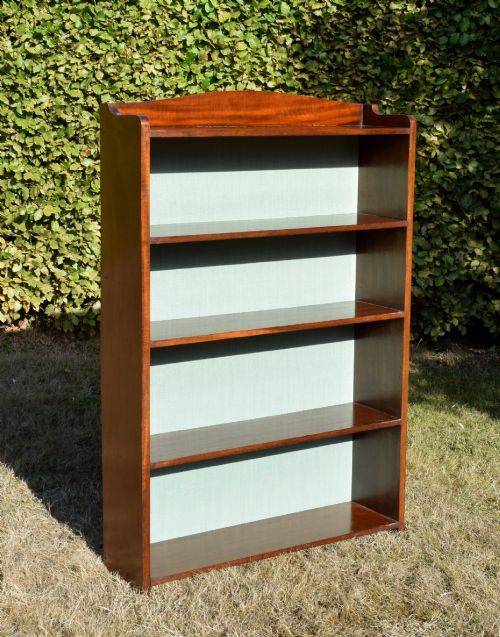
Common formats include open bookcases, breakfront library cabinets, and secretaire bookcases with fitted writing drawers.
What varies in quality
The distinction between standard commercial storage and exceptional cabinet work rests in the choice of timber and the precision of the joinery. Superior pieces utilise highly figured flame mahogany veneers matched symmetrically across large breakfront surfaces, whereas simpler examples rely on plain mahogany boards.
Proportion and architectural detailing set the finer library bookcases apart from utilitarian iterations. Well-executed cornices, crisply carved mouldings, original brass fitments, and integrated adjustable shelf racks demonstrate the hand of a skilled workshop rather than standard factory production.
Waring and Gillows
The Traditional Mahogany Library Bookcase Glossary
- Breakfront
- A cabinet design where the central section projects forward from the flanking wings. This architectural arrangement creates depth and visual balance on large library pieces.
- Flame mahogany veneer
- A thin slice of timber cut from the fork of the branch where the grain twists into a flame-like pattern. Cabinet makers laid this over stable secondary woods.
- Secretaire bookcase
- A tall cabinet featuring a fitted drop-front desk drawer concealed behind upper doors or mid-section panels. It combined study space with vertical book storage.
- Glazed top
- The upper section of a bookcase enclosed by glass-paned doors to protect volumes from dust. These doors often utilise wooden framing bars known as astragals.
- Adjustable library bookcase
- A shelving unit equipped with vertical rack strips or wooden slots allowing shelf heights to change. This system accommodated varying sizes of folio volumes.
Traditional Mahogany Library Bookcase: Frequently Asked Questions
How do I tell a Georgian bookcase from a Victorian one?
Georgian pieces often display restrained classical proportions, lighter cornices, and bracket feet or simple plinths. Their timber selection leans toward rich, dark mahogany with subtle grain figures.
Victorian bookcases generally offer heavier proportions, deeper breakfronts, and more robust plinth drawers. They frequently incorporate adjustable shelving systems and larger expanses of glass.
Can shelf heights be adjusted?
Many library bookcases include adjustable shelving mechanisms, though the exact system depends on the period and maker. Some rely on traditional wooden ratchets, whilst others use metal stud supports.
This adjustability allowed owners to store oversized folio volumes alongside smaller octavo books without wasting vertical space.
Where were these bookcases placed?
These bookcases were designed primarily for private libraries, studies, and drawing rooms in large houses and town residences. Their imposing height and deep shelves accommodated extensive private reading collections.
In modern interiors, they function equally well in home offices, sitting rooms, or dining spaces to display books and decorative objects.