




Traditional Mahogany Caddy
These traditional mahogany caddy pieces are finely timbered boxes and stands that bring classic Georgian and Regency utility to your interior.
Traditional Mahogany Caddy
When you search for traditional mahogany caddy items, you encounter pieces designed for the storage of cutlery, bottles, and papers. The examples on this page span the Georgian, Victorian, and Edwardian eras, alongside later revival pieces.
The selection includes cutlery boxes, decanter holders, and cellarettes fashioned from rich timber. These containers served specific domestic roles in wealthy households before finding a place in modern display schemes.
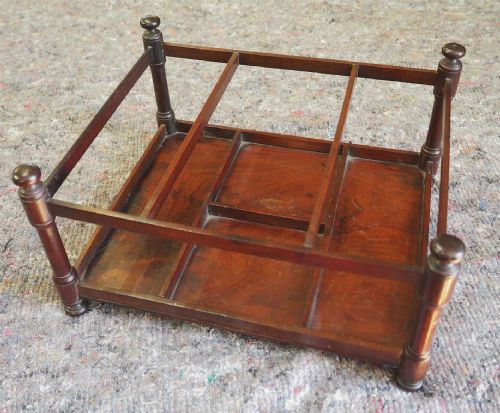
Georgian and Regency forms dominate the selection, showing the polished surfaces and functional compartments characteristic of the period. You also find Edwardian interpretations and magazine racks that adapt the timber to later domestic routines.
How they were made
Maker's workshops built these objects using solid and veneered mahogany, often selecting timber with deep grain patterns. Craftsmen shaped the wood into bow fronts, sarcophagus outlines, and revolving book compartments.
Mounts of brass, silver, and glass added both structural support and decorative contrast to the dark timber. Interiors were lined with baize or fitted with precise dividers to hold silver cutlery and glass decanters securely.
A revolving bookcase allows you to consult your entire miniature library without leaving your armchair.
What varies in quality
The standard of a traditional mahogany caddy rests on the choice of timber and the precision of the joinery. Superior pieces display carefully matched grain patterns across curved fronts and lids.
Finer examples retain original metal mounts, hinges, and internal dividers without replacement. The depth of the patina and the crispness of any inlaid wood further distinguish the finer workshop outputs from standard production.
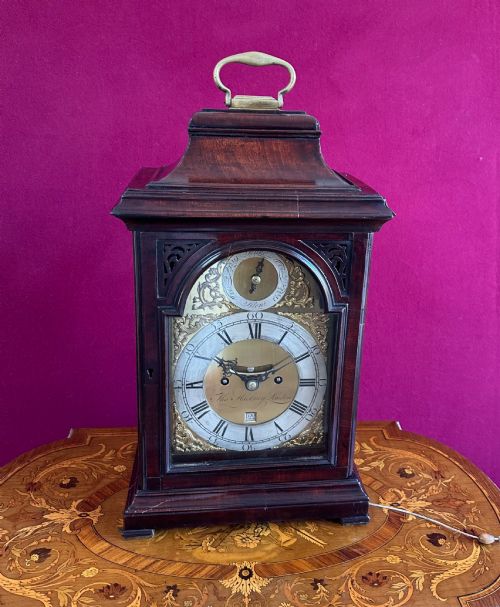
Mappin and Webb·John Taylor London
The Traditional Mahogany Caddy Glossary
- Mahogany
- A durable tropical hardwood prized for its rich reddish-brown colour and fine grain. It forms the primary structural material for these boxes and stands.
- Baize
- A coarse woolen material resembling felt, traditionally used to line the interior compartments of cutlery boxes and trays. It protects silver and glass from friction.
- Cellarette
- A lockable container used for storing wine bottles and decanters near the dining table. Regency examples often take a sarcophagus shape.
- Inlaid Wood
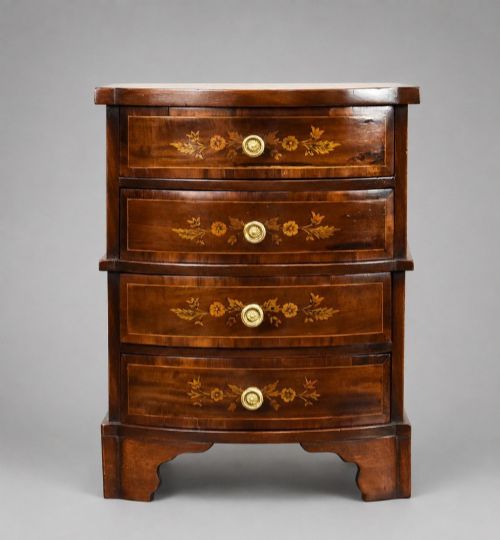
- Pieces of contrasting timber or metal set into the surface of the mahogany to create decorative patterns. This technique appears on Edwardian miniature chests and boxes.
- Sarcophagus
- A monumental chest shape with a stepped or domed lid, popular during the Regency period for large containers.
Traditional Mahogany Caddy: Frequently Asked Questions
What was a traditional mahogany caddy used for?
These boxes and holders stored items like table cutlery, wine decanters, and tea in dining rooms and parlours. They kept valuable domestic goods secure and organised.
Over time, forms evolved from utilitarian dining containers into decorative display pieces that still hold small collections or papers in a living space.
How do I identify a Georgian piece?
Georgian items display restrained proportions, solid mahogany construction, and functional brass or silver mounts. Look for hand-cut dovetail joints and aged patination on the timber surfaces.
Revival pieces from later decades often mimic these Georgian outlines but can show different internal fittings or modern mechanical components.
Are the internal dividers original?
Many surviving boxes retain their fitted wooden channels or baize-lined slots designed for specific cutlery sets or bottles. These internal layouts reflect the precise domestic customs of the eighteenth and nineteenth centuries.
Modifications or missing inserts are common in older pieces that transitioned through different uses over generations.
How should I care for mahogany timber?
Keep the wood away from direct sunlight and heat sources to prevent the mahogany from drying out or splitting. Gentle dusting with a dry cloth maintains the polished surface.
Avoid using silicone-based polishes, as they build up residue and dull the natural patina developed over centuries of handling.