
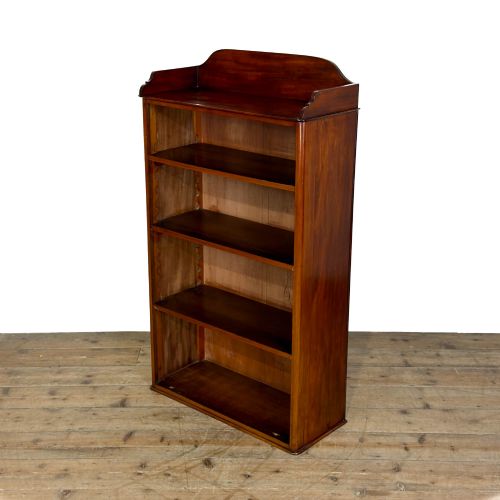
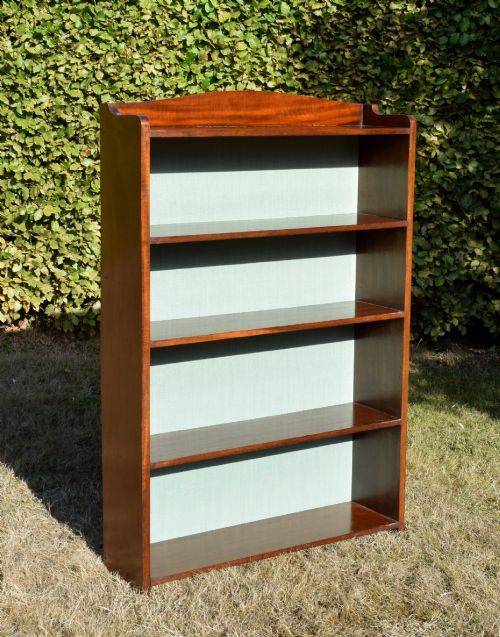
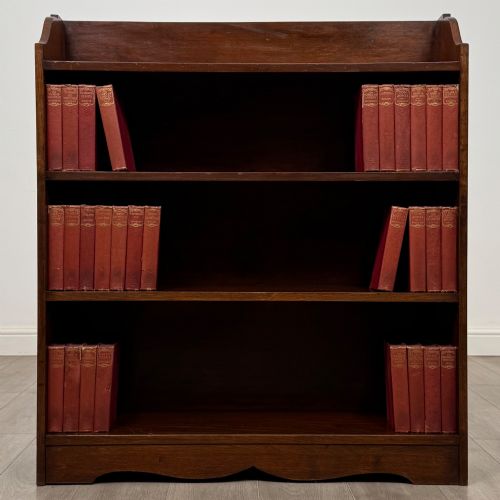


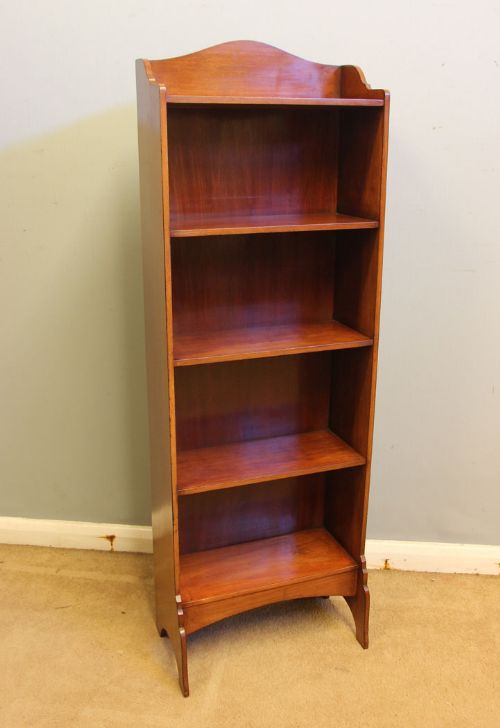
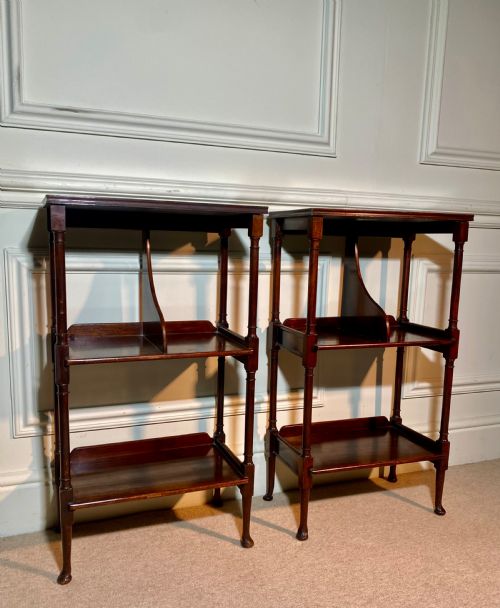

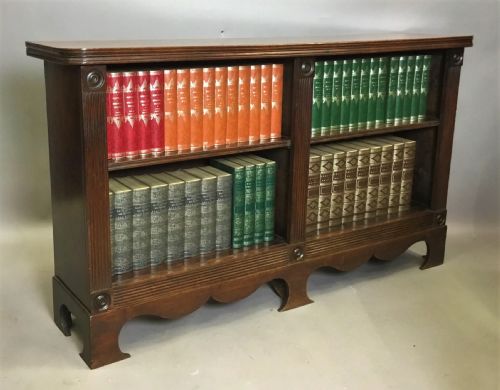

Traditional Mahogany Book Stand
These traditional mahogany book stand pieces offer practical elegance for libraries and studies, combining rich timbers with time-tested forms.
Traditional Mahogany Book Stand
A traditional mahogany book stand encompasses open bookcases, revolving stands, and bedside night shelves designed to hold volumes securely within domestic interiors.
The pieces on this page span several distinct periods including Regency, Victorian, Edwardian, and the early twentieth century, reflecting shifting tastes in furniture design.
Makers utilised mahogany primarily, often pairing it with brass, cast iron, fabric, and pine to build functional shelving units and display cabinets.
Materials and Construction
Makers relied heavily on solid mahogany and mahogany veneers, prized for their rich grain and durability in load-bearing shelving.
Metal components such as brass and cast iron appear in structural or revolving mechanisms, while secondary timbers like pine are found in internal framing and hidden elements.
Revolving book stands let you spin your entire library in circles while sitting still.
Assessing Quality
Quality rests upon the selection of timber and the sophistication of the design, distinguishing standard commercial shelving from unusually configured breakfront or revolving pieces.
The integration of secondary materials, such as brass fittings and well-fitted fabric elements, marks the difference between basic utilitarian items and finer cabinet work.
The Traditional Mahogany Book Stand Glossary
- Mahogany
- A durable tropical hardwood known for its deep reddish-brown colour and fine grain, frequently used in high-grade cabinet making.
- Waterfall bookcase
- A stepped shelving unit where each tier is narrower than the one below, creating a cascading profile.
- Revolving bookcase
- A freestanding shelving unit mounted on a rotating base, designed for easy access to volumes from any angle.
- Breakfront
- A cabinet design where the central section projects forward from the flanking wings, adding architectural depth to the piece.
- Regency
- An English design period spanning the early nineteenth century, characterised by classical restraint and refined proportions.
Traditional Mahogany Book Stand: Frequently Asked Questions
What is a traditional mahogany book stand?
These pieces comprise open shelving units, bedside night stands, and revolving book holders designed to organise and display volumes in a home.
They serve as both functional furniture and decorative woodwork within studies, libraries, and bedrooms.
How do I date a mahogany bookcase?
Dating relies on observing construction methods, hardware materials, and stylistic cues associated with periods such as Regency, Victorian, and Edwardian.
Evidence from dated pieces helps anchor specific design traits to particular decades between the nineteenth and early twentieth centuries.
Where were these pieces used?
They were built for domestic spaces like country houses, studies, and bedrooms to keep reading material close at hand.
Smaller revolving stands and bedside night shelves functioned effectively beside seating areas or beds.
What woods besides mahogany appear?
Pine frequently appears as a secondary timber in internal framing, drawer linings, and hidden structural elements.
Primary surfaces utilise mahogany, while brass and cast iron provide functional hardware for revolving mechanisms.