
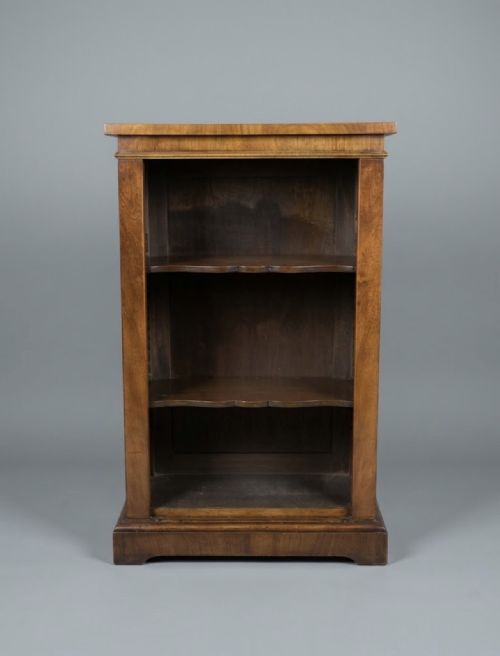
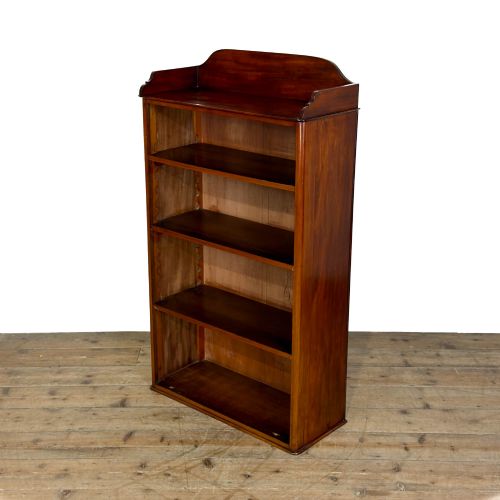
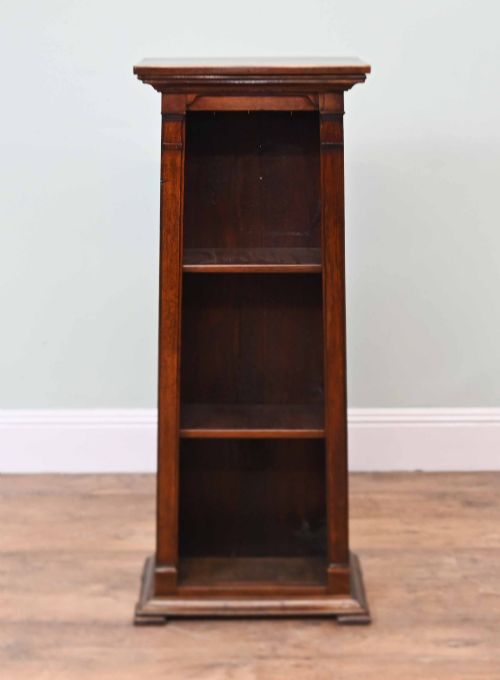
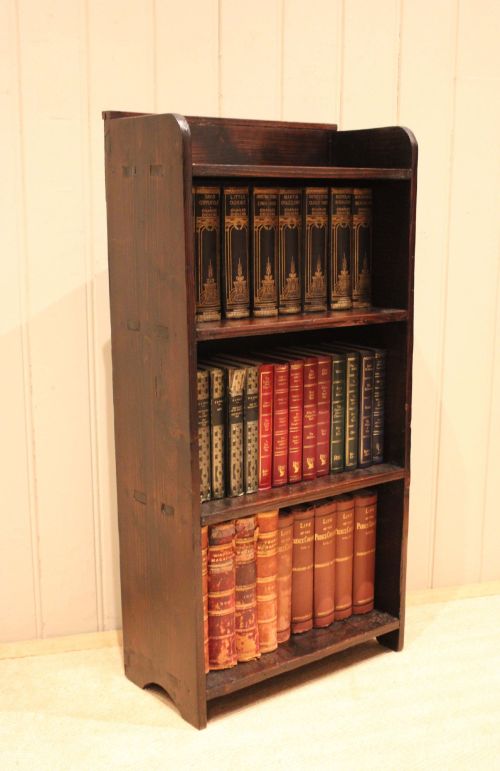
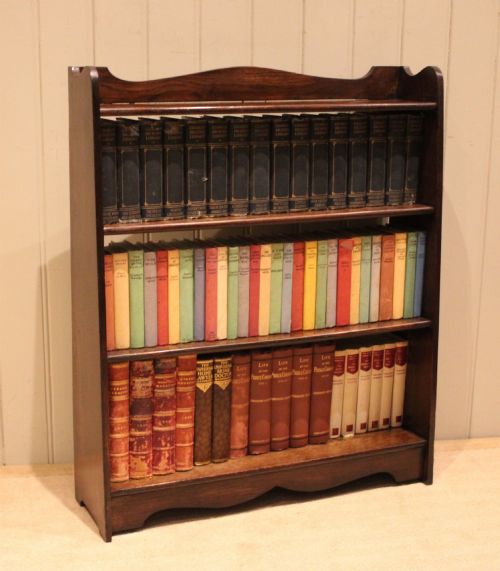
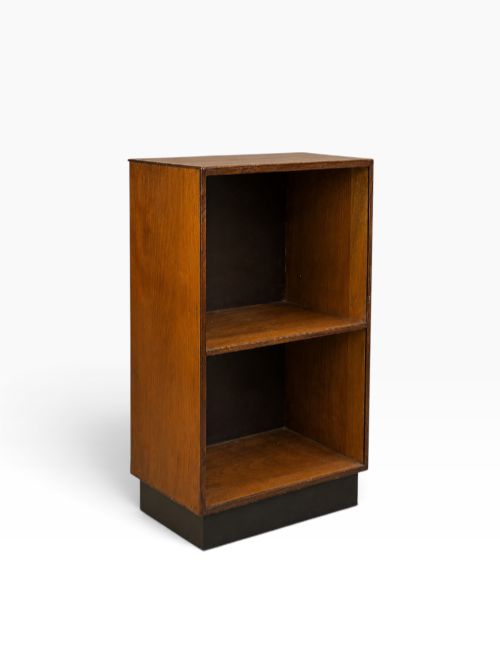
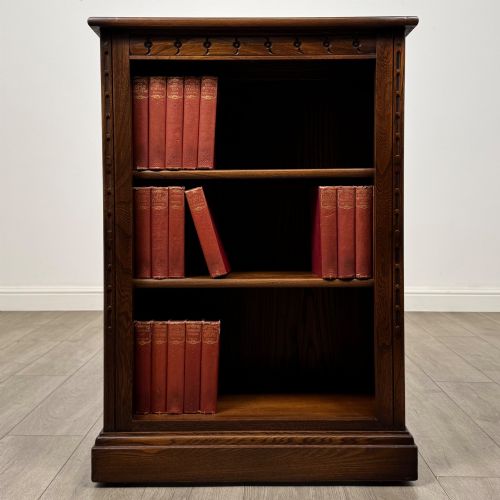
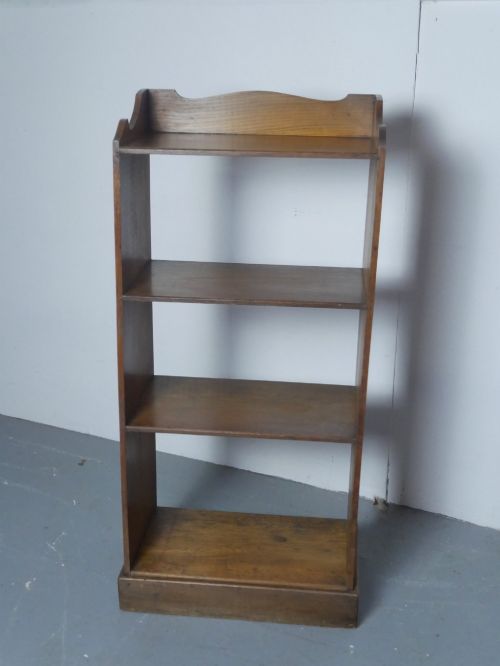


Compact Wooden Bookshelf
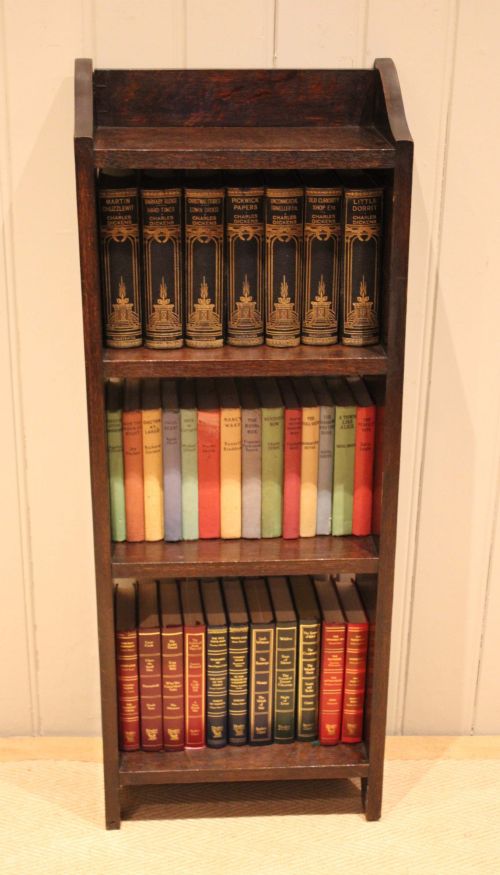
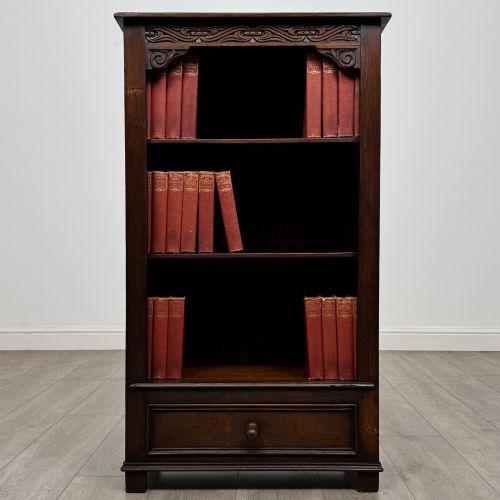
A compact wooden bookshelf solves the perennial problem of housing a growing library within a constrained footprint.
Compact Wooden Bookshelf
A compact wooden bookshelf serves everyday reading needs by offering sturdy, accessible tier storage for volumes without dominating a room. These pieces appear in forms such as open shelf units, dwarf cases, revolving tiers, and low freestanding furniture.
The versions most commonly met on this page span the Victorian and Edwardian eras through to the nineteen-twenties and nineteen-forties. Dimensions lean diminutive and small, accommodating modest floor spaces in traditional and country settings.
Origins represented in the listings stretch from English workshops to French provincial makers. Structural designs take influence from Arts and Crafts simplicity, Art Deco geometry, and rustic country vernacular.
How they were made
Construction relies heavily upon native hardwoods and softer timbers such as oak, mahogany, pine, ash, and partridge wood. Cabinetmakers selected these materials for grain pattern stability and the ability to bear weight across horizontal spans.
Joinery techniques range from simple pegged frames to carved decorative panels and integrated lower drawers. Surfaces frequently receive a polished wood finish that highlights the natural figuring of the timber.
Listings feature oak, mahogany, pine, ash, and partridge wood across Victorian, Edwardian, and Art Deco periods.
What varies in quality
The distinction between standard utility items and finer examples rests upon timber selection and secondary details like carved mouldings or specialised revolving mechanisms. Material consistency across backboards and shelves dictates structural longevity.
Stylistic cohesion also defines the upper tier of pieces, where Arts and Crafts restraint or French provincial proportions are executed with deliberate care rather than hurried manufacture.
Ercol
The Compact Wooden Bookshelf Glossary
- Open bookcase
- A shelf unit lacking doors or enclosed compartments. This form allows immediate visibility and retrieval of stored books.
- Dwarf bookcase
- A low shelving unit designed to sit beneath window height or within restricted wall spaces. These pieces maintain a small vertical profile.
- Revolving bookcase
- A freestanding tiered unit mounted on a rotating pivot base. This mechanism lets a reader access multiple directions of shelving from a single stationary position.
- Partridge wood
- A dense tropical timber prized for its distinctive mottled partridge-feather grain pattern. Cabinetmakers utilised this material for decorative accent surfaces.
Compact Wooden Bookshelf: Frequently Asked Questions
Where should I place a compact wooden bookshelf?
These small bookcases suit alcoves, hallways, and studies where full-height shelving proves impractical. Their modest proportions allow placement beneath windows or beside seating areas.
Positioning them away from direct heat sources protects the timber from drying out and prevents the wood from warping over time.
How do I maintain polished wooden shelves?
Routine care involves dusting with a soft, dry cloth to prevent particulate buildup on the timber surface. Avoid silicone-based sprays that can leave a persistent residue.
Applying a traditional beeswax polish periodically helps nourish the wood and preserves the depth of the finish.
Can these shelves hold heavy volumes?
Most pieces handle standard octavo books and general fiction without structural strain. Solid oak and mahogany examples offer higher weight tolerances.
Very heavy art folios or encyclopaedias place stress on extended shelf spans and are better suited to reinforced or shorter tiers.
How do I identify an Edwardian bookcase?
Edwardian pieces often display lighter timber tones and simpler decorative carving compared to heavier Victorian counterparts. Stylistic touches frequently borrow from earlier vernacular traditions.
Construction details such as machine-sawn backing boards and lighter internal framing help distinguish this twentieth-century period.