




Small Library Cabinet
These small library cabinet pieces offer neat book storage and display, bringing period character and compact proportions to home studies.
Small Library Cabinet
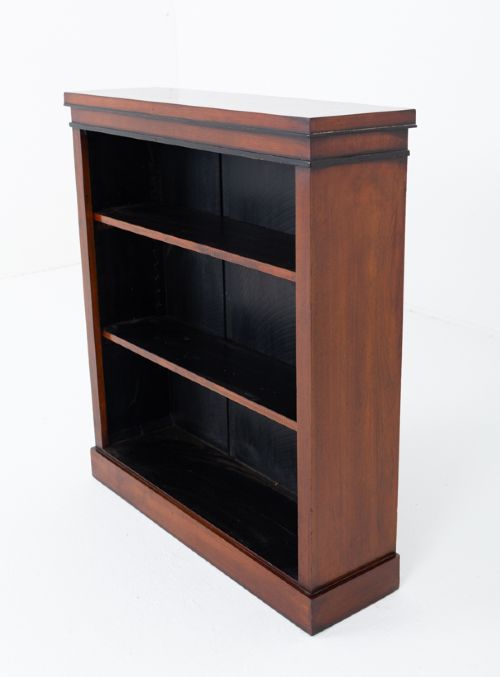
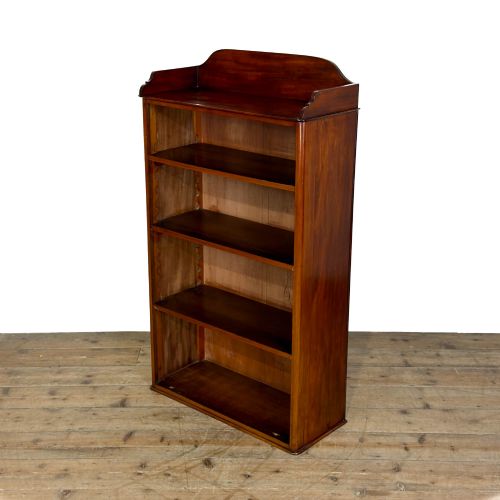
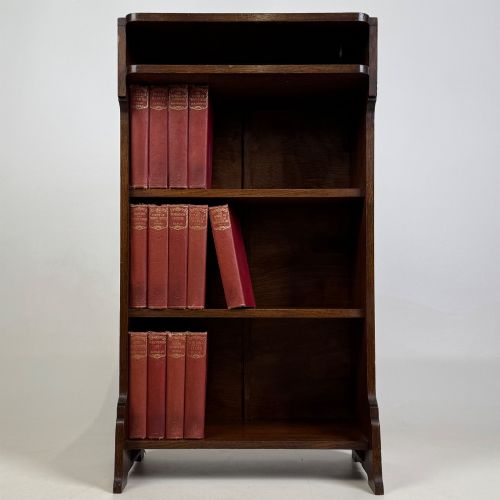
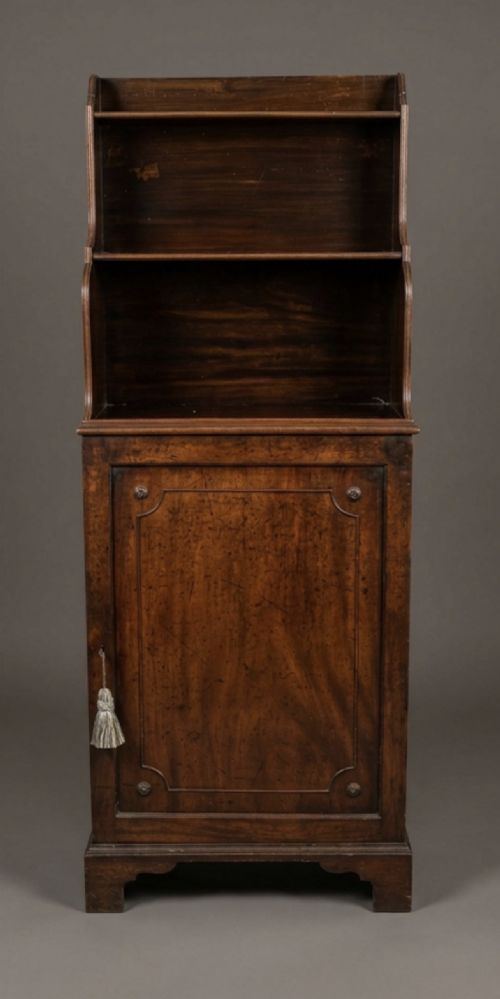
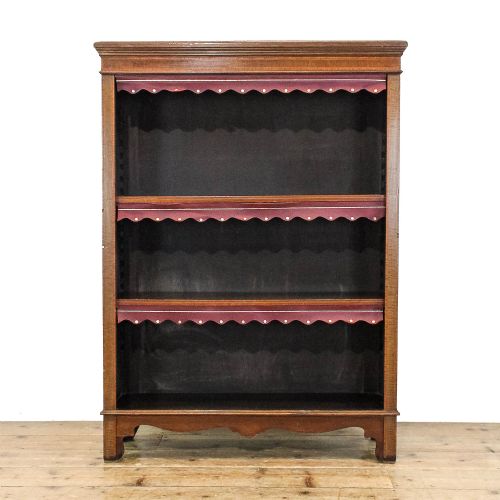
A small library cabinet provides compact storage for books and papers, fitting easily into smaller rooms while maintaining traditional utility. These pieces include open shelves, glazed doors, and cupboards beneath display sections.
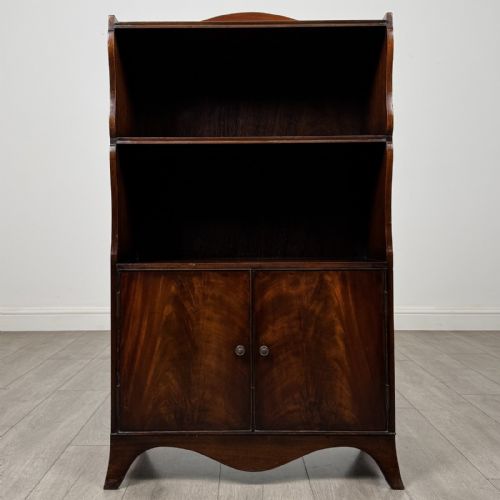
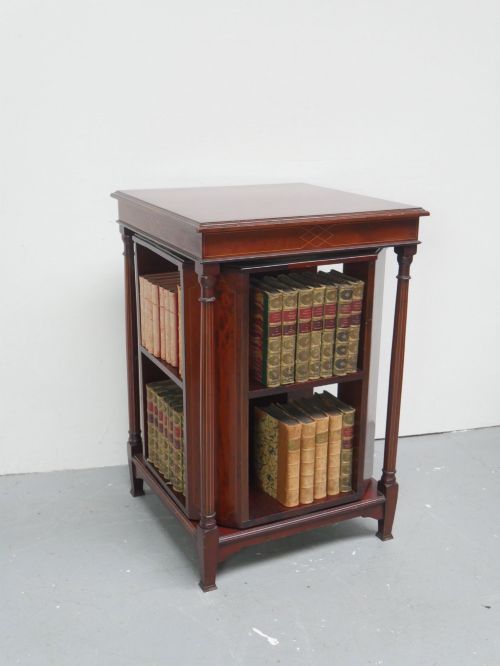
The versions appearing here span Victorian, Edwardian, and Georgian periods alongside 19th-century and 1920s examples. Buyers most frequently encounter mahogany and oak constructions, often incorporating revolving designs, waterfall shelves, or break-front configurations.
How they were made
Cabinet makers utilised solid timbers such as mahogany and oak, frequently applying flame mahogany veneer and satinwood inlay for decorative contrast. Structural framing relied on traditional joinery methods suited to supporting heavy volumes.
Fittings include brass castors for mobility and glazed doors to protect volumes from dust. Carved edges and tooled leather details finish the surfaces of these functional storage items.
The documented periods range from Georgian and William IV through to the Edwardian era and the 1930s.
What varies in quality
The standard of timber selection and veneer matching defines the visual appeal of each cabinet. Finer examples display carefully chosen grain patterns and restrained inlay work rather than heavy ornamentation.
Mechanical integrity in revolving tiers, smooth drawer action, and original brass hardware distinguish superior items from simpler utility pieces.
Gillows
The Small Library Cabinet Glossary
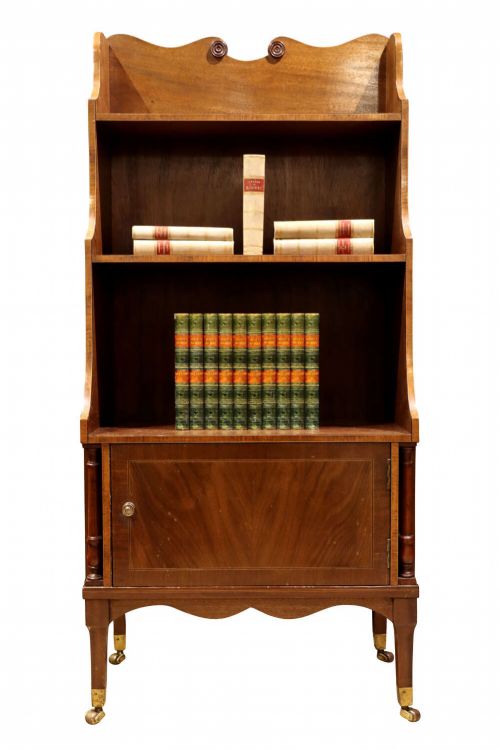
- Waterfall bookcase
- A tiered bookcase where each successive shelf is narrower than the one below, creating a cascading profile. This form is common among compact display pieces.
- Break-front
- A cabinet design where the central section projects forward from the flanking wings. This architectural arrangement adds depth and formal presence to library furniture.
- Satinwood inlay
- Decorative wood ornamentation inserted into contrasting timber surfaces to form geometric or floral patterns. It provides a bright golden contrast against darker woods like mahogany.
- Revolving bookcase
- A rotating shelving unit designed to sit on a floor or tabletop for easy book selection from any angle. These items feature internal pivoting mechanisms.
- Flame mahogany veneer
- A thin slice of mahogany timber cut from the fork of the tree to produce a fiery, rippling grain pattern. Cabinet makers applied this to prominent exterior surfaces.
Small Library Cabinet: Frequently Asked Questions
Where should I place a small library cabinet?
These compact pieces suit studies, living rooms, and narrow hallways where full-sized bookcases would overwhelm the floor space. Their reduced depth allows placement against shorter walls or beside seating areas.
Revolving versions work particularly well beside armchairs for easy access to current reading material, while cabinet styles fit neatly into corners or alcoves.
How do I care for mahogany surfaces?
Dust regularly with a soft, dry cloth to prevent particulate buildup on the timber and veneer. Avoid placing wooden cabinets in direct sunlight or near heat sources to prevent the wood from drying out.
Occasional application of appropriate wax polish maintains the lustre of the finish without sealing the pores of the historical timber.
What is the difference between open and glazed bookcases?
Open bookcases provide immediate access to volumes and display the bindings as part of the room's decor. They suit everyday reading collections that require frequent handling.
Glazed bookcases enclose the books behind glass panels, offering protection from dust, moisture, and handling. This enclosed format suits delicate bindings and older publications.
How do I identify a Victorian library cabinet?
Victorian pieces often utilise dense mahogany or walnut timbers, sometimes featuring elaborate carving, glazed doors, or brass castors. Proportions tend to be sturdy and functional, reflecting the period's domestic requirements.
Construction details such as hand-cut dovetails in drawers and traditional backboards help confirm the nineteenth-century origin of the piece.