


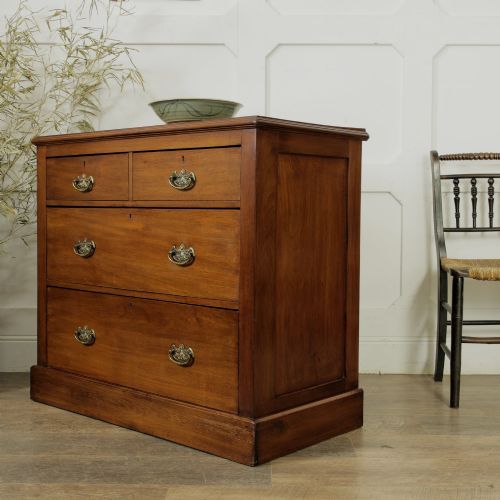
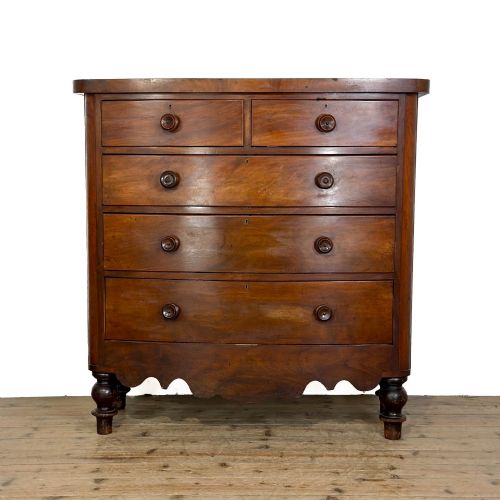
Traditional Mahogany Bedroom Chest
A traditional mahogany bedroom chest brings warmth and substantial storage to a room, drawing on centuries of cabinet-making skill.
Traditional Mahogany Bedroom Chest
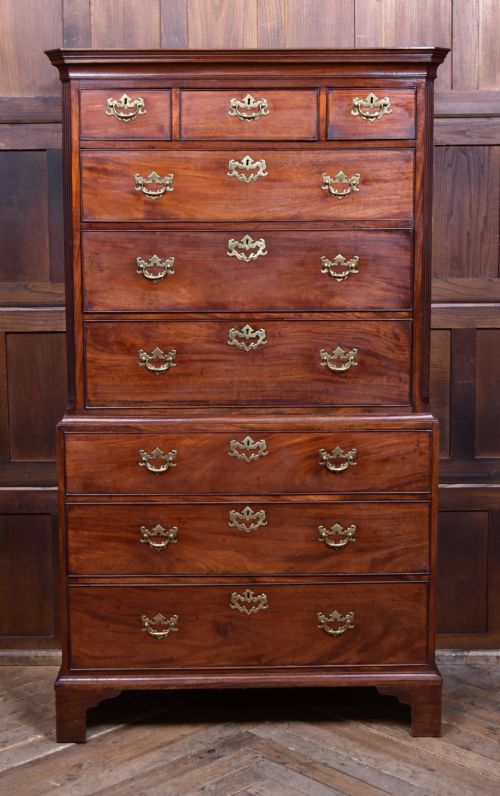
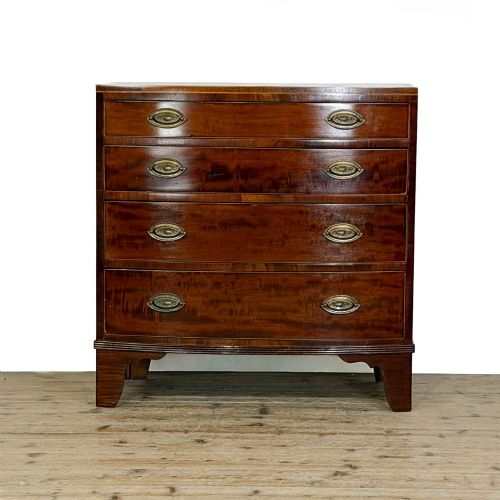
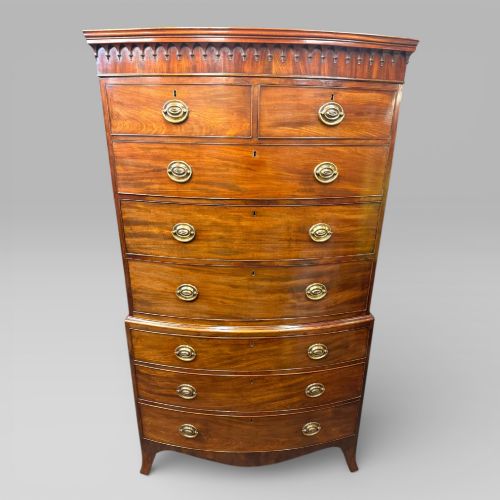
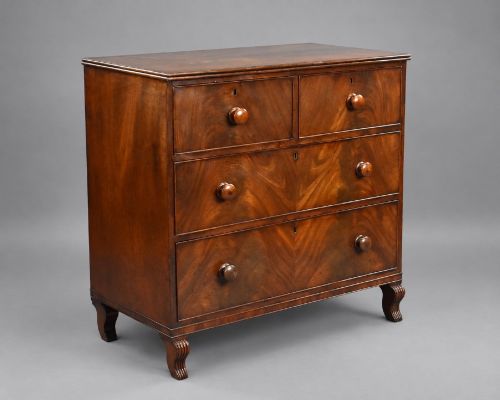
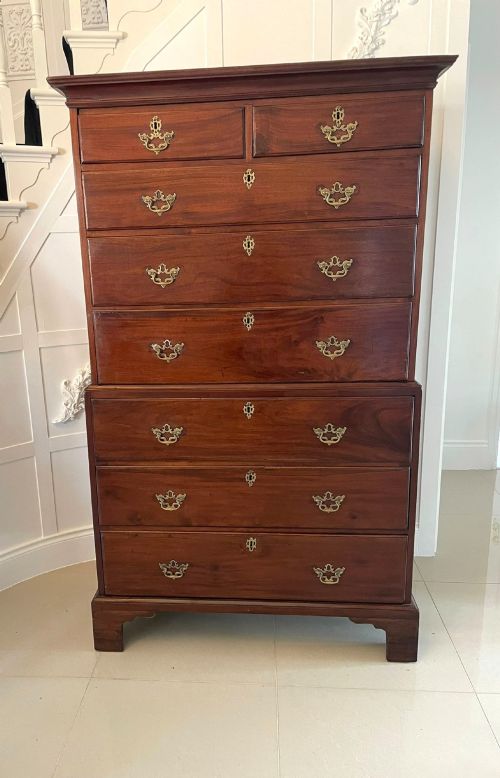
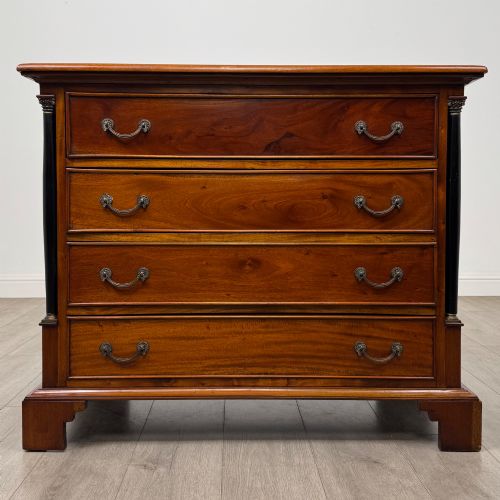
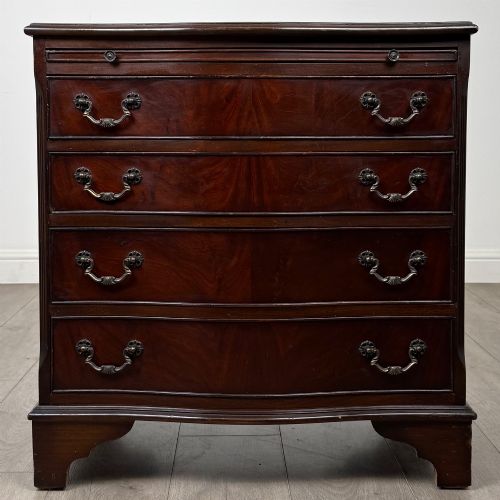
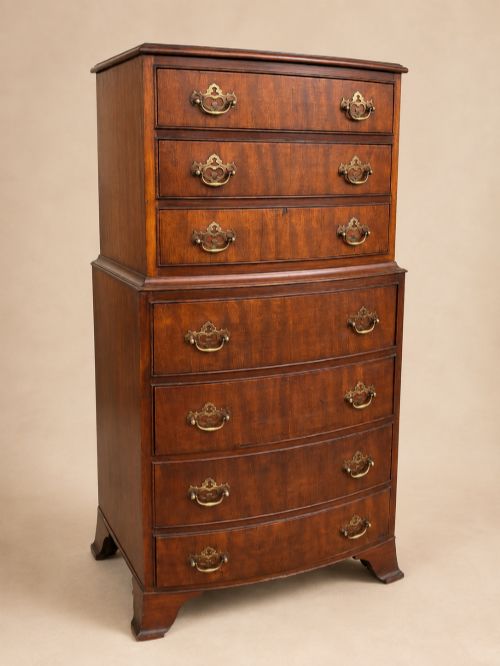
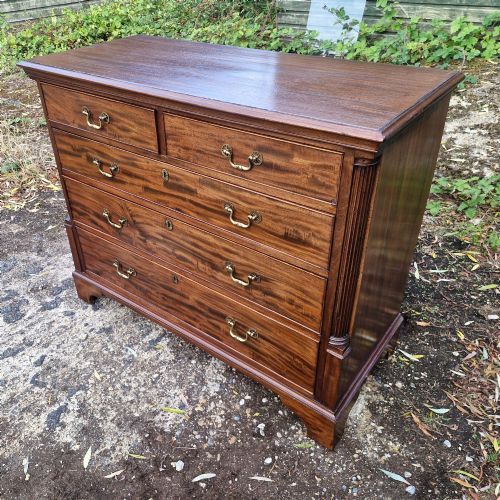
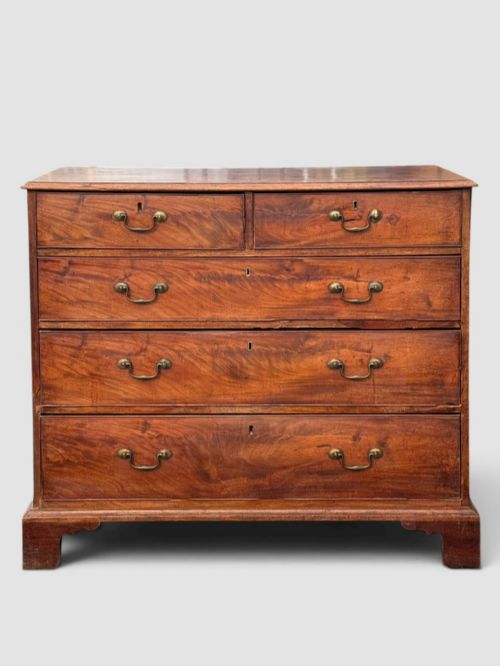
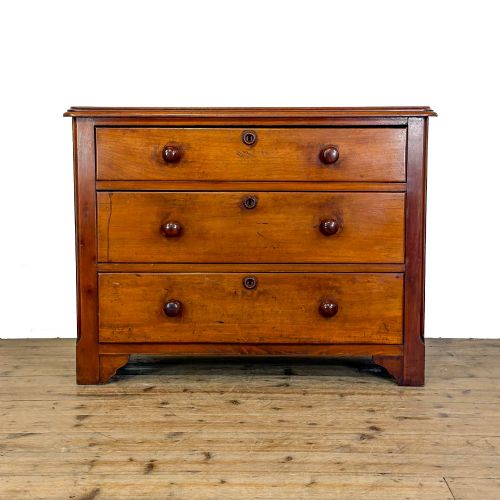
A traditional mahogany bedroom chest provides essential storage through structured rows of drawers designed for domestic use. The pieces appearing here range from compact bedside chests to grand chest-on-chest forms.
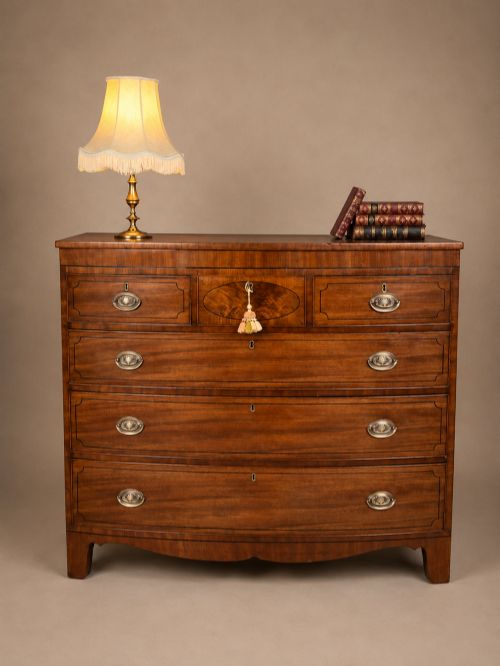
Most examples originate from the Georgian and Victorian periods, alongside Edwardian and later 20th century interpretations. Chests with bow-front and serpentine silhouettes appear frequently among the standard rectangular drawer configurations.
How they were made
Cabinet makers utilised solid mahogany and flame mahogany veneer applied over secondary woods such as pine and oak. The rich grain patterns of the primary timber receive emphasis through careful polishing and selection.
Hardware details typically include brass handles fastened to the drawer fronts, which feature varied heights such as the common two-over-three arrangement or four and five height vertical stacks.
Pairs of bedside chests occasionally turn up together, proving that matching your nightstands is a very old obsession indeed.
What varies in quality
The refinement of the timber selection dictates visual distinction, particularly where figured flame mahogany veneer displays deep movement across the drawer fronts. Superior execution shows in the crispness of the mouldings and the harmonious proportions of the chest.
Structural integrity depends on the precision of the drawer construction and the preservation of original brass hardware. Pieces retaining their early finish and uncompromised secondary woods hold greater integrity.
The Traditional Mahogany Bedroom Chest Glossary
- Bow-front
- A convex curved front profile that projects outward in the centre, creating a softer silhouette than a flat chest. This shape gained popularity during the Georgian and Regency periods.
- Flame mahogany
- A veneer cut from the branching points of the mahogany tree to reveal a rippling, flame-like grain pattern. Cabinet makers reserved this striking timber for principal display surfaces.
- Chest on chest
- A tall storage unit comprising a smaller chest stacked directly upon a wider base chest, also known as a tallboy. This form maximises vertical capacity.
- Serpentine
- A front contour characterised by a convex centre flanked by concave curves, forming a continuous undulating line. It represents a more complex form of cabinet work.
Traditional Mahogany Bedroom Chest: Frequently Asked Questions
How do I date a mahogany chest?
Dating relies on observing construction methods, timber choices, and hardware styles across periods like the Georgian and Victorian eras. Secondary woods like oak or pine inside the drawers often offer clues to the origin.
Changes in drawer linings, handle design, and overall proportions help narrow down whether a piece belongs to the 18th, 19th, or early 20th century.
Are bedside chests common in these styles?
Bedside chests and small nightstands appear frequently in pairs or single formats alongside larger drawer units. They adapt the traditional materials and heights for smaller spaces.
These smaller pieces often mirror the proportions and brass hardware of their larger counterparts while offering compact drawer storage.
How do I care for mahogany furniture?
Mahogany surfaces respond best to regular dusting with a soft, dry cloth and protection from direct sunlight and extreme temperature shifts. Keeping the wood away from heat sources prevents the timber and veneer from drying out.
Occasional treatment with appropriate wax maintains the lustre of the polished grain without building up heavy residues over time.