
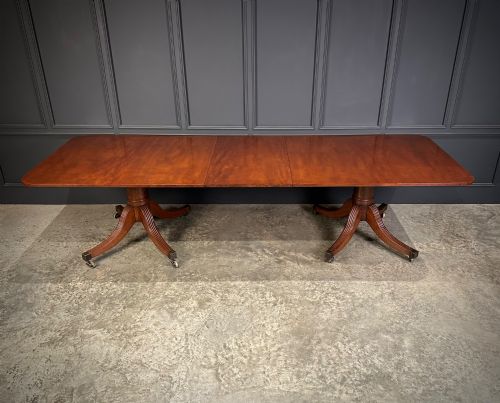
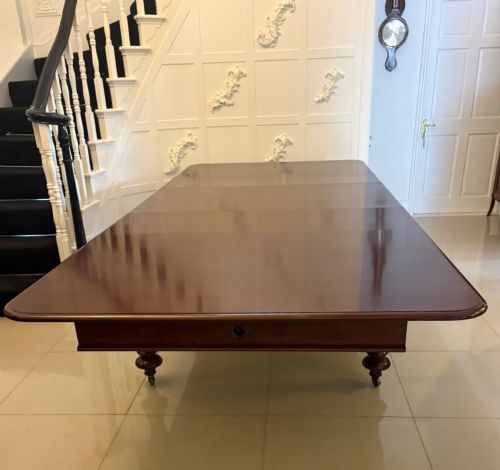
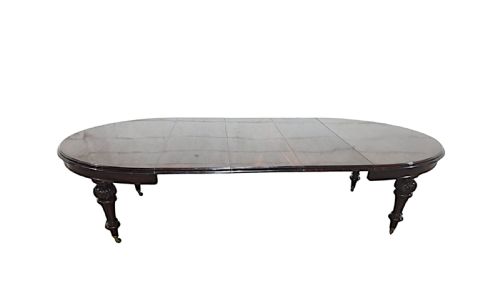
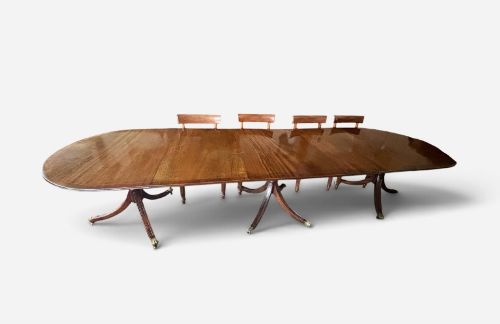
Traditional Mahogany Banquet Table
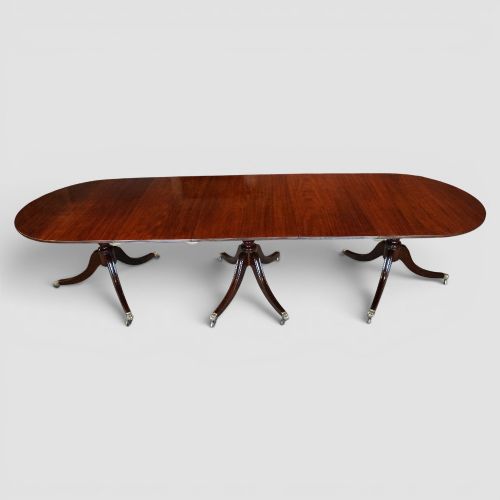
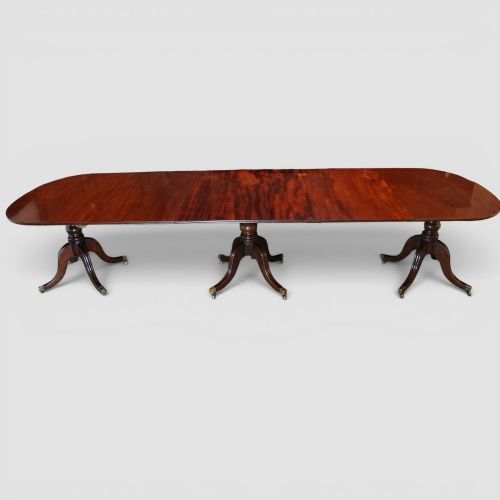
A traditional mahogany banquet table brings immense scale and rich timber grain to large dining rooms, offering numerous seating arrangements for grand gatherings.
Traditional Mahogany Banquet Table
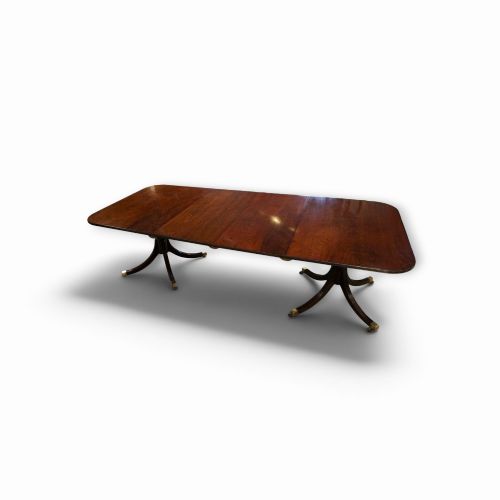
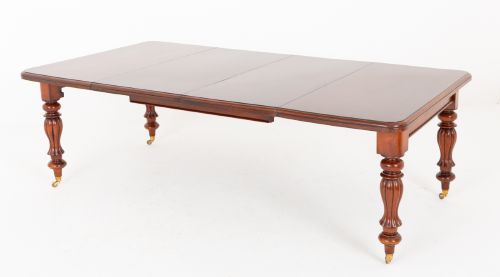
When you search for a traditional mahogany banquet table, you encounter large extending dining formats designed to accommodate upwards of ten to over twenty guests. These impressive pieces predominantly span the Georgian, Regency, William IV, and Victorian periods, alongside later revival iterations from the early twentieth century.
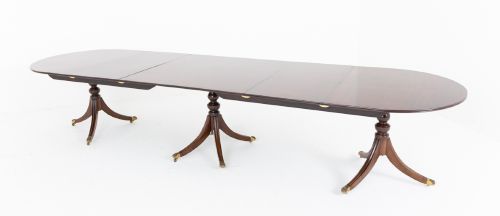
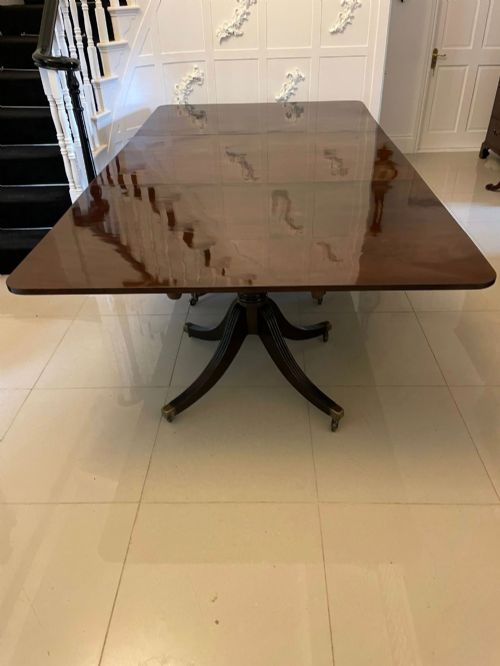
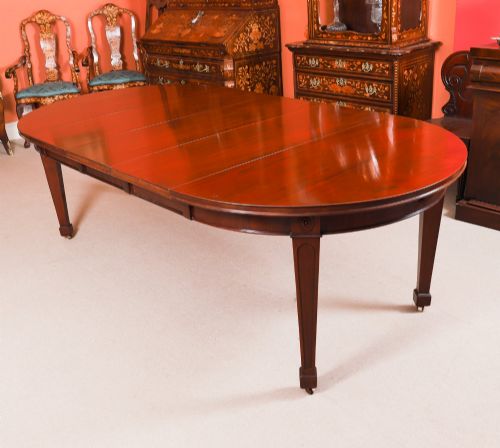
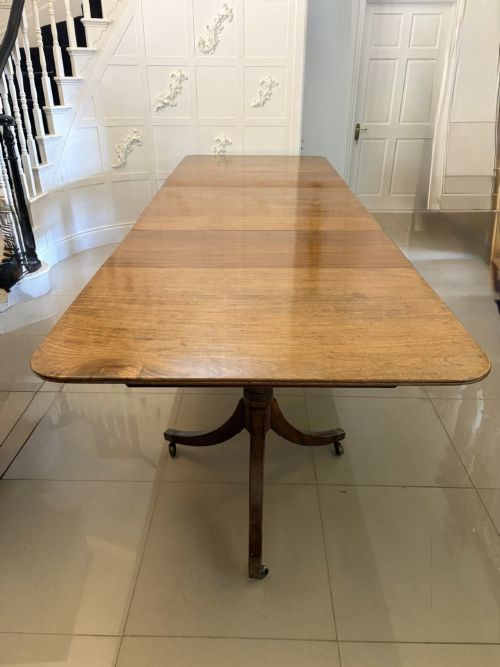
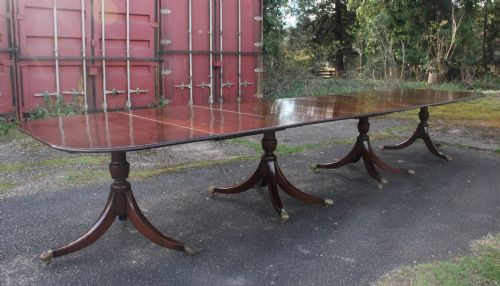
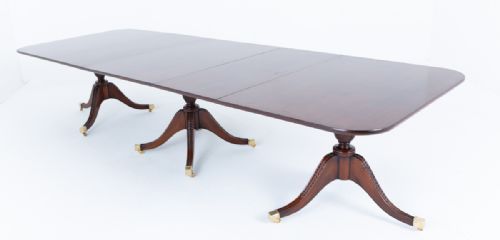
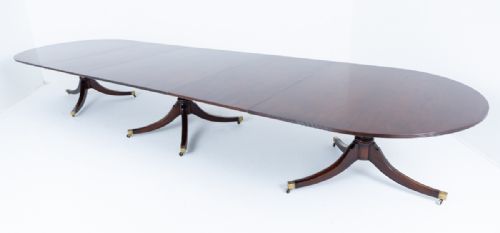
The configurations commonly seen on this page rely on multiple pedestals and removable leaves, allowing the furniture to expand or contract. Twin, triple, and four pillar structures dominate the inventory, frequently accompanied by D-end sections or extra leaves for substantial length.
Originating largely from English and Irish workshops, these grand tables serve primary functions in formal dining settings. Buyers find both authentic period examples and careful revival pieces sharing similar architectural proportions and timber selections.
Materials and construction methods
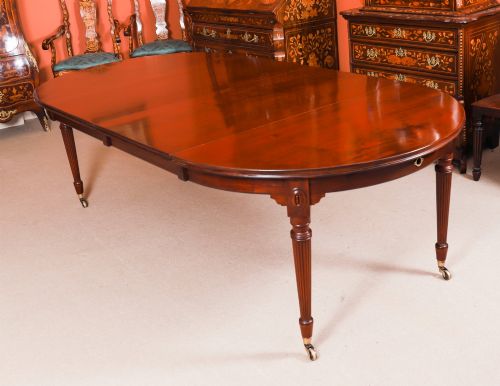
Cabinet makers utilised dense, figured mahogany timber for the primary surfaces, bringing deep colour and pronounced grain patterns to the table tops. Brass fittings, including castors and connecting clips, often support the multi-pillar underframes and facilitate smooth mechanical extension.
Construction relies on sturdy pedestal columns, sometimes reeded or carved, branching into tripod or quadrapod legs that distribute heavy loads evenly. Wind-out mechanisms and drop-in leaves allow carpenters to engineer stable platforms that extend across great lengths without sagging.
Listings feature tables spanning the Georgian, Regency, Victorian, and Edwardian periods alongside twentieth-century revival pieces.
Factors influencing quality and craftsmanship
The distinction between ordinary and superior pieces rests in the selection of figured timber and the precision of the joinery. Tables displaying book-matched veneers, consistent colour across multiple added leaves, and crisply carved pedestal legs command greater appreciation.
Structural integrity also dictates worth, as well-executed extension mechanisms and original brass hardware ensure the heavy timber sections align correctly. Maker attribution, such as stamps from established Lancaster workshops, elevates an example above anonymous workshop production.
Gillows Lancaster·Waring and Gillow
The Traditional Mahogany Banquet Table Glossary
- Pedestal
- A central support column resting on spreading legs that holds up the main dining surface. These pillars allow greater legroom than traditional four-legged tables.
- Extension leaf
- A removable board inserted into the centre of the table to increase its overall length. Multiple leaves allow the furniture to seat anywhere from ten to twenty-six guests.
- D-end
- A table end shaped like a semi-circle, resembling the letter D. When detached or separated from central sections, these ends function as standalone console tables.
- Reeded
- A decorative moulding consisting of parallel convex strips carved directly into wood. This surface treatment frequently appears on the legs and pillars of Regency furniture.
- Wind-out mechanism
- A geared mechanical system operated by a handle that expands or contracts the table frame. This innovation appeared on nineteenth-century extending tables to simplify operation.
Traditional Mahogany Banquet Table: Frequently Asked Questions
How do I operate an extending dining table?
Most period examples utilise either drop-in leaves supported by internal runners or a geared winding mechanism operated via a crank handle. Turning the handle separates the table ends, allowing you to drop additional leaves securely into place.
Ensure the brass alignment pins and clips engage properly to maintain a level surface across all joined sections before laying table settings.
How do I distinguish between original period pieces and revival styles?
Examine the construction methods underneath the table tops, looking for hand-cut joints, timber shrinkage patterns, and period-appropriate hardware like cast brass castors. Revival pieces from the early twentieth century often display standardised mechanical parts and different secondary woods.
Consult the listed period details to determine whether an example dates from the Georgian and Regency eras or emerged during later Victorian and Edwardian revival movements.
How should I care for a mahogany table top?
Protect the polished timber surface from direct heat and moisture by using padded mats and coasters during meals. Regular dusting with a soft, dry cloth preserves the natural lustre of the mahogany grain without building up heavy wax residues.
Keep the room at a stable humidity level to prevent the solid timber and added leaves from warping or splitting over time.