
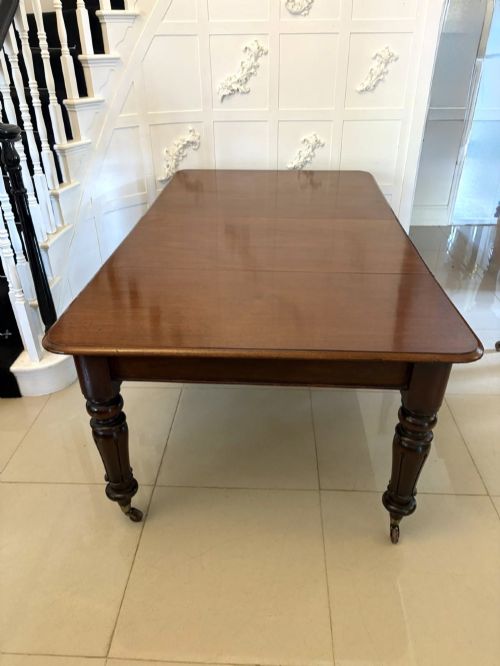
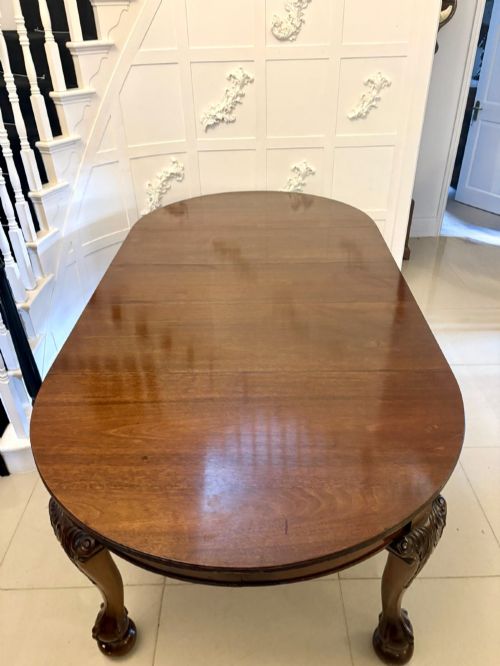
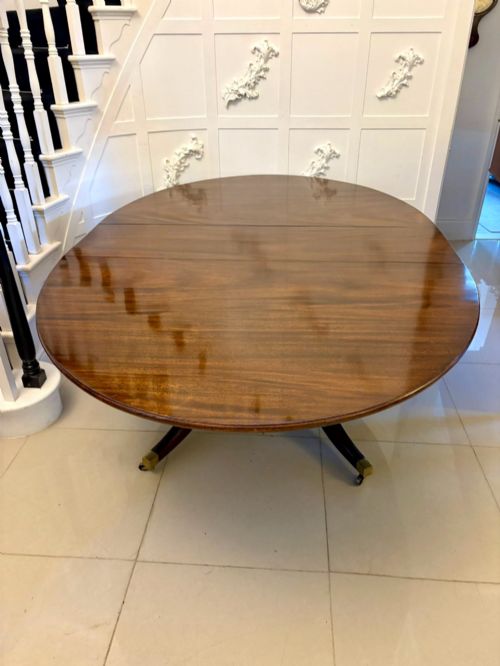


Extending 10 Seater Table
An extending 10 seater table brings family and guests together around solid timber surfaces shaped by generations of dining history.
Extending 10 Seater Table
An extending 10 seater table provides substantial surface area for large gatherings, adapting easily from modest daily meals to full dinner parties through the use of removable leaves or mechanical winding systems. These dining tables appear predominantly in mahogany, shaped by Victorian, Georgian, William IV and Regency cabinet makers.
Buyers looking through this selection will frequently encounter Victorian pieces, alongside earlier Georgian and William IV examples, plus later Art Deco and fruitwood farmhouse designs. The typical form relies on robust pedestals or turned legs to support heavy timber leaves without sagging under weight.
Materials and construction methods
Makers constructed these tables chiefly using dense mahogany and figured mahogany timber, occasionally incorporating brass winding mechanisms, ceramic castors, burr walnut, maple, oak, and fruitwood. Solid timber boards form the main top, whilst internal runners and pull-out frames distribute weight evenly when extended.
Carpenters joined structural elements using traditional mortise and tenon techniques, mounting pedestals securely to heavy plinths or carved claw and ball feet. Surface finishes were hand-polished to highlight the natural grain of the wood.
Distinctions in craftsmanship
Superior examples demonstrate careful timber selection, showing rich figured mahogany grain matched evenly across multiple extension leaves. Lesser pieces employ plain timber veneers or show misalignment between leaves when fully wound out.
The sophistication of the internal mechanism separates standard pieces from the finest work, with smooth winding actions and solid brass fittings indicating higher workshop standards. Carved details, such as claw and ball legs or reeded pedestal columns, reflect the time invested by the original maker.
Joseph Fitter
The Extending 10 Seater Table Glossary
- Extending table
- A dining table equipped with sliding frames, pull-out sections or removable leaves to increase the overall surface length. This design allows hosts to seat ten or more people comfortably.
- Wind-out table
- An extending dining table operated via a mechanical handle and internal screw mechanism. Turning the handle separates or draws together the main sections to accommodate additional leaves.
- Figured mahogany
- Timber cut from specific sections of the mahogany tree displaying dramatic grain patterns like flame or feather. Cabinet makers reserved these choice boards for the visible top surfaces of formal dining tables.
- Pedestal base
- A central column support resting on feet, used instead of standard corner legs. This construction provides greater legroom for diners seated along the sides of large tables.
- Leaf
- A removable board inserted into the centre of an extending table to lengthen the top. Multiple leaves allow the table to shrink or grow depending on the number of guests.
Extending 10 Seater Table: Frequently Asked Questions
How do I operate the extension mechanism?
Most period examples utilise either a manual pull-out frame or a geared screw mechanism operated with a winding handle. Turning the handle rotates internal metal threads that pull the table halves apart.
Once the gap opens sufficiently, drop the extra timber leaves into place and wind the mechanism back to clamp everything securely together.
How many people can realistically sit here?
These tables cater comfortably for ten diners, with many versions accommodating twelve guests when fully extended with all leaves inserted. The generous length prevents crowding along the sides.
Armchairs placed at each end require extra clearance, so check the distance between pedestals or legs before arranging seating.
How do I care for a polished timber top?
Protect the wood from direct heat and moisture by using coasters, placemats and felt pads beneath hot dishes or serving platters. Spills should be wiped away immediately with a dry cloth.
Occasional application of traditional beeswax feeds the timber and maintains a deep lustre without building up heavy chemical residues.
How can I distinguish Victorian from Georgian pieces?
Georgian tables often feature simpler geometric lines, tapered legs and lighter proportions dating from the late eighteenth or early nineteenth century. Mahogany tones tend to be mellow and rich.
Victorian variants from the mid to late nineteenth century frequently display heavier carvings, robust pedestal bases, elaborate claw and ball feet, and darker timber finishes.