



Traditional Low Ottoman
Traditional low ottoman pieces bring practical seating and footrests to a room, drawing on centuries of sturdy carpentry and diverse upholstery.
Traditional Low Ottoman
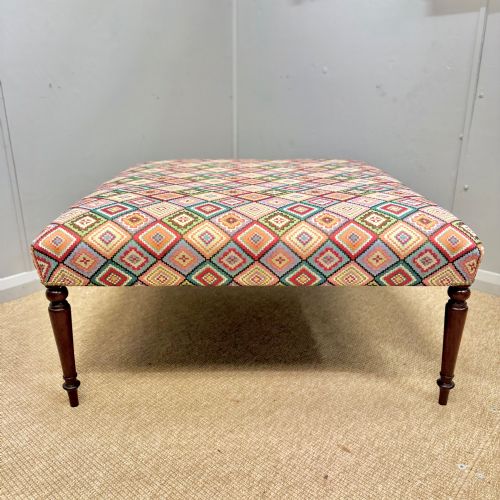
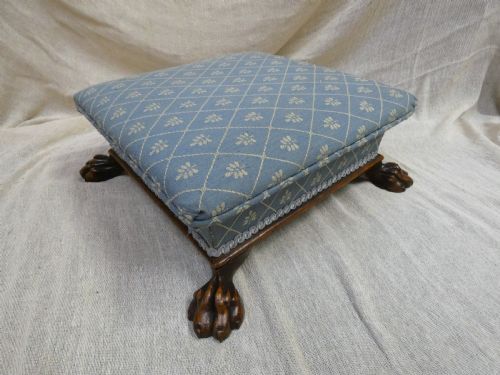
A traditional low ottoman functions primarily as a footstool, centre stool, or low seating option designed for domestic use. These items appear across periods including the Victorian era, Edwardian period, and the early twentieth century, reflecting varied historical influences.
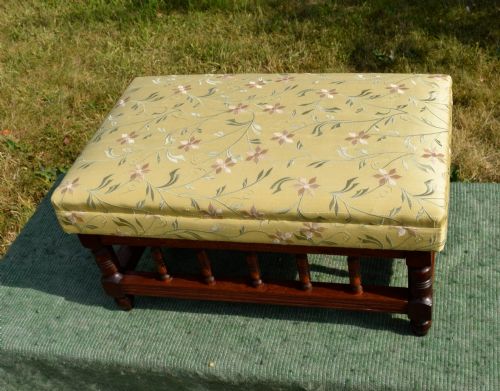
Most examples take the form of footstools or low stools constructed from timbers such as mahogany, oak, walnut, and teak. Buyers encounter forms ranging from square and oblong frames to large country house ottomans resting on brass castors.
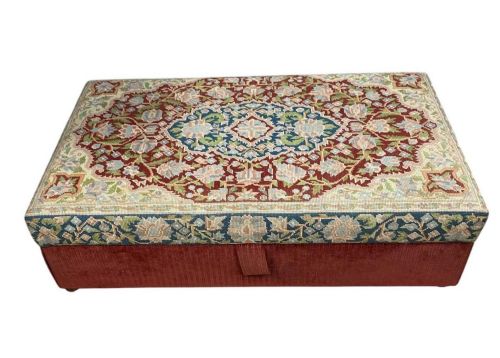
Makers often drew upon established design vocabularies, producing pieces in Queen Anne style, Chippendale revival, and Jacobean revival. Simple unornamented frames sit alongside carved mahogany or rosewood structures upholstered in fabric, wool, leather, and needlework.
How they were made
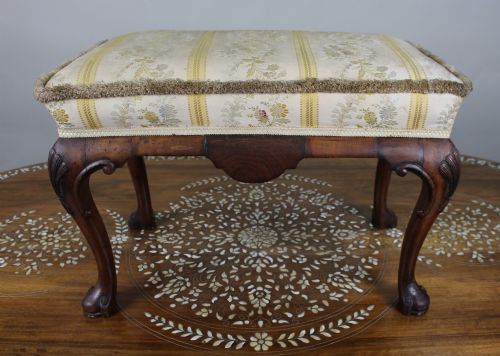
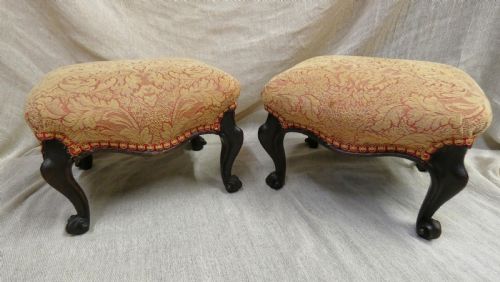
Carpenters constructed the underlying frames using hardwoods like mahogany, walnut, and oak, often incorporating carved details or cabriole legs. Joinery methods secured these timber structures to withstand daily weight and movement.
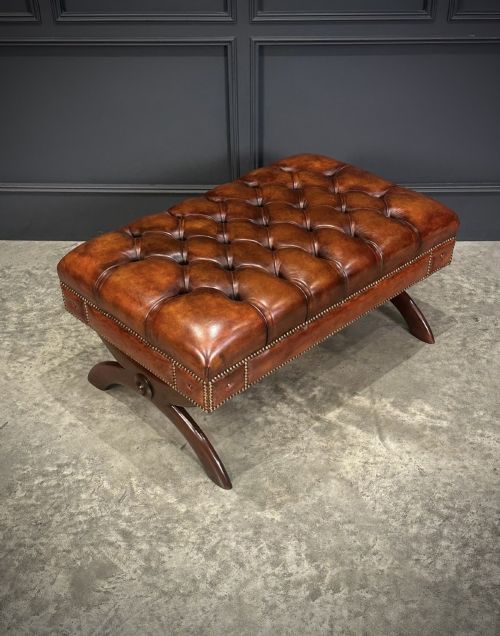
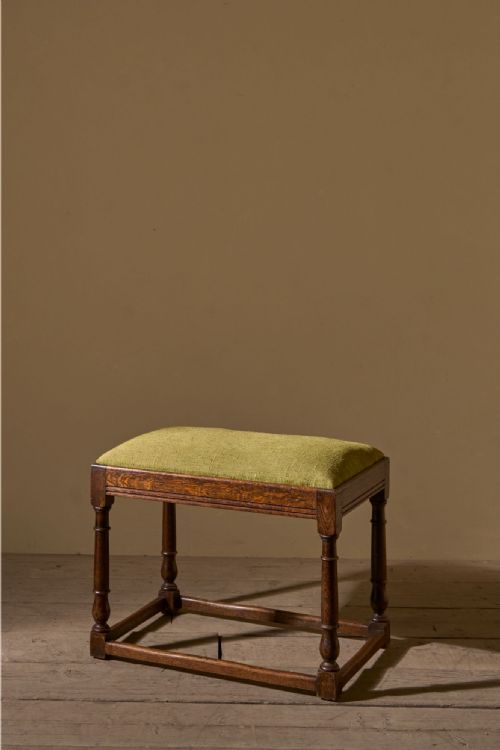
Upholstery formed a central part of construction, utilising materials such as wool, heavy green linen, leather, textile, and woven rattan. Cushion tops and deep buttoning provided comfort, sometimes supported internally by webbing and stuffing.
Traditional Low Ottoman Retail Price Guide 2026
Typical asking prices for traditional low ottoman among the pieces listed under this phrase on Sellingantiques today, from the lower quarter to the upper quarter. They describe what is for sale here now, not the wider market.
Several stools sit low on brass castors, ready to roll across the floor at a moment's notice.
What varies in quality
The refinement of the timber frame dictates much of the standard, separating simple utility benches from finely carved revival pieces. Hand-carved mahogany or walnut structures with balanced proportions and robust joinery stand above plain or loosely assembled frames.
The choice and execution of upholstery materials also determine the grade of a piece. Original needlework, heavy linen, or quality leather properly fitted to the frame indicate greater attention to initial manufacture than basic replacement coverings.
Howard and Sons·Whytock and Reid
The Traditional Low Ottoman Glossary
- Cabriole leg
- A furniture leg that curves outward and then tapers inward, typically ending in a pad or foot. This form appears frequently on Queen Anne and Chippendale style stools.
- Centre stool
- A large stool designed to stand in the middle of a room rather than against a wall. These items often feature generous proportions and substantial upholstery.
- Castor
- A small wheel fitted to the base of a furniture leg to allow easy movement. Brass castors are common on large nineteenth-century footstools.
- Deep buttoning
- An upholstery technique where buttons are pulled deep into the padding to create a geometric pattern of folds. This method secures the filling and adds texture.
- Caned top
- A seating surface woven from rattan or cane strips in an open mesh pattern. This technique provides a light, flexible top for specific stool designs.
Traditional Low Ottoman: Frequently Asked Questions
How do I use a low ottoman?
These pieces serve primarily as footstools before armchairs or as occasional low seating in living spaces and dressing rooms. Their modest height makes them practical for resting feet or providing a convenient perch.
Larger variants can also act as centre pieces or coffee tables when paired with a rigid tray. Their versatility allows them to move easily between different rooms in a traditional interior.
How do I identify a Victorian stool?
Victorian examples often feature dark hardwoods like mahogany or rosewood, sometimes accompanied by deep buttoning or turned legs fitted with castors. The construction tends to be heavy and robust.
Stylistic markers can include late Victorian art nouveau motifs or simpler rectangular frames designed for heavy textile upholstery.
What is a Queen Anne style stool?
Queen Anne style pieces typically showcase walnut timber and characteristic cabriole legs that curve gracefully downward. The overall silhouette remains relatively restrained compared to later revival periods.
Original twentieth-century revivals of this style often mimic early eighteenth-century proportions while retaining the manufacturing methods of their own time.
How do I care for antique upholstery?
Maintenance depends on the specific textile, whether it is wool, leather, heavy linen, or needlework. Regular light brushing helps remove dust from fabric surfaces without damaging the fibres.
Leather elements benefit from appropriate conditioning to prevent drying, while delicate needlework requires protection from direct sunlight to preserve the colours.