




Padded Tapestry Stool
A padded tapestry stool brings tactile warmth and period character to a room, offering a functional low seat or footrest rooted in centuries of craftsmanship.
Padded Tapestry Stool
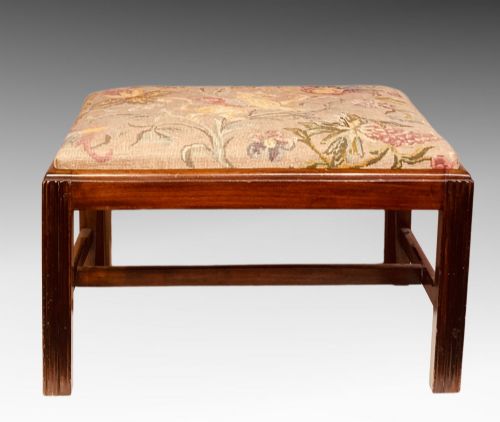
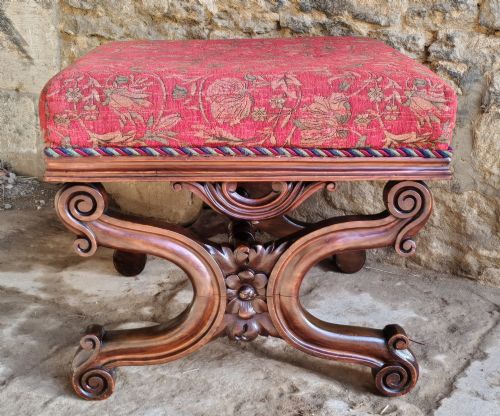
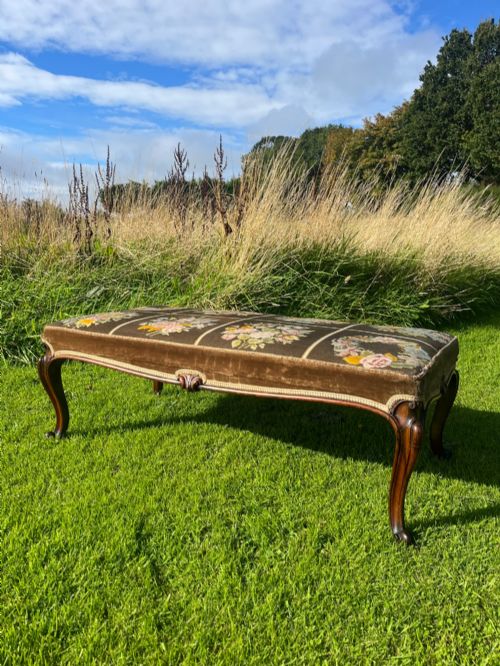
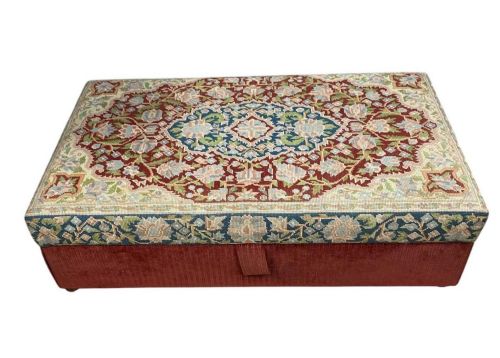
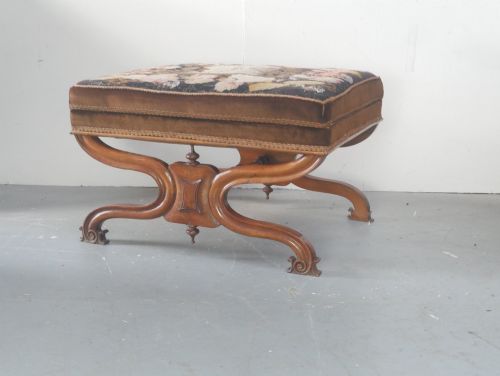
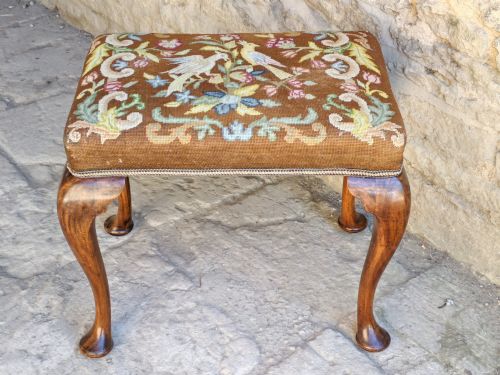
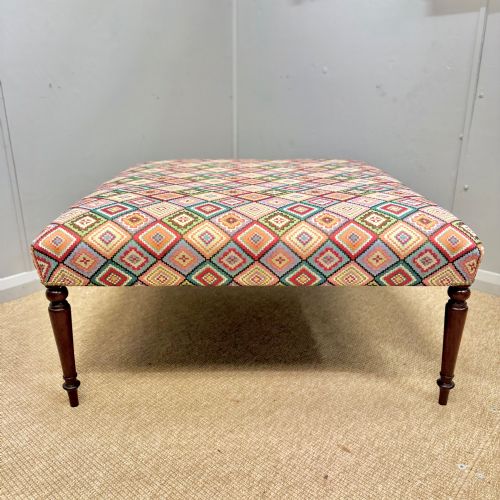
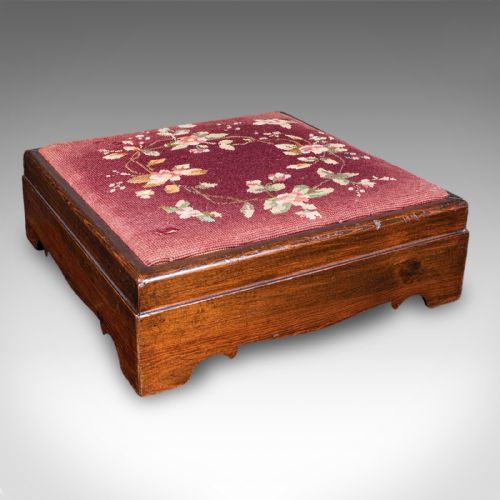
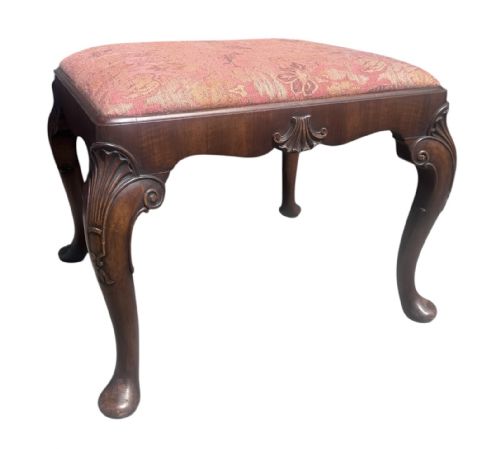
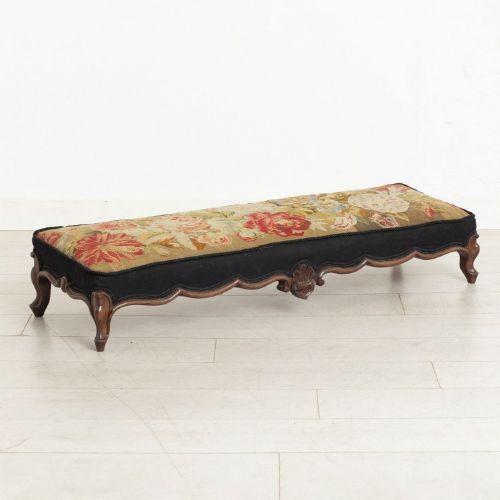
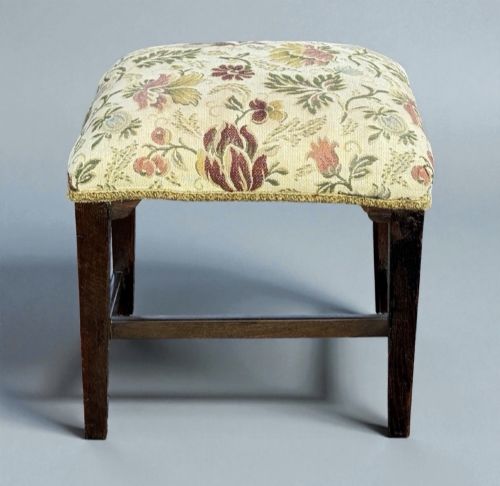
A padded tapestry stool is a low seating piece defined by a textile top and a timber frame, appearing frequently in Victorian, Edwardian and nineteenth century iterations. Buyers encounter forms ranging from compact fireside footstools and dressing table seats to larger ottomans and window benches.
The aesthetic vocabulary spans revival designs including Queen Anne, Chippendale and Georgian styles, alongside Arts and Crafts and aesthetic movement examples. Walnut and mahogany dominate the timber choices, often paired with wool needlepoint, fabric or velvet upholstery.
How they were made
Frames rely on traditional cabinet timbers such as walnut, mahogany, rosewood and pitch pine, shaped with turned, fluted or cabriole legs. Joinery employs classic methods appropriate to the period, from nineteenth century carving to revival joinery.
Upholstery combines textile covers like wool tapestry, needlepoint and velvet with internal padding, supported on wooden or webbed bases. Brass fittings and inlaid details occasionally accent the structural woodwork.
Padded Tapestry Stool Retail Price Guide 2026
Typical asking prices for padded tapestry stool among the pieces listed under this phrase on Sellingantiques today, from the lower quarter to the upper quarter. They describe what is for sale here now, not the wider market.
Listings feature walnut and mahogany predominantly, spanning the seventeenth to the early twentieth centuries.
What varies in quality
Quality rests in the crispness of the timber carving, the selection of dense cabinet woods, and the structural integrity of the frame joints. Elaborate ornamental carving and substantial proportions distinguish finer workshop pieces from simpler domestic seating.
The character of the textile top also determines distinction, with hand-worked needlepoint, tapestry and period fabric retaining historical integrity. The harmony between the upholstery design and the period style of the wooden frame elevates the piece.
Jas Shoolbred
The Padded Tapestry Stool Glossary
- Cabriole leg
- A furniture leg that curves outward and then tapers inward, mimicking an animal's leg. This form is common in Queen Anne and eighteenth century revival designs.
- Cross stretcher
- Structural wooden bars connecting the lower legs diagonally or horizontally for added stability. They often feature central finials or turnings.
- Needlepoint
- A type of canvas work embroidery executed with yarn, frequently seen on nineteenth century footstool tops. It provides a durable and decorative textured surface.
- Window seat
- An elongated stool or bench designed to sit within a bay or recess. These pieces often incorporate upholstered tops and arm supports.
- Ottoman
- A low, fully upholstered seat or footstool lacking a back, sometimes doubling as a storage box. They appear in larger proportions during the Victorian and Regency periods.
Padded Tapestry Stool: Frequently Asked Questions
Where were these stools used?
These pieces served multiple domestic functions near fireplaces, dressing tables and deep windows. They functioned primarily as footrests, low seats or impromptu benches in sitting rooms.
Larger variations also acted as ottomans or work boxes in Victorian drawing rooms. Their modest height made them versatile additions to various rooms in the house.
How do I date a wooden frame?
Dating relies on timber selection, leg shape and construction details characteristic of specific reigns and eras. Walnut and mahogany were favoured at different times, alongside distinct revival movements.
Proportions and carving styles also shift between the Georgian era, the Victorian period and Edwardian revivals. Comparing the structural joinery helps confirm the period of manufacture.
What is needlepoint upholstery?
Needlepoint is a stitched textile worked on an open-weave canvas backing using wool or silk threads. It creates a firm, decorative surface ideal for heavy daily use on footstools.
Many period pieces retain their original needlework depicting floral or geometric patterns. This textile technique remains a defining visual trait for nineteenth century examples.
How do I clean the wooden frame?
Maintenance involves gentle dusting with a dry lint-free cloth to preserve the polished timber surface. Avoid modern silicone sprays or harsh chemical polishes that can damage antique finishes.
Applying traditional beeswax occasionally nourishes older woods like mahogany and walnut. Keep the piece away from direct heat sources and strong sunlight to protect the wood and fabric.