


Traditional Livestock Painting
Traditional livestock painting captures the agrarian heart of past centuries through oil on canvas and watercolour, portraying prized beasts in pastoral settings.
Traditional Livestock Painting
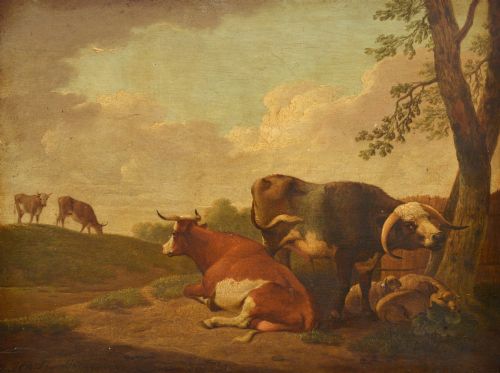
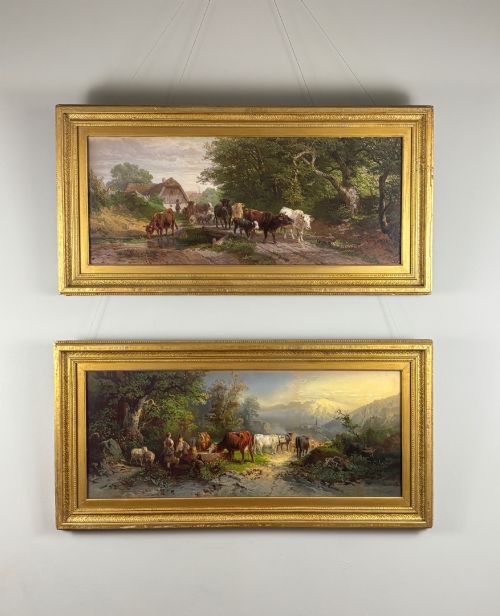
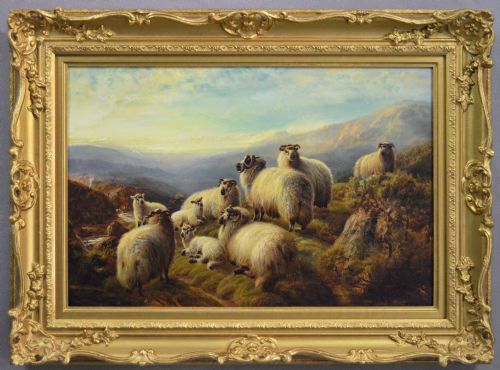
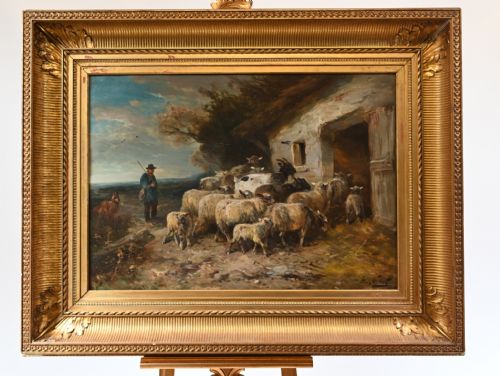
A traditional livestock painting typically presents cattle, sheep, and horses within detailed rural and pastoral landscapes. These works originate predominantly from the eighteenth and nineteenth centuries, spanning Georgian, Victorian, and early twentieth-century periods.
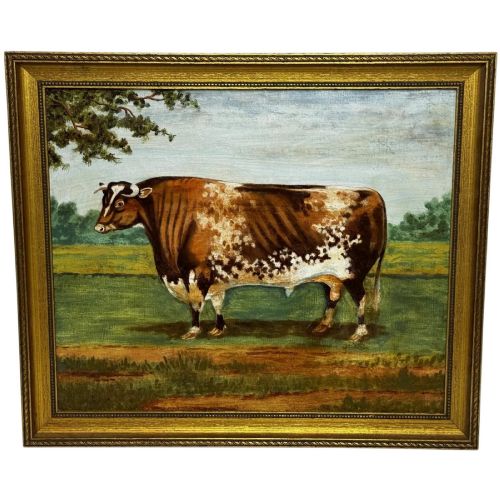
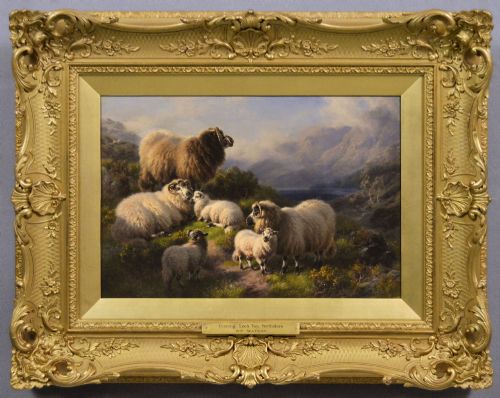
Collectors encounter oil on canvas compositions alongside occasional watercolours, housed in period frames of giltwood, gesso, and gilded wood. The subjects range from individual portraits of prize-winning shorthorn bulls to sweeping flocks resting in Highland or coastal terrain.
Materials and Methods
Artists relied primarily on oil paint applied to stretched canvas, building rich textures and atmospheric depths through layered pigments. Watercolours on paper also appear, capturing lighter tonal gradations in rural scenes.
Frames formed an integral part of the finished piece, utilising carved wood finished with gesso and gold leaf. These ornate surrounds provided structural support and visual definition suited to nineteenth-century fine art presentation.
Several canvases feature meticulously rendered chickens and cockerels keeping a watchful eye over grazing cattle.
Distinctions in Execution
The anatomical precision of the animals distinguishes superior compositions from standard studio output. Master artists rendered bone structure, muscle tone, and fleece texture with convincing realism.
Atmospheric integration separates accomplished works from ordinary farmyard records. High-quality examples anchor the livestock firmly within a coherent landscape of light, weather, and topography rather than placing isolated figures against a generic backdrop.
Hendrik Willem Schweickhardt·Johann Friedrich Voltz·Henry Schouten·William Henry Mander·Thomas Sidney Cooper·Frederick Septimus Lewis·Andre de Moller·Eugene Joseph Verboeckhoven·Heinrich Harder·Julius Caesar Ibbetson·Charles Jones·Arthur Charles Dodd·Claude Cardon·John W Morris·Edgar Hunt·Henry Cheadle·William Sidney Cooper·William Huggins·Louis Marie Dominique Robbe
The Traditional Livestock Painting Glossary
- Animalier
- A nineteenth-century artistic focus on the realistic portrayal of animals. Painters in this tradition studied livestock and wildlife with scientific and aesthetic intent.
- Pastoral
- Pertaining to rural life and idealized country scenes. These compositions emphasise tranquil landscapes inhabited by shepherds, herdsmen, and farm animals.
- Giltwood
- Timber that has been coated with a thin layer of gold leaf or gold paint. It frequently forms the decorative surface of nineteenth-century picture frames.
- Gesso
- A plaster-like mixture applied to wood as a base for gilding or painting. It allowed craftsmen to mould intricate relief ornamentation on antique frames.
Traditional Livestock Painting: Frequently Asked Questions
What subjects feature in traditional livestock painting?
These works primarily depict cattle, sheep, horses, and poultry set within rural, agricultural, or pastoral landscapes. Scenes often feature prized bulls, grazing flocks, and farmyard activities.
Artists frequently documented specific breeds of livestock that were prized by farmers and landowners during the eighteenth and nineteenth centuries. The focus remained on the physical traits of the animals combined with regional topography.
How do I date a traditional livestock painting?
Dating relies heavily on stylistic conventions, clothing styles of any figures present, and the framing materials. Eighteenth-century works often display softer romanticism, whereas Victorian pieces lean towards detailed realism.
Signatures, stretcher construction, and canvas stamps offer further chronological clues. Examining the composition helps align the piece with documented working periods of known animal painters.
Where should I hang an oil painting of livestock?
These works suit traditional reception rooms, studies, and dining spaces where their rural subject matter creates a warm, grounded atmosphere. Pairing them with wooden furniture complements the earthy tones of the canvas.
Placement should avoid direct sunlight to protect the oil pigments and the delicate gilding on antique frames. Stable indoor humidity preserves both the canvas tension and the underlying wooden stretcher.
What is the difference between oils and watercolours here?
Oil paintings on canvas offer richer texture, deeper colour saturation, and greater durability over centuries. They represent the primary medium for substantial nineteenth-century animal portraits and landscapes.
Watercolour paintings on paper provide a lighter, more translucent quality, usually preserved beneath glass in delicate frames. These works capture subtle atmospheric effects in rural and coastal scenes.