


Traditional Livestock Art
Traditional livestock art centres on oil and watercolour paintings of cattle, sheep, and farm animals set within rural landscapes.
Traditional Livestock Art
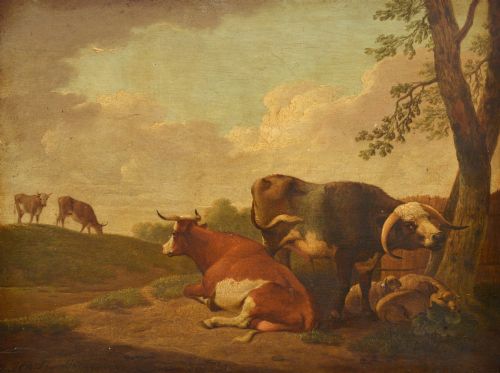
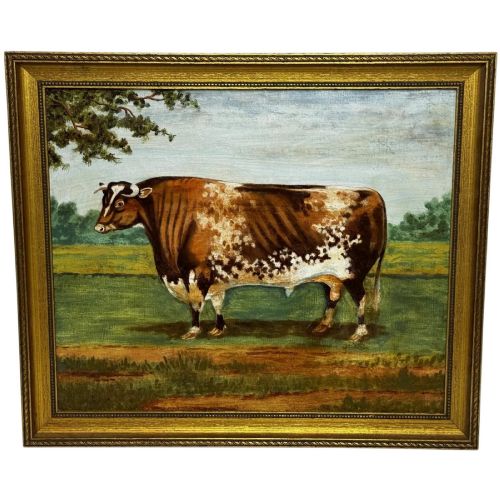
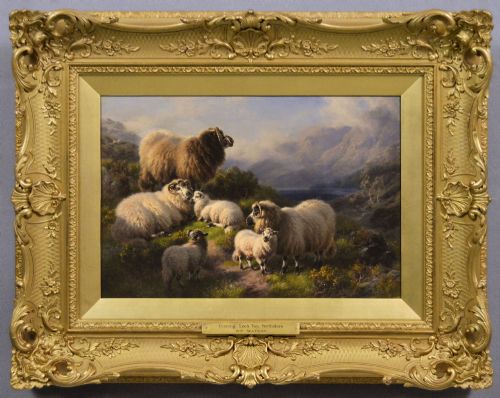
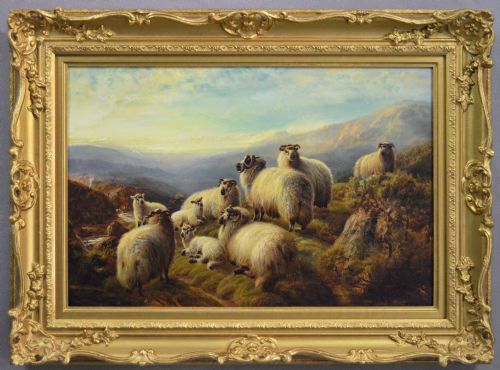
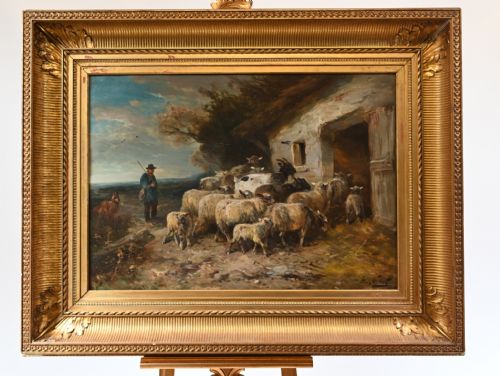
Traditional livestock art encompasses oil paintings and watercolour paintings produced across the eighteenth, nineteenth, and early twentieth centuries. These works frequently depict prized shorthorn bulls, highland sheep, and farmyard scenes rendered by British and continental European schools.
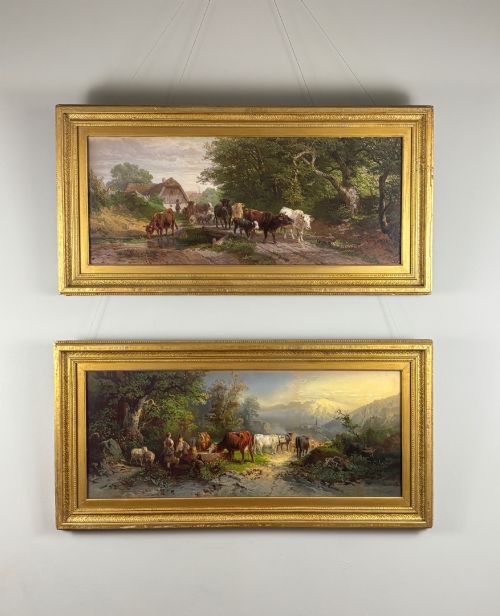
Buyers encountering this genre will most commonly find nineteenth-century oil on canvas pieces framed in giltwood or gesso. Subjects range from solitary animals resting by rivers to large pastoral landscapes featuring cattle gathered near watering holes.
How They Were Made
Artists in this field applied oil paint or watercolour onto canvas, panel, or paper surfaces using traditional brushwork techniques. Canvases were often stretched and secured within wooden frames finished with ornate gesso and gold leaf.
Framing materials such as burr wood and gilded wood complemented the detailed pastoral compositions, preserving the physical integrity of the paintings over successive centuries.
Several sheep painted centuries ago appear remarkably well-fed, suggesting artists may have occasionally flattered the livestock as much as the landowners.
What Varies in Quality
Quality within this category depends upon the anatomical precision of the animals and the atmospheric depth of the surrounding landscape. Master painters captured the specific musculature and textures of livestock with convincing realism, whereas lesser works rely on generic forms.
The sophistication of the palette and the preservation of the original canvas and giltwood frame further distinguish standard decorative pieces from works executed by accomplished named painters.
Hendrik Willem Schweickhardt·William Watson Jnr·Johann Friedrich Voltz·Robert Watson·Henry Schouten·A M Gauci·William Henry Mander·Thomas Sidney Cooper·Frederick Septimus Lewis·Andre de Moller·Eugene Joseph Verboeckhoven·Heinrich Harder·Julius Caesar Ibbetson·Charles Jones·Arthur Charles Dodd·Claude Cardon·John W Morris·Henry Brittan Willis·Edgar Hunt·Henry Cheadle·William Sidney Cooper·W A Clark·William Huggins·A Davis·Louis Marie Dominique Robbe
The Traditional Livestock Art Glossary
- Animalier
- A nineteenth-century artistic genre dedicated primarily to the realistic portrayal of animals. This term helps identify works focusing closely on the physical form of livestock.
- Gesso
- A plaster-like mixture applied to wooden frames before gilding. It provides a smooth base for gold leaf application in period frames.
- Pastoral
- Pertaining to rural life and the tending of livestock. These scenes typically present idealised or tranquil views of the countryside.
- Canvas
- A heavy woven fabric used as a surface for oil painting. It remains the standard support medium for the majority of nineteenth-century works in this genre.
Traditional Livestock Art: Frequently Asked Questions
What periods do these paintings cover?
The available works span from the eighteenth century through the Victorian era and into the early twentieth century. Most pieces date from the nineteenth century when pastoral painting reached significant popularity.
Examples range from eighteenth-century Georgian compositions to Edwardian watercolours, reflecting changing artistic approaches to rural subjects over time.
How should I display traditional livestock art?
These pieces suit traditional interiors, libraries, or dining rooms where their rural subjects complement period architectural details. Pairing them with their original giltwood or burr frames enhances their visual presence.
Keep paintings away from direct sunlight and excessive moisture to protect the oil paint, canvas, and delicate gesso frame mouldings.
How can I identify the artist?
Many works bear signatures or initials directly on the canvas surface, often placed near the lower corners of the landscape. Documentation or framing labels sometimes provide additional provenance.
Stylistic elements, such as the specific treatment of light in British and Belgian rural landscapes, also help attribute unsigned works to particular schools.