


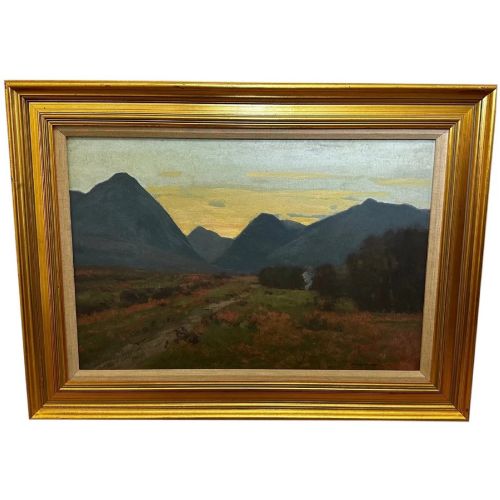
Traditional Landscape Canvas
Traditional landscape canvas works capture rural scenery, woodland views and pastoral scenes, offering buyers a connection to historic countryside artistry.
Traditional Landscape Canvas
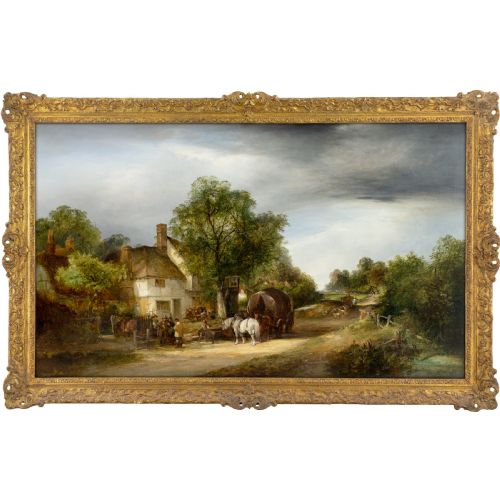
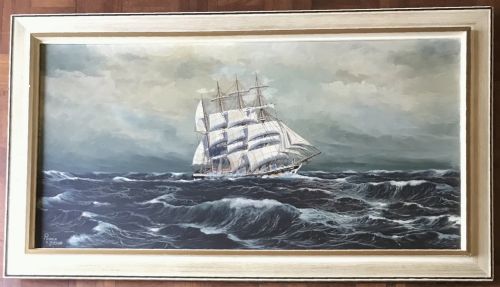
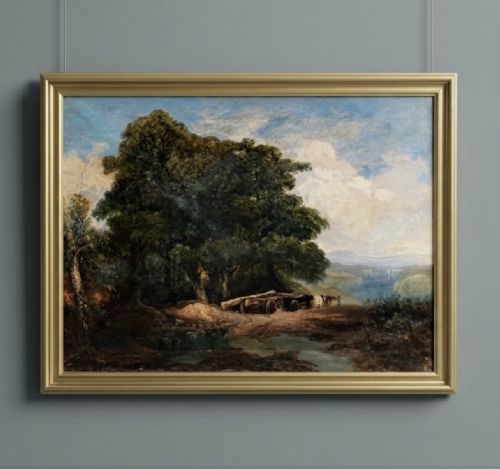
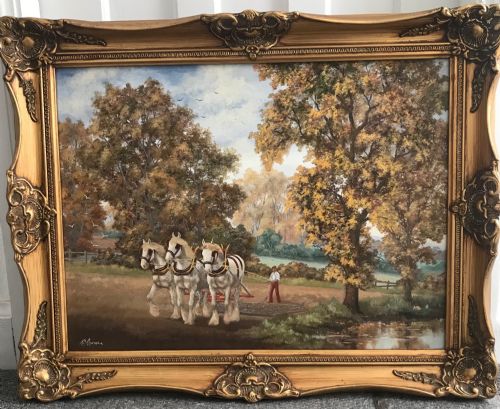
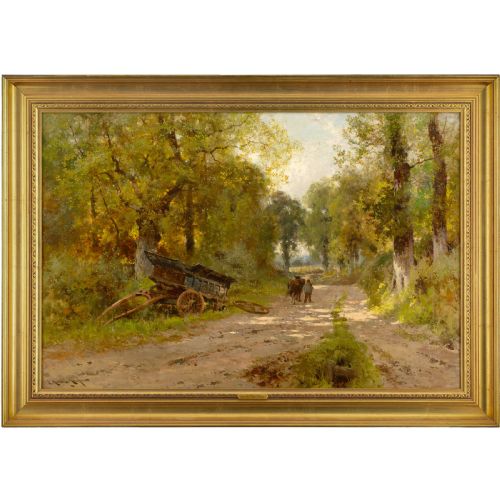
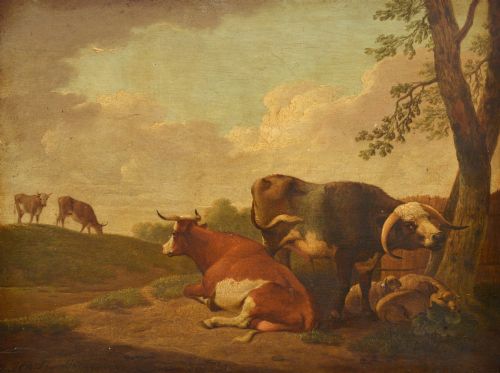
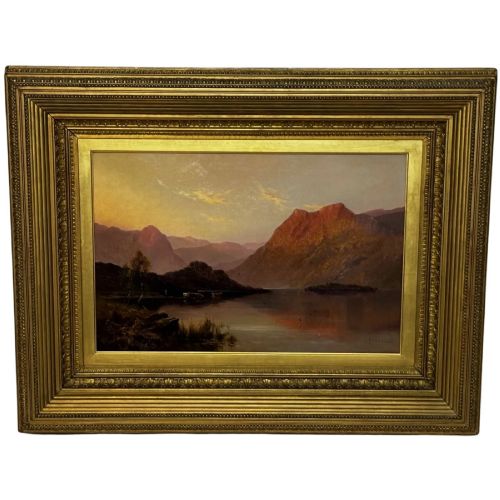
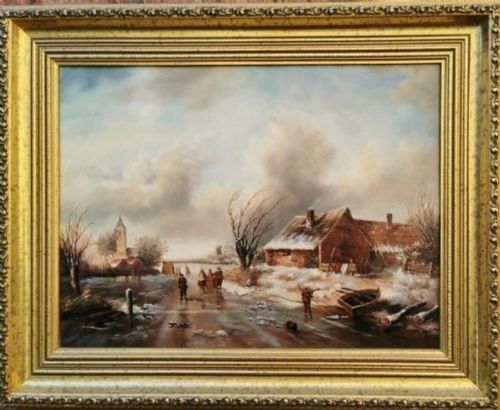
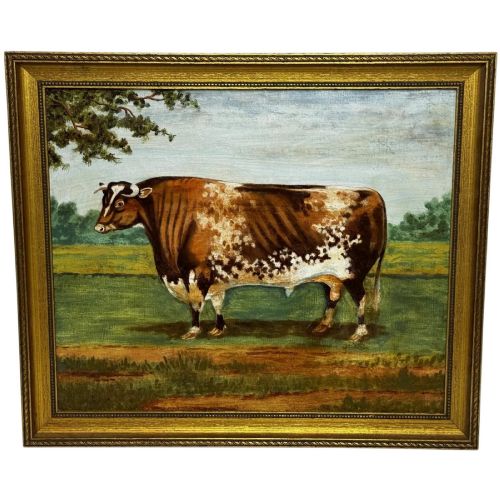
A traditional landscape canvas depicts rural vistas, riversides, woodland paths and pastoral agricultural life set against open skies. These works record historic views of the countryside, coastal areas and mountain ranges painted by British and European artists. Buyers searching for a traditional landscape canvas encounter oil paintings originating primarily from the eighteenth, nineteenth and early twentieth centuries. The selection also includes mid-twentieth century works created in established historical styles.
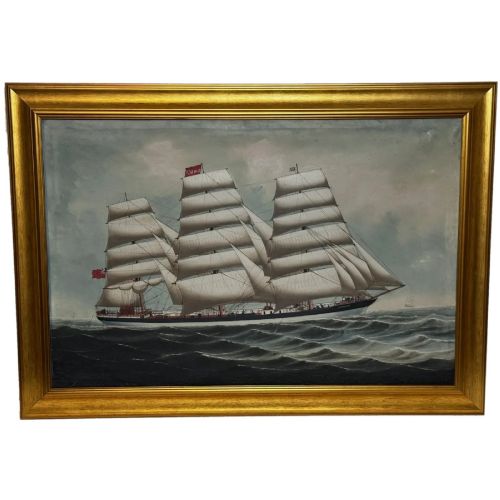
The subjects range from quiet river valleys and harvest fields with figures to grand mountainous terrain and coastal seascapes. Many pieces display specific regional locations across Britain, Scotland and continental Europe, framed by period wood and giltwood surrounds. These paintings serve as focal points for traditional interiors, bringing historical depth and atmosphere to domestic rooms.
Materials and construction methods
Artists painted primarily with oil paint applied to woven canvas supports stretched over wooden frames. The pigment mixtures created depth and texture across pastoral scenes, marine views and woodland compositions. Oil paint allowed workers to build rich layers of colour, capturing shifting light on water, foliage and distant hillsides.
Finished canvases were secured within wooden frames, frequently enhanced with carved gesso and giltwood ornamentation. These frames provided structural support while complementing the visual weight of the oil paintings. The combination of durable canvas, stable oil pigments and timber framing ensured the survival of these artworks across centuries.
Listings feature works spanning from the eighteenth century through the 1960s, executed in oil on canvas with wood and giltwood framing.
Distinctions in artistic execution
Quality rests in the handling of light, atmospheric perspective and anatomical precision within figures and animals. Finer examples demonstrate confident brushwork that defines foliage, water reflections and cloud formations with clarity and balance. Weaker works display rigid composition and repetitive application without naturalistic depth.
The preservation of the original canvas surface and the integrity of the paint layers influence the standing of a piece. Works retaining their initial giltwood frames and clear artist signatures or attributions command stronger interest. Evidence of skilled restoration work preserves a painting's character, whereas heavy overpainting obscures the original hand.
Richard Sebastian Bond·William Beattie-Brown·William H Myers·George Graham·John Horace Hooper·Reginald Arthur Borstel·Hendrik Willem Schweickhardt·Alfred Fontville de Breanski Jr·George Houston·Thomas Barker of Bath·Thomas W Lascelles·David Bates·Thomas Smythe·Robert John Hammond·Walter Heath Williams·Thomas Creswick·Thomas Sidney Cooper·John Sargent Noble·Henry H Parker·Robert Watson·Albert Rieger·William Watson Jnr
The Traditional Landscape Canvas Glossary
- Oil on Canvas
- A painting technique where pigmented oil is applied to a woven fabric support. This method allows for subtle blending and rich texture.
- Giltwood
- Timber carved and coated with gold leaf or metallic gilt finish. It forms the decorative surface of period picture frames.
- Gesso
- A plaster mixture applied to wooden frames as a base for gilding. It provides a smooth surface for detailed moulding.
- Victorian Pastoral
- A nineteenth-century artistic style focusing on idealized rural scenes and agricultural life. These works celebrate peaceful countryside existence.
- British School
- A classification for paintings produced by artists trained or working in Britain. It encompasses various regional styles across multiple centuries.
Traditional Landscape Canvas: Frequently Asked Questions
How do I identify a nineteenth-century oil painting?
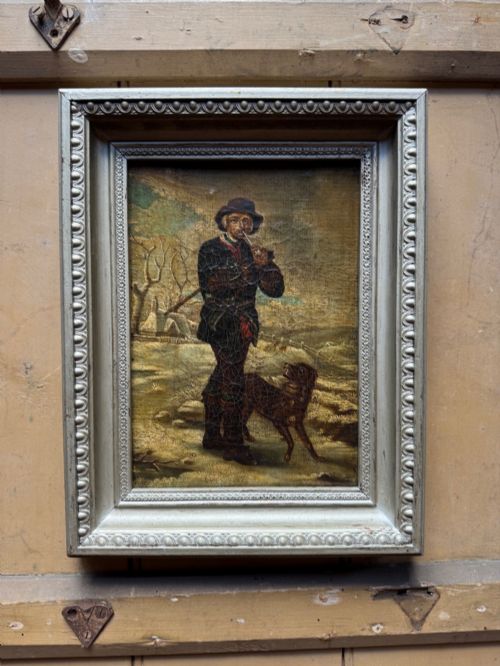
Nineteenth-century oil paintings on canvas often show characteristic craquelure, which is the fine network of microscopic cracks in aged oil paint. Examining the stretcher frames and canvas backing reveals period timber construction methods and older nails or wedges.
Signatures, artist plaques and handwritten inscriptions on the reverse provide further clues to the date and origin. Comparing the style to documented works by contemporary painters helps confirm the period.
What subjects are common in these landscape artworks?
Common subjects include pastoral scenes with livestock, river valleys, woodland paths with figures, and coastal marine views. Artists frequently recorded agricultural activities such as ploughing, harvesting and tending to cattle or sheep.
Regional topography across England, Scotland and continental Europe inspired many compositions. These scenes reflect a romanticized view of rural life and natural scenery.
How should I care for an antique oil painting?
Keep antique oil paintings away from direct sunlight, high humidity and sudden temperature fluctuations. These environmental controls prevent the canvas from warping and the oil paint from cracking or fading.
Dust the canvas surface and frame gently with a soft, dry, lint-free cloth without applying pressure. Avoid using liquid cleaners or chemical solvents on the paint layer or giltwood frame.
Are original giltwood frames important for these artworks?
Original giltwood frames add historical context and aesthetic harmony to antique oil paintings. A matching period frame indicates that the artwork has been preserved intact alongside its presentation surround.
Frames featuring hand-carved gesso ornamentation complement the craftsmanship of the canvas within. While paintings can be reframed, period surrounds contribute to the overall integrity of the piece.