


Traditional Lake Painting
A traditional lake painting brings water, mountains and changing light onto the wall through the hand of the artist.
Traditional Lake Painting
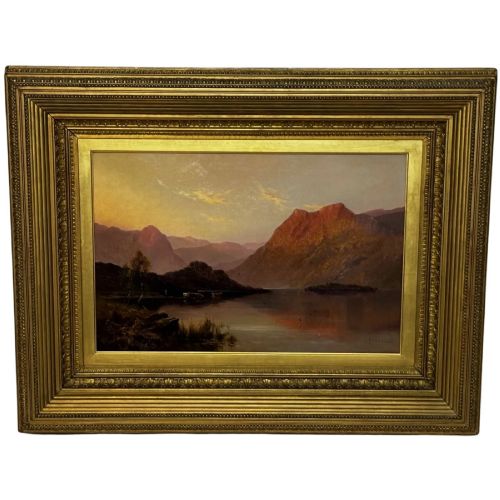
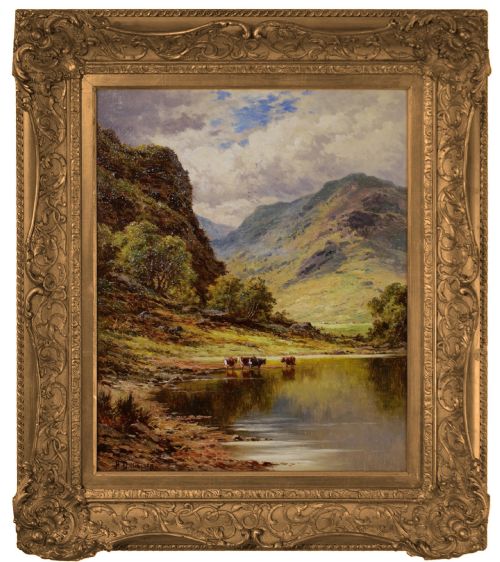
A traditional lake painting captures natural bodies of water surrounded by mountains, valleys, and countryside across canvas and wood panels. These works emerge largely from the nineteenth century, extending into Edwardian and mid-century periods through British and European schools.
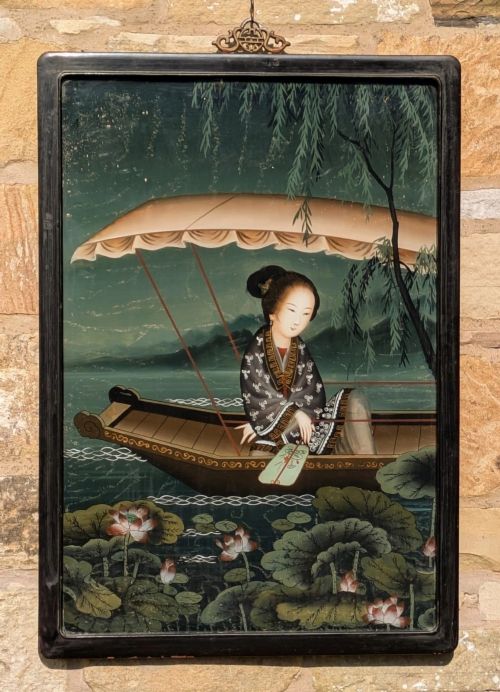
The dominant forms on this page include oil paintings, watercolours, and framed artworks depicting specific locations such as Scottish highlands, Cumbrian waters, and alpine ranges. Viewers frequently encounter framed canvases alongside occasional painted glass panels and panels showing figures near the water.
Victorian and Edwardian landscapes dominate the selection, often signed by known artists or attributed to regional British and European schools. Buyers encounter peaceful summer views, moody mountain passes, and winter scenes featuring frozen lakes.
Materials and execution
Artists painted primarily with oil paint on canvas or wood panels, building up layers of pigment to capture the depth of water and sky. Watercolours appear on paper works, offering a lighter treatment of light and atmosphere.
Frames typically consist of giltwood and gesso, providing ornate or simple borders that complement the traditional subjects. Glass appears both as a protective covering for works on paper and as the literal ground for reverse-painted scenes.
Makers applied preparatory grounds to canvas and panels before laying down paint with brushes and occasionally palette knives. Leaded glass windows incorporate hand-painted countryside and lake scenes fired onto the material.
Listings feature canvases, wood panels, and glass windows spanning the eighteenth to the mid-twentieth century.
Factors of quality
Quality rests upon the handling of light, atmosphere, and spatial depth within the landscape. Superior works convey the movement of water and the weight of clouds with confident brushwork rather than mechanical repetition.
The skill of the artist and the documentation of provenance distinguish finer examples from standard decorative works. Signed pieces by established painters demonstrate a higher mastery of composition and colour harmony.
The preservation of the original paint surface and the condition of the supporting canvas or panel dictate the integrity of the piece. Contemporary frames that suit the period enhance the overall presentation without overpowering the artwork.
Alfred Fontville de Breanski Jr·Henry H Parker·Charles Leslie·Giulio Cecchini·James Gunson Atkinson·John Douglas Perrett·Joseph Farrington RA·Stephen Enoch Hogley·Alexis De Leeuw·Alfred de Breanski Snr·Benjamin Williams Leader·William Mellor·Percy Lancaster
The Traditional Lake Painting Glossary
- Oil on canvas
- A painting technique using pigment suspended in drying oils applied to a stretched cloth support. This combination allows for rich colour blending and textured impasto application.
- Giltwood
- Wood carved and coated with gold leaf or a gold-coloured metallic finish. It frames traditional artworks with reflective brilliance.
- Gesso
- A paint mixture consisting of a neutral binder mixed with chalk, gypsum, or pigment. It serves as a smooth preparation base for wood panels and frames before gilding.
- Reverse painting on glass
- An art form where the image is painted directly onto the back of a glass sheet and viewed from the front. This technique produces a glossy surface finish.
- Leadeded glass
- Glass pieces joined together with lead cames to form a window panel. Hand-painted scenes appear directly upon the glass segments.
Traditional Lake Painting: Frequently Asked Questions
What subjects appear in a traditional lake painting?
These works depict natural bodies of water, including Scottish lochs, Cumbrian tarns, and alpine lakes surrounded by mountains. Scenes often incorporate figures, boats, camps, or native wildlife beside the shore.
Compositions range from calm summer evenings to passing rain showers and frozen winter landscapes with skaters. The geographical focus spans British, European, and occasionally Asian locations.
How do I date a traditional lake painting?
Dating relies on stylistic clues, framing materials, artist signatures, and inscriptions recorded on the reverse of the canvas or panel. Nineteenth-century works frequently display romantic or impressionist influences with naturalistic palettes.
Victorian and Edwardian pieces often carry specific dates or artist biographies within the listing details. Costume of any figures depicted also provides a reliable indicator of the period.
Are these paintings signed by the artist?
Many examples feature artist signatures, initials, or contemporary gallery inscriptions on the front or back of the work. Attribution to specific schools or known painters appears where stylistic evidence supports the origin.
Unsigned works remain common, attributed instead to nineteenth-century or Edwardian British and European traditions based on technique and materials.