



Traditional Ladder Back
Traditional ladder back seating brings tactile domestic heritage into modern rooms through honest construction and woven rush or fabric seats.
Traditional Ladder Back
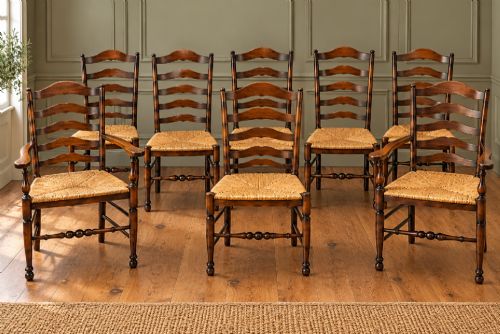
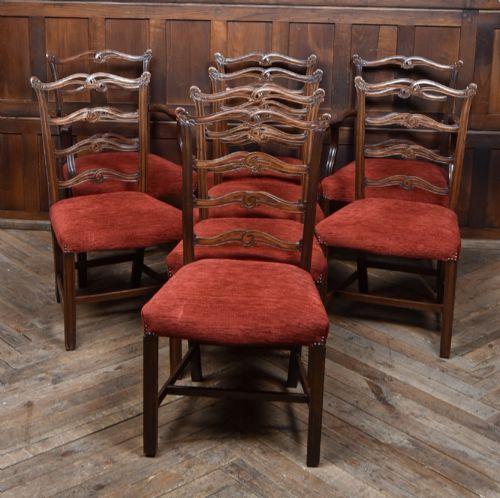
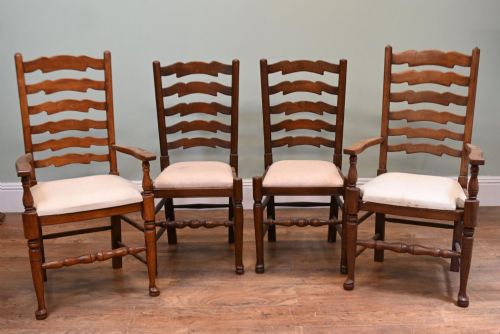
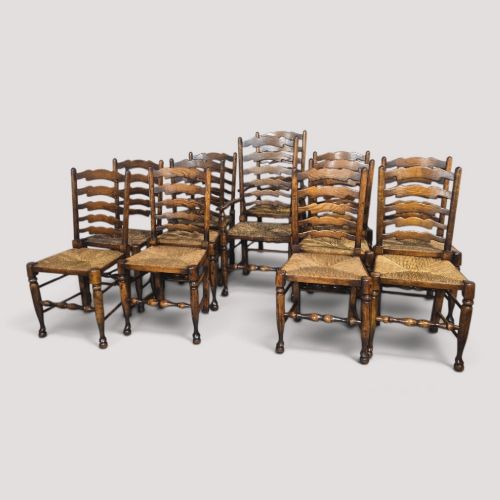
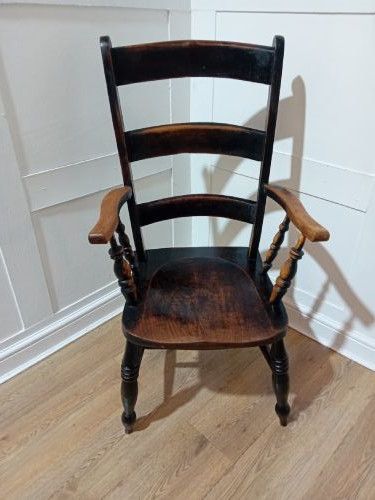
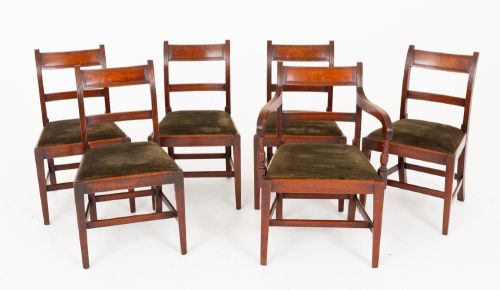
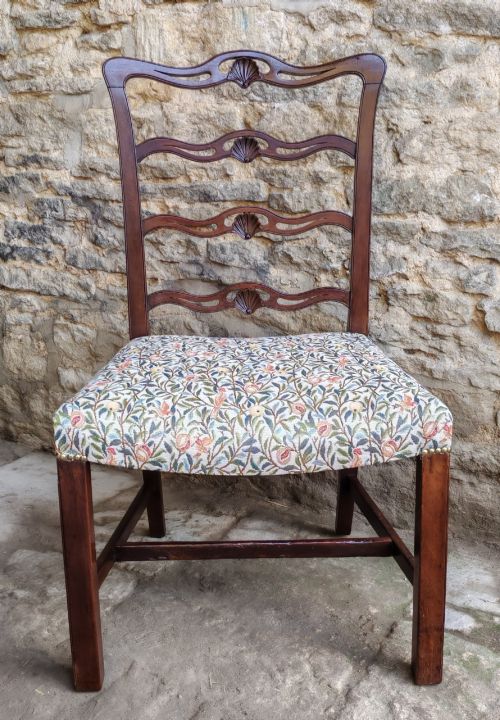
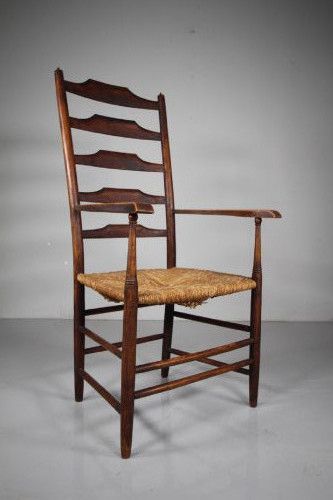
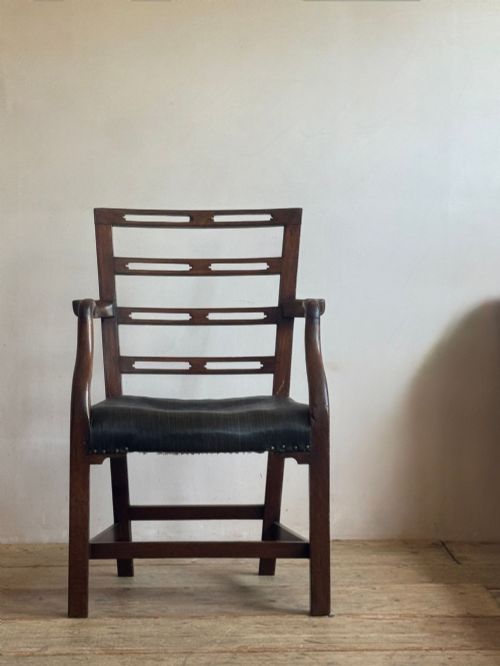
A traditional ladder back chair relies on horizontal slats set between two upright posts, a form appearing across the eighteenth, nineteenth, and early twentieth centuries in varying regional guises. Buyers encounter everything from robust country vernacular ash and elm examples to refined mahogany sets influenced by Georgian and Chippendale aesthetics.
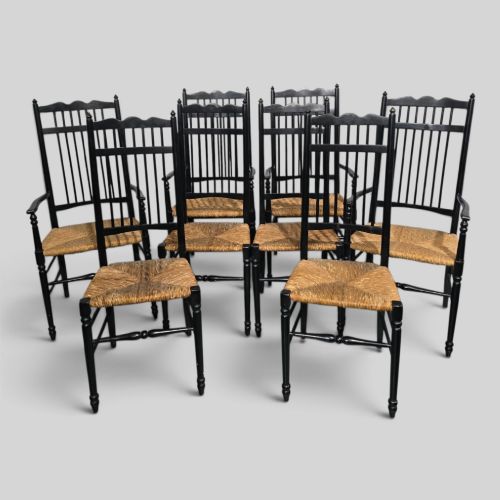
The regional variety spans Lancashire and Cheshire styles alongside Dutch and French interpretations, offering single chairs, carvers, and rocking chairs. Sets range from smaller gatherings of four or six up to twelve pieces, often retaining rush or fabric seating pads.
Makers utilised native hardwoods such as oak, ash, and beech for country seating, while urban workshops turned to mahogany for formal dining rooms. This mix bridges rustic farmhouse interiors and formal period dining spaces with equal ease.
Materials and Construction
Joiners shaped solid timbers like oak, ash, elm, and mahogany using turning lathes and drawknives to form the uprights and horizontal slats. Turned spindles and shaped crest rails provide structural rigidity while supporting the back during use.
Seats utilise twisted rush or woven fabric stretched tightly across the wooden frames to create a resilient platform. Pegged joints and mortise-and-tenon construction hold the frame together without relying on modern metal fasteners.
Traditional Ladder Back Retail Price Guide 2026
Typical asking prices for traditional ladder back among the pieces listed under this phrase on Sellingantiques today, from the lower quarter to the upper quarter. They describe what is for sale here now, not the wider market.
A sturdy child's rocking chair brings miniature craftsmanship to the fireside alongside full-sized kitchen armchairs.
Quality and Distinction
The finesse of the horizontal slat shaping dictates the visual rhythm of the backrest, where subtle tapering separates provincial utility from considered design. Timber selection also defines the tier, moving from utilitarian local ash to imported mahogany with deep natural grain.
The integrity of the woven rush or upholstery work dictates the longevity of daily use, alongside the tightness of the original frame joints. Pieces retaining patinated original surfaces hold greater integrity than those stripped down to bare wood.
Philip Clissett·Lawrence Neal·Edward Gardener·Liberty and Co
The Traditional Ladder Back Glossary
- Rush seat
- A woven seating surface made from dried marsh grasses wound around a core. This traditional technique provides a durable and slightly flexible platform.
- Slat
- A horizontal wooden member spanning the back uprights. Multiple slats give this chair type its characteristic stepped profile.
- Carver
- An armchair designed to sit at the head of a dining table. These frames incorporate supportive elbow rests.
- Vernacular
- Objects made by local regional craftspeople following traditional utility patterns rather than high-style metropolitan dictates.
- Spindle
- A turned wooden rod used for structural reinforcement or decorative backing. These elements appear frequently in country farmhouse seating.
Traditional Ladder Back: Frequently Asked Questions
How do I identify a country ladder back?
Country examples typically employ native hardwoods like ash, elm, or oak paired with woven rush seats. The turnings on the upright posts tend to be bolder and simpler than those found in formal urban versions.
Look for pegged joinery and regional characteristics associated with Lancashire or Cheshire workshops. These details separate rustic vernacular seating from later revival dining sets.
Can I use these chairs for daily dining?
These sturdy frames suit regular daily use when the joints remain firm and the rush or fabric seating is secure. Solid wood construction handles active dining environments well.
Ensure the frame does not wobble and the rush shows no signs of fraying before placing them into heavy service around a family table.
What is the difference between side and arm chairs?
Side chairs lack armrests, making them compact enough to fit compactly around dining tables in greater numbers. Armchairs feature integrated elbow supports for added comfort.
Dining sets often pair a matched pair of carvers with several side chairs for the main table arrangement.
How do I care for rush seating?
Rush seats require dry indoor conditions and benefit from occasional cleaning with a soft brush to remove dust from the twists. Avoid excess moisture, which can weaken the natural fibres over time.
Placing them away from direct heat sources prevents the dried marsh grass from becoming brittle and splitting during dry winter months.