


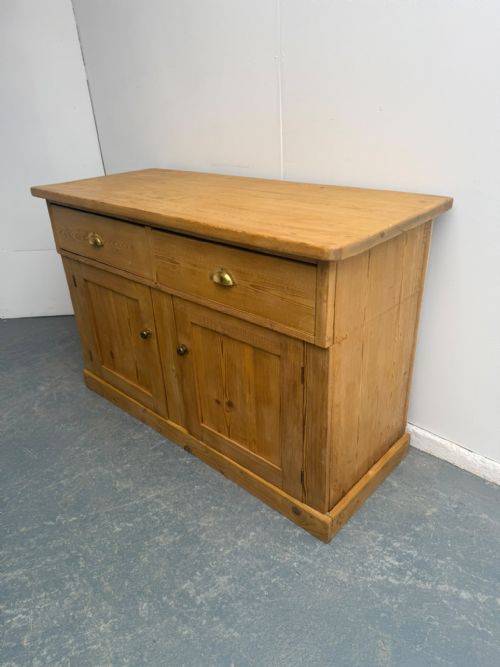


Traditional Kitchen Credenza
A traditional kitchen credenza brings honest utility and timeless timber character into a domestic space.
Traditional Kitchen Credenza
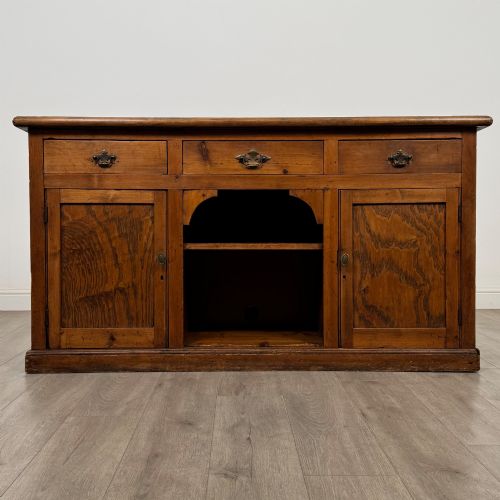
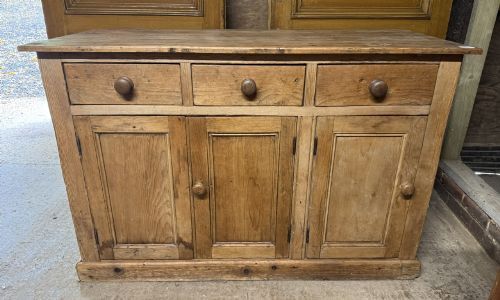
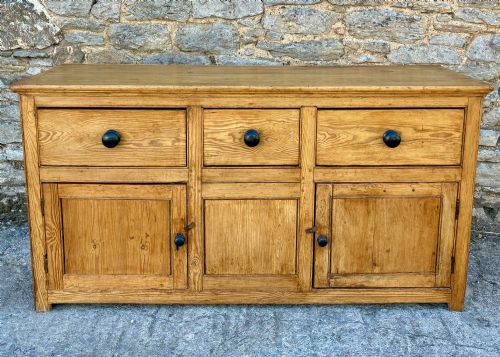
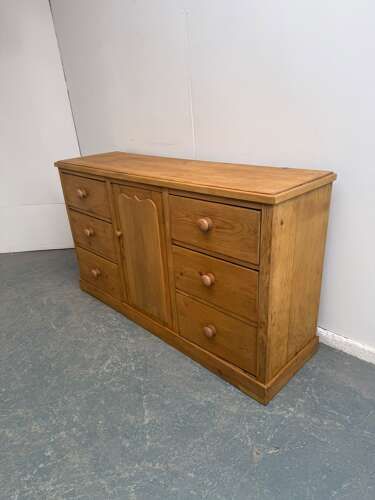
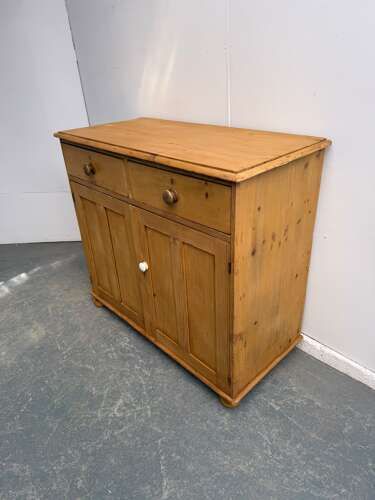
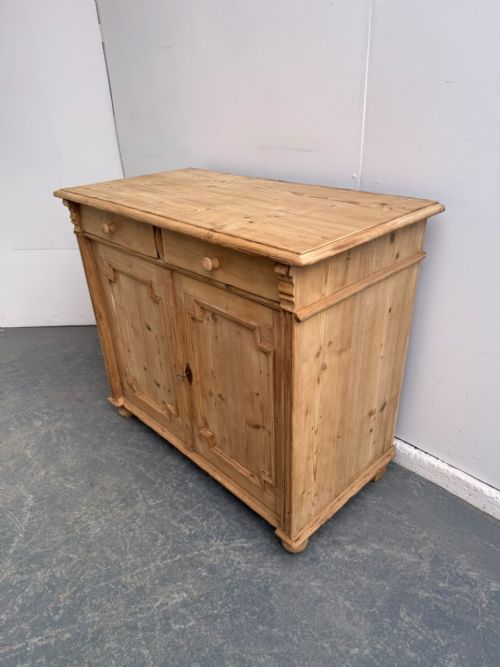
A traditional kitchen credenza generally takes the form of a sturdy dresser base, sideboards, or low cupboards designed for domestic storage. These pieces bridge the gap between utilitarian workspace and furniture, fulfilling the role of a traditional kitchen credenza in period settings.
Most examples found here hail from the nineteenth and eighteenth centuries, reflecting vernacular English country house tastes. Buyers will frequently encounter pine and oak constructions shaped by Victorian, Georgian, and rustic country traditions.
Materials and construction methods
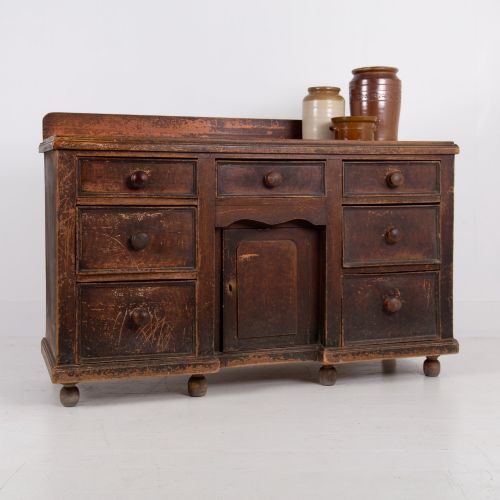
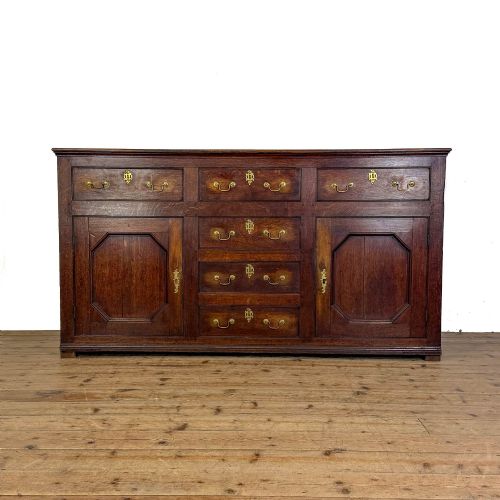
Makers relied heavily on solid pine and oak, often combining structural timbers with brass or iron hardware for hinges and pulls. Surfaces display either a natural waxed finish, exposed grain, or layers of original paint accumulated over decades of domestic use.
Joinery is straightforward and robust, prioritising durability for heavy domestic service rather than delicate ornamentation. Potboard bases and panelled doors reflect regional English cabinet-making standards from the Georgian and Victorian eras.
Many pine bases still carry the faint scent of old beeswax and decades of kitchen suppers.
Distinctions in quality and execution
Quality rests upon the integrity of the original timber and the retention of honest surface finishes, such as untouched early paint or deep patinated wax. Pieces that maintain their structural proportions without heavy timber replacement command greater interest.
The sophistication of the internal drawer construction and the refinement of the moulding details separate everyday utility pieces from finer country house examples. The presence of original brass or iron hardware further elevates the standing of a piece.
The Traditional Kitchen Credenza Glossary
- Dresser base
- A low kitchen storage unit featuring drawers and cupboards beneath a flat top surface, typically without upper shelving.
- Potboard
- An open lower shelf built into the base of a dresser, historically utilised for storing heavy pots and pans.
- Chiffonier
- A compact sideboard or low cupboard developed during the Regency period, featuring enclosed storage beneath a useful surface.
- Patina
- The surface sheen and colour developed by wood and paint over centuries of handling, cleaning, and exposure to light.
- Housekeeper's cupboard
- A large tall storage cabinet traditionally utilised in large English country houses for linens and dry stores.
Traditional Kitchen Credenza: Frequently Asked Questions
What is a traditional kitchen credenza?
A traditional kitchen credenza is typically a sturdy nineteenth or eighteenth-century timber dresser base, sideboard, or low cupboard built for utilitarian storage in domestic spaces.
These versatile items combine drawers, panelled doors, and sometimes open potboard shelves beneath a functional top surface.
How were these pieces used?
These pieces served as the central workspace and storage hub in busy country kitchens, holding heavy cookware, tableware, and provisions.
The flat top provided a reliable surface for food preparation and daily domestic tasks before fitted modern cabinetry became common.
How do I live with one?
Integrating a period timber base into a modern home brings warmth, texture, and practical storage to dining rooms, hallways, or contemporary kitchens.
Their robust construction handles everyday use well, while waxed or painted pine and oak surfaces age gracefully with normal care.
How do I tell periods apart?
Georgian and eighteenth-century examples often feature dense oak timbers and simpler proportions, whereas nineteenth-century pieces frequently utilise pine with varying levels of turned or panelled detailing.
Hardware styles, construction joinery, and the presence of original paint finishes also help determine whether a piece belongs to the Regency, Victorian, or earlier eras.