
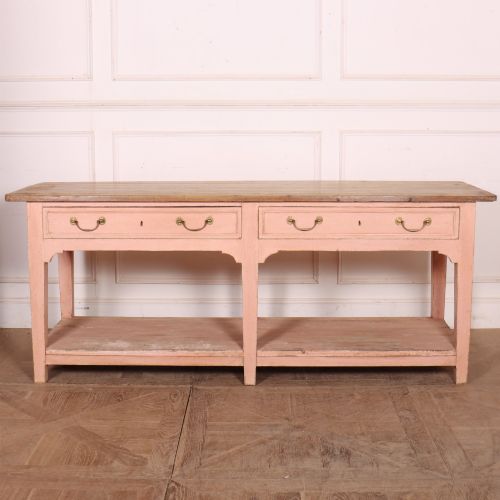
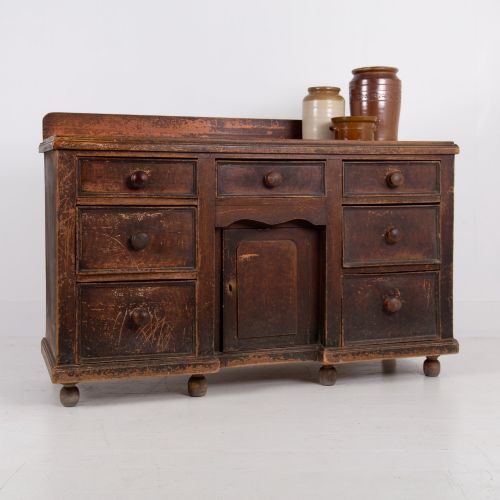


Painted Farmhouse Sideboard
A painted farmhouse sideboard brings robust utility and aged character to a room, offering generous storage through deep drawers and open potboards.
Painted Farmhouse Sideboard
When you search for a painted farmhouse sideboard, you are looking at substantial utilitarian furniture built to serve working kitchens, dairies, and country houses. These pieces combine practical storage with the aesthetic of rural domestic life, originating primarily from the nineteenth century.
You are most likely to meet regional variations such as Scottish potboard dresser bases, English serving tables, and French country serving pieces. Forms range from narrow servers to monumental dresser bases featuring drawers and lower pot-shelves.
The regional diversity evident in these listings includes Scottish vernacular, English country house, and French country styles. Each piece reflects the specific domestic needs of its original rural setting, often retaining layers of historic painted surfaces.
How they were made
Makers constructed these sturdy items predominantly from solid pine and oak, relying on durable timbers that could withstand daily domestic labour. Structural iron and brass fittings such as hinges and drawer pulls were utilised for reinforcement and functional hardware.
Surfaces were frequently finished with paint, creating the layered painted wood and painted timber finishes recorded across nineteenth-century examples. This traditional application of paint has aged over decades to develop a characteristic patina.
Listings span the nineteenth century, specifically featuring pieces dated from eighteen-sixty, eighteen-seventy, and eighteen-ninety.
What varies in quality
Quality in these rural pieces rests upon the integrity of the timber construction and the proportion of the form. Sturdier joints and balanced proportions distinguish robust utility pieces from more simply constructed variants.
The character of the surface finish plays a significant part in the appeal of a piece, particularly where original paint survives intact. Gradations in quality depend upon how well the historic painted timber has aged and retained its authentic depth.
The Painted Farmhouse Sideboard Glossary
- Potboard
- A low open shelf positioned beneath a dresser base or serving table, traditionally used for storing pots and heavy crockery. This structural feature provides both stability to the frame and display space.
- Dresser Base
- The lower section of a kitchen dresser, functioning as a standalone sideboard or serving table equipped with drawers. These sturdy units form the foundation of nineteenth-century rural kitchen furniture.
- Vernacular
- Furniture designed and built by local craftsmen using regional traditions and readily available materials rather than following high-style metropolitan fashions. Scottish and English country pieces exemplify this practical design approach.
- Patina
- The surface sheen and textural change acquired by wood, paint, and metal through decades of use, cleaning, and exposure to light. A desirable patinated surface reflects the genuine age and history of the piece.
Painted Farmhouse Sideboard: Frequently Asked Questions
What is a potboard base?
A potboard base is a heavy serving table or dresser base featuring an open lower shelf near the floor. This shelf was designed for holding heavy kitchenware in busy nineteenth-century country houses and dairies.
Today, this lower surface provides practical display space for large decorative items or collections. It defines the architectural silhouette of many traditional farmhouse sideboards.
How do I date a painted sideboard?
Dating relies on examining construction methods, timber types, and the composition of the painted surface. Nineteenth-century examples display hand-cut joinery and signs of sustained domestic use.
The layers of paint also offer clues, as historic finishes show natural wear patterns distinct from modern applications. Regional styles from Scotland, England, and France further help narrow the period of origin.
Where were these pieces used?
These sideboards and dresser bases originated in the working rooms of rural properties, including farmhouse kitchens, dairies, and country house sculleries. They served as central stations for food preparation and storage.
Their robust construction was intended to handle heavy daily workloads rather than formal parlour display. This utilitarian background gives them their characteristic blend of strength and simplicity.
How do I care for original paint?
Caring for historic painted surfaces requires avoiding harsh chemical cleaners and excessive moisture. Gentle dusting with a dry, soft cloth preserves the fragile layers of nineteenth-century paint.
Keeping the piece away from direct heat sources and strong sunlight prevents the timber from warping and the paint from flaking. Maintaining stable room conditions protects the accumulated patina.