






Traditional Kilim Runner
A traditional kilim runner brings flat-woven warmth and geometric tribal artistry directly to corridors and narrow spaces.
Traditional Kilim Runner
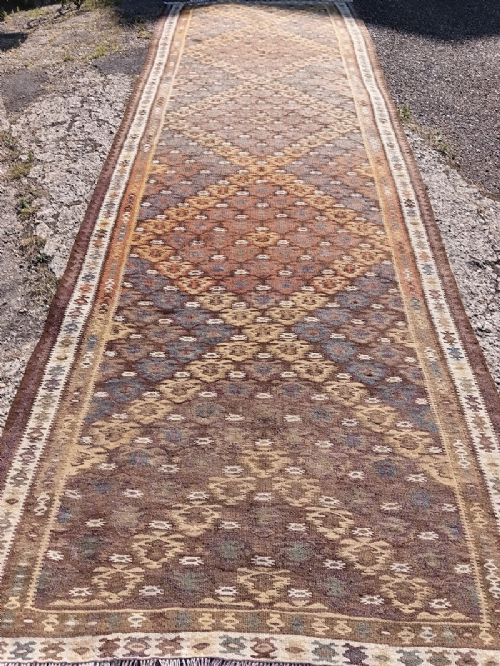
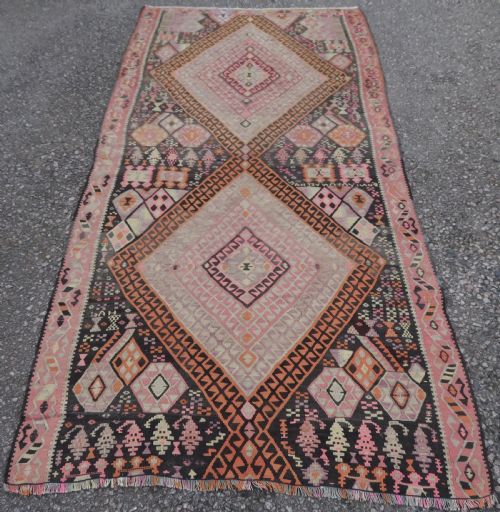
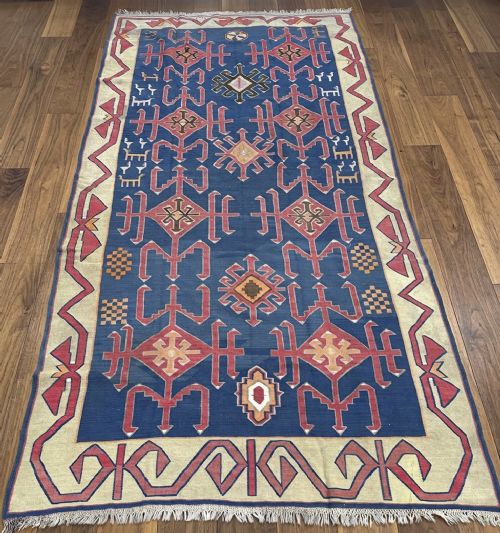
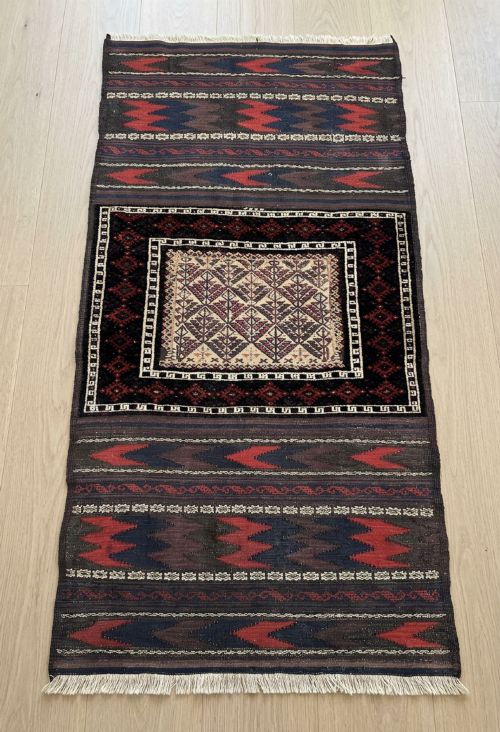
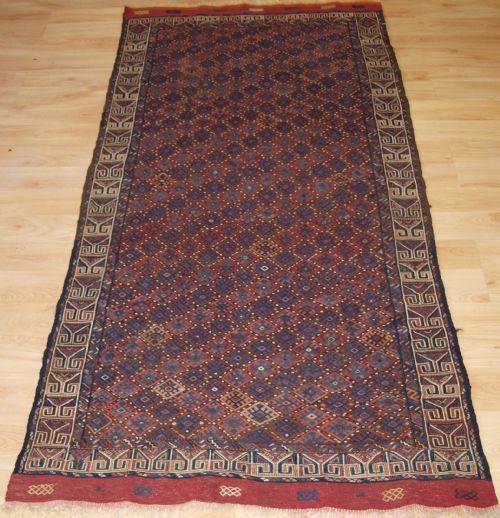
A traditional kilim runner is a flat-woven textile designed primarily for hallways, stairs, and narrow floor spaces. These pieces originate from various tribal and regional traditions across Turkey, the Caucasus, Persia, and Central Asia.
The selection ranges from Anatolian and Caucasian examples to Uzbek and Afghan tribal pieces. Floor coverings in this category often feature elongated formats with repeating geometric motifs and characteristic slit-weave construction.
How they were made
Weavers constructed these runners using wool and cotton foundations, often relying on hand-spun wool for the pileless, flat-woven surface. Natural dyes provided the deep, lasting palette seen across the regional groups.
Techniques varied from standard slit-weave flat-weaving to soumak wrapping and multi-strip construction where narrower panels were joined together. This lack of a pile resulted in a durable, reversible textile well-suited for high-traffic corridors.
Traditional Kilim Runner Retail Price Guide 2026
Typical asking prices for traditional kilim runner among the pieces listed under this phrase on Sellingantiques today, from the lower quarter to the upper quarter. They describe what is for sale here now, not the wider market.
Listings span from the 1860s through the 1940s, showcasing wool, cotton, and natural dye traditions from Turkish, Caucasian, and Central Asian workshops.
What varies in quality
Quality in a traditional kilim runner depends on the tightness of the weave and the precision of the geometric design. Finer structures display greater structural integrity and sharper lines in the repeating motifs.
The choice and depth of natural dyes also dictate the character of the piece, with harmonious fading and rich colour variation elevating the visual impact. Condition and the preservation of original flat-weave ends further separate exceptional examples from standard ones.
The Traditional Kilim Runner Glossary
- Kilim
- A flat-woven carpet or rug produced by tightly interweaving warp and weft strands without creating a pile. This method results in a lightweight, reversible textile with distinct geometric patterns.
- Slit-weave
- A specific flat-weaving technique where the weft threads are looped back at the boundary of a colour change, creating a small vertical slit. This defines the sharp, angular edges typical of tribal designs.
- Soumak
- A supplementary weft-wrap technique that produces a textured, braided surface on the face of the textile while leaving loose threads underneath. It adds durability and distinct linear detail to the weave.
- Natural Dyes
- Colourants derived from plants, insects, and minerals rather than synthetic compounds. They age with a soft, complex patina over decades of exposure.
- Warp
- The stationary vertical threads stretched tightly on a loom that form the structural foundation of the textile. Weft threads are passed horizontally through these foundational strands.
Traditional Kilim Runner: Frequently Asked Questions
Where should I place a runner?
These narrow textiles suit hallways, corridors, staircases, and galley kitchens where floor space is limited. Their flat-woven structure allows doors to swing easily above them without catching.
Because they lack a pile, they handle foot traffic well while adding geometric colour to transitional spaces in the home.
How do I care for a flat-weave?
Gentle shaking and regular light vacuuming without a rotating brush roll help remove embedded grit from the weave. Professional textile cleaning is recommended for deeper maintenance.
Keeping the piece out of direct, harsh sunlight preserves the natural dyes over time.
Are these textiles reversible?
Most flat-woven pieces present a similar pattern on both sides because the weft threads are carried fully across the design. Flipping the textile periodically helps distribute wear evenly across the surface.
Checking both sides also reveals the neatness of the foundational knotting and finishing work.
What makes regional styles different?
Weaving centres across Anatolia, the Caucasus, and Central Asia developed distinct geometric vocabularies and colour palettes. Anatolian pieces often use bold panels, while Caucasian and Persian tribal examples incorporate intricate hooked medallions and repeating borders.
Construction methods also vary, with some regions joining narrower strips together to achieve a runner format.