




Traditional Japanese Table Lamp
A traditional japanese table lamp brings hand-painted porcelain and cast bronze from Meiji and Edo workshops into modern rooms.
Traditional Japanese Table Lamp
When you search for a traditional japanese table lamp, you encounter items shaped from historic East Asian ceramics and metalwork fitted for modern illumination. The selection on this page consists entirely of table lamps created from earlier vases, jars, and sculptural bronzes.
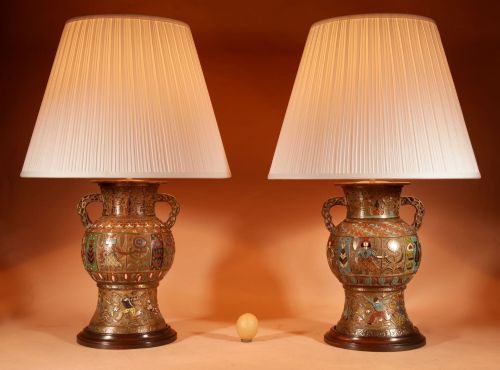
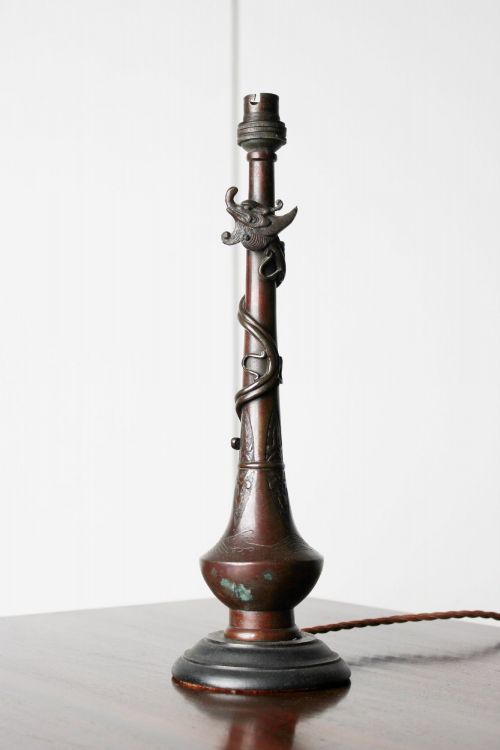
Most examples originate from the Meiji period and the 19th century, alongside earlier Edo period pieces and Edwardian interpretations. You find Satsuma, Kutani, and Arita Imari porcelains paired with heavy cast bronze and champlevé enamel.
The forms range from pairs of porcelain baluster vases to single bronze elephant figures and elaborate brass mounts. These pieces bridge traditional Eastern craftsmanship and Western domestic lighting history.
How they were made
Makers shaped the ceramic bodies using local clays, applying detailed underglaze blues and polychrome enamel designs by hand before firing. Porcelain varieties like Imari and Kutani display characteristic palettes that have endured for centuries.
Metalworkers cast bronze and brass components, often adding champlevé enamel work where glass pastes fill recessed channels in the metal. Artisans then converted these vases and figures into lamps, integrating electrical fittings or older burner mounts.
Traditional Japanese Table Lamp Retail Price Guide 2026
Typical asking prices for traditional japanese table lamp among the pieces listed under this phrase on Sellingantiques today, from the lower quarter to the upper quarter. They describe what is for sale here now, not the wider market.
Elephants occasionally double as illumination, reminding us that 19th-century makers possessed a wonderful sense of domestic theatre.
What varies in quality
Quality rests in the crispness of the hand-painted details on the porcelain and the weight and intricacy of the bronze casting. Finer Satsuma and Kutani pieces show meticulous brushwork and rich gilding that remain sharp under close examination.
The integrity of the original vessel dictates the overall merit of the lamp, particularly whether a historic vase was drilled with care for wiring. Matching pairs of porcelain vases or bronze figures also command greater interest than isolated single pieces.
The Traditional Japanese Table Lamp Glossary
- Imari
- A style of Japanese porcelain decorated in underglaze blue, iron red, and gold. This ware was produced in Arita and exported widely through European ports.
- Meiji Period
- The era in Japanese history spanning from 1868 to 1912. Objects from this time often display ambitious metalwork and decorative porcelain destined for Western markets.
- Champlevé
- An enamelling technique where artists carve troughs into a bronze or brass surface to hold coloured glass paste. The metal plate is then fired and polished smooth.
- Kutani
- Japanese painted porcelain known for vibrant polychrome palettes and pictorial designs. These ceramics frequently feature striking greens, reds, and golds.
- Edo Period
- The time in Japanese history running from 1603 to 1867. Surviving works from this era reflect distinct traditional domestic aesthetics.
Traditional Japanese Table Lamp: Frequently Asked Questions
How do I identify Meiji period pieces?
Meiji period items date between 1868 and 1912, a time when Japanese export crafts flourished. These pieces frequently combine elaborate bronze casting or detailed Satsuma earthenware.
Look for intricate decorative motifs and substantial weight that reflect the ambitious manufacturing standards of the era.
What is the difference between Imari and Kutani?
Imari porcelain relies on a distinct palette of underglaze blue, iron red, and rich gilding on a white ceramic ground. It was primarily produced around Arita.
Kutani porcelain typically showcases bolder, more pictorial polychrome enamels with an emphasis on greens, purples, and reds.
How do I place a bronze lamp in a room?
Bronze and champlevé enamel lamps offer dark, rich metallic tones that anchor side tables or heavy wooden desks. Their solid construction pairs well with traditional studies and libraries.
Keep them away from direct moisture and pair them with simple fabric shades that let the detailed metalwork remain the visual focus.