



Vintage Japanese Lamp Base
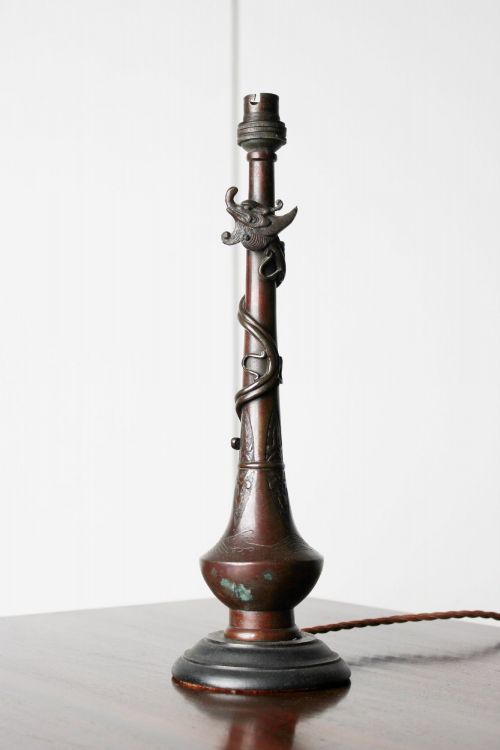
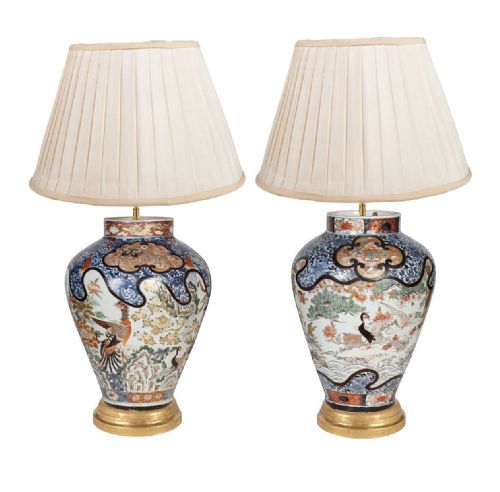
These vintage japanese lamp base pieces bring hand-worked porcelain and bronze into a room, offering rich Satsuma and Imari colour.
Vintage Japanese Lamp Base
When you search for a vintage japanese lamp base, you find table lamps and standard lamps that transform earlier vases and vessels into lighting. The selection spans the nineteenth century and earlier, including Meiji and Edo period pieces alongside Edwardian interpretations.
You meet porcelain, earthenware, and bronze forms, often wired from converted Satsuma and Imari vases or root wood. These pieces range from compact table lights to tall standard lamps, reflecting both traditional Japanese craft and British domestic adaptation.
The objects here include porcelain bodies painted with detailed scenes, alongside cloisonne enamel on bronze and carved root wood. Each piece brings a distinct period character, connecting nineteenth-century artistry directly to modern interiors.
How they were made
Maker workshops shaped porcelain and earthenware by hand before applying intricate enamel and hand-painted glazes, often firing the pieces multiple times. Bronze and brass components were cast and chased, whilst cloisonne work involved soldering fine wire cells to metal surfaces and filling them with enamel paste.
Root wood standards were carved directly from natural timber growths, preserving organic textures and grain patterns. Later conversion work involved drilling ceramic bodies and mounting them with fabric or silk shades on standard electrical fittings.
Vintage Japanese Lamp Base Retail Price Guide 2026
Typical asking prices for vintage japanese lamp base among the pieces listed under this phrase on Sellingantiques today, from the lower quarter to the upper quarter. They describe what is for sale here now, not the wider market.
Some roots refused to grow straight, leaving twentieth-century homes with lamp stands that stubbornly trace the path of least resistance.
What varies in quality
Quality depends upon the crispness of the hand-painted detail on porcelain bodies and the precision of the cloisonne wirework. Finer Satsuma and Imari examples display delicate brushwork and rich gilding that remain clear across the ceramic surface.
The integrity of the underlying vessel influences overall value, as does the subtlety of the conversion work that turns a historic vase into a lamp. Solid bronze castings and carefully preserved root wood show superior material selection by the maker.
The Vintage Japanese Lamp Base Glossary
- Satsuma
- A type of Japanese earthenware with a pale, ivory-coloured crackle glaze that is typically decorated with polychrome enamels and gilding. This ceramic style became popular for export during the nineteenth century.
- Imari
- A traditional style of Japanese porcelain featuring a distinct palette of underglaze blue and iron red, often accented with gold. The name originates from the port where these wares were shipped.
- Cloisonne
- A metalwork technique where fine wires form raised barriers on a bronze or brass base to create compartments filled with coloured enamel. The entire surface is then fired and polished smooth.
- Meiji Period
- The era in Japanese history spanning from eighteen sixty-eight to nineteen twelve, marked by extensive international trade and distinct decorative arts. Pieces from this time frequently appear in Western collections.
Vintage Japanese Lamp Base: Frequently Asked Questions
Are these lamps converted from old vases?
Many examples on this page are historical porcelain or bronze vases that have been professionally adapted into table or standard lamps.
This method allows decorative Imari and Satsuma vessels to serve a practical lighting purpose whilst retaining their original surface artistry.
How do I date a lamp base?
Dating relies on examining the ceramic body, the style of the hand-painted decoration, and the metal components like bronze or brass mounts.
Periods such as the Meiji era or the eighteenth century exhibit specific manufacturing traits and glaze characteristics that help establish age.
What is root wood?
Root wood lamp bases utilise the naturally gnarled and twisted forms of tree root systems, shaped and polished to create unique wooden columns.
Craftsmen selected these organic sections for their irregular grain patterns and sculptural silhouette.
How do I style a Japanese lamp?
These lamps work well as focal points on side tables or desks, pairing traditional ceramic or bronze textures with simple fabric or silk shades.
Their detailed patterns complement both neutral interiors and spaces that embrace mixed antiques.