


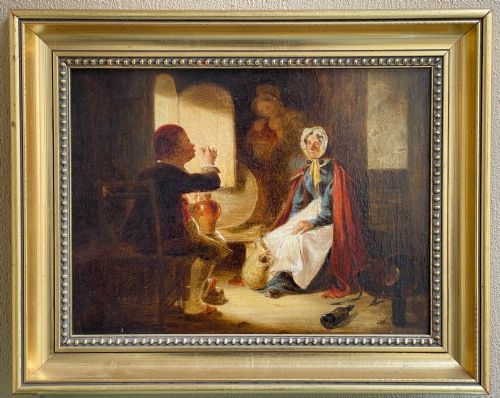
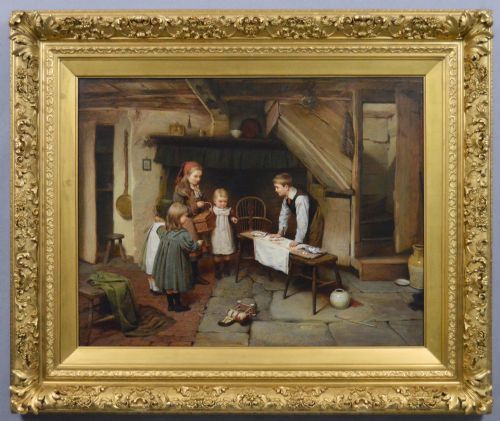


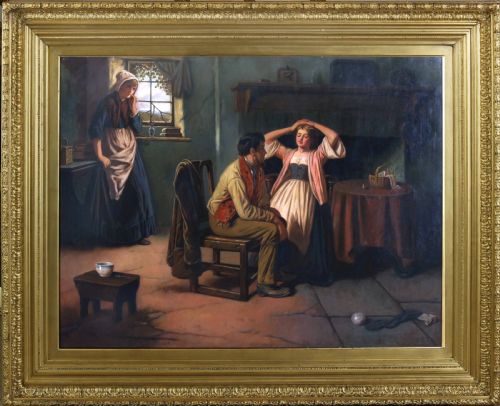

Traditional Interior Genre Scene
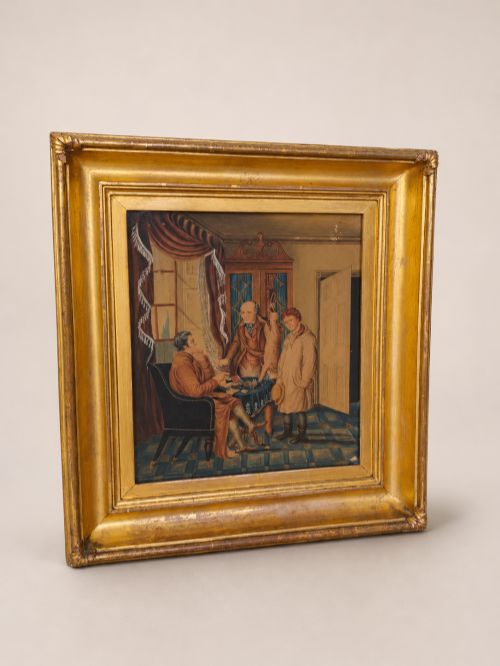
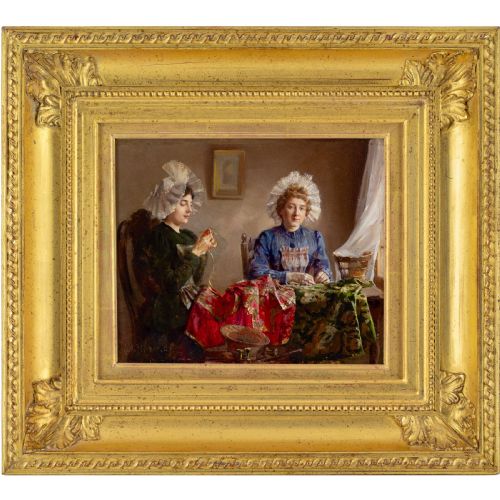
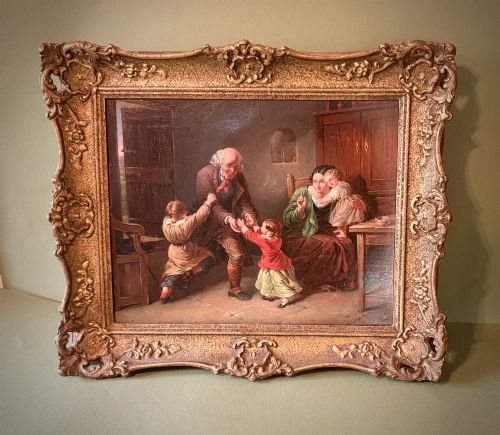
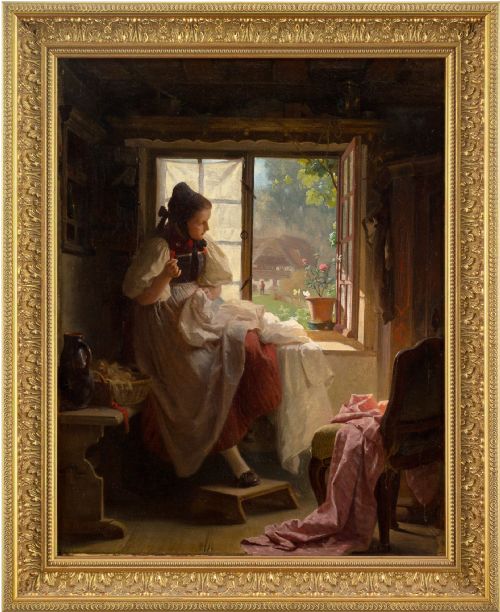
A traditional interior genre scene captures domestic life and fireside quiet, offering an intimate glimpse into past centuries through oil paint and watercolour.
Traditional Interior Genre Scene
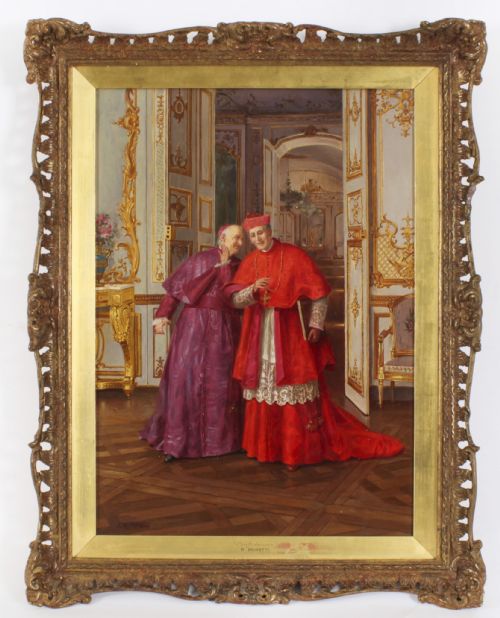
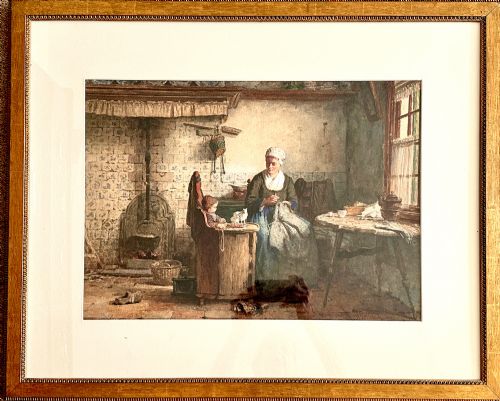
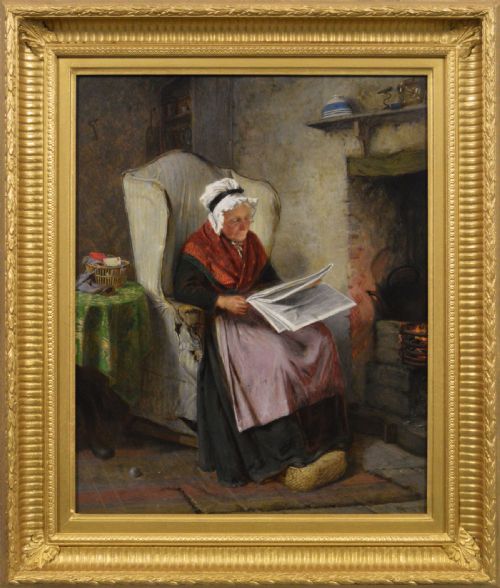
A traditional interior genre scene focuses on domestic moments, domestic work, and cottage life from the nineteenth century and surrounding decades. These works depict everyday activities such as embroidery, sewing, fireside gatherings, and cottage interiors.
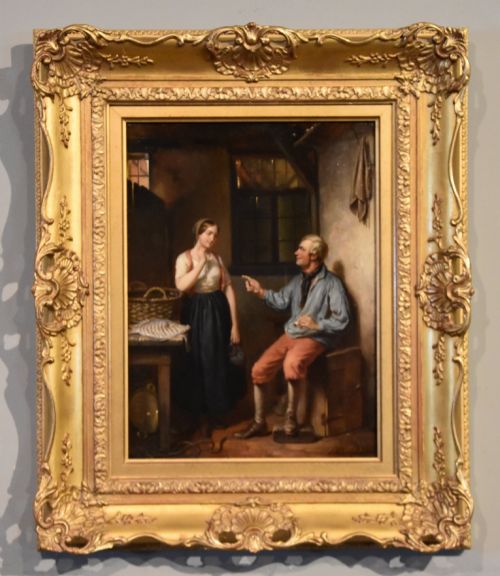
Most pieces encountered on this page originate from the Victorian era and the nineteenth century, executed primarily as oil paintings on canvas or panel, alongside watercolours. Subjects range from tavern interiors and Dutch genre scenes to children playing and quiet domestic portraits.
Materials and execution
Artists working on these scenes typically applied oil paint to canvas, panel, copper, or paper, capturing fine details of light within domestic settings. Watercolours on paper provide a lighter, more immediate record of domestic subjects.
Frames frequently incorporate wood, gesso, and gold leaf, creating gilt wood surrounds that complement the traditional palette of the paintings.
Traditional Interior Genre Scene Retail Price Guide 2026
Typical asking prices for traditional interior genre scene among the pieces listed under this phrase on Sellingantiques today, from the lower quarter to the upper quarter. They describe what is for sale here now, not the wider market.
Several domestic scenes patiently record dogs warming themselves by the hearth alongside human family members.
Factors of quality
Quality in a traditional interior genre scene rests upon the artist's handling of light, shadow, and human expression within confined domestic spaces. Stronger compositions convey narrative depth and character through assured brushwork.
The physical preservation of the canvas or panel, together with the quality and condition of the original gilt wood frame, distinguishes finer examples from simpler decorative works.
Claude-Salvator Hugard·Max Kaltenmoser·Hendrik Valkenberg·Renato Moretti·Jacob Akkersdijk·Harry Brooker·Alexander Rosell·John Arthur Lomax·Haynes King·James Kyd·Henry Spernon Tozer·Gustav Goemans·Pauline Delacroix Garnier·Alfred Provis·Henry Collins·Thomas Gist·Jonathan Pratt
The Traditional Interior Genre Scene Glossary
- Genre painting
- A style of art depicting scenes from everyday life, typically involving ordinary people in domestic or familiar settings. These works focus on narrative and human activity rather than formal portraiture.
- Oil on canvas
- A traditional painting technique where pigments bound in oil are applied to a stretched canvas support. This medium allows for rich colour blending and lasting durability.
- Gesso
- A plaster-like mixture applied to wood panels or frames to prepare a smooth surface for painting or gilding. It provides a stable base for gold leaf application.
- Watercolour
- A paint consisting of pigment suspended in a water-based solution, typically painted on paper. It creates transparent washes and delicate tonal effects.
- Panel painting
- A painting executed on a flat piece of wood rather than canvas. Wooden panels offer a rigid surface favoured by many historical artists.
Traditional Interior Genre Scene: Frequently Asked Questions
What is a traditional interior genre scene?
A traditional interior genre scene is a work of art depicting everyday domestic activities, such as sewing, fireside gatherings, or tavern life. These pieces record the daily habits and domestic spaces of past centuries.
They serve as visual windows into nineteenth-century life, executed primarily in oil paint or watercolour by artists documenting ordinary people.
How do I date these paintings?
Dating relies on stylistic evidence, artist signatures, framing methods, and materials such as canvas or wood panels. Many works carry specific dates or fall within defined nineteenth-century periods.
Examining the clothing, interior furnishings, and painting techniques helps place a work within the Victorian era or adjacent decades.
Were these painted on canvas or panel?
Artists utilised both canvas stretched over wooden frames and solid wooden panels for their interior scenes. A smaller number appear on copper or paper supports.
The choice of support often reflects the period and the artist's preference for achieving specific details in lighting and texture.
How should I frame and display them?
These paintings suit traditional spaces, often housed within period gilt wood and gesso frames that match their nineteenth-century origins. Displaying them away from direct sunlight preserves the oil paint and paper watercolours.
Ensuring stable indoor humidity protects both the wooden panels and the canvas supports from environmental stress.