


Traditional Indian Table Lamp
These traditional indian table lamps bring warm, textured character into a room through hand-painted surfaces and rich materials.
Traditional Indian Table Lamp
Traditional indian table lamps encompass hand-painted and carved lighting pieces sourced from regions such as Kashmir and broader Anglo-Indian traditions. Buyers searching for a traditional indian table lamp will encounter items dating from the Victorian era through the early twentieth century, including the decades of 1910, 1920, and 1930.
The forms span individual tall lamps, matched pairs, and lamp holders designed for domestic illumination. Alongside standard table lamps, the selections also include related occasional furniture such as red lacquer side tables from the Victorian period.
How They Were Made
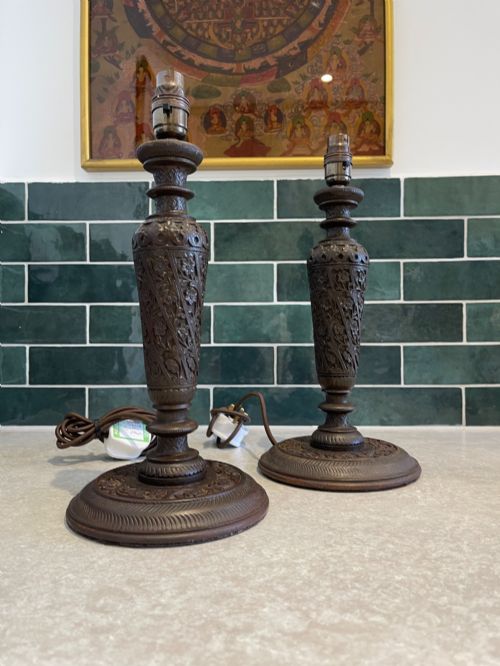
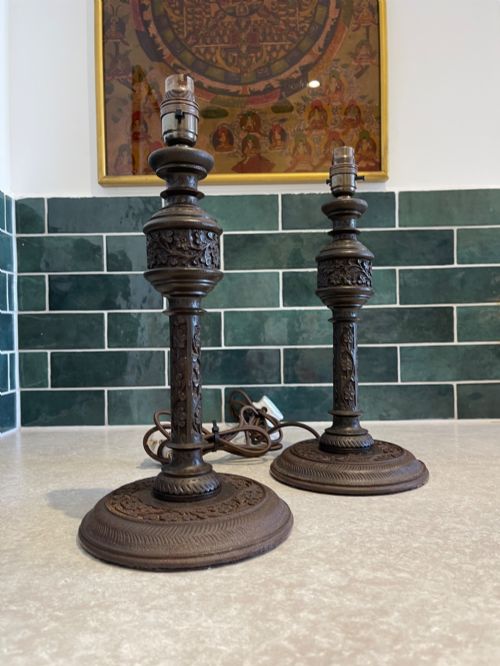
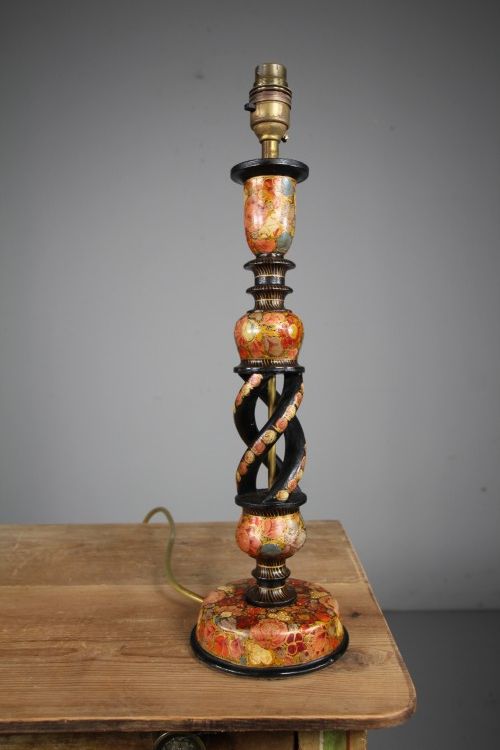
The construction relies heavily on traditional organic and metallic mediums, combining carved wood and walnut with papier-mache and lacquer finishes. Artisans applied hand-painted details directly onto papier-mache and wooden bases to create intricate surface patterns.
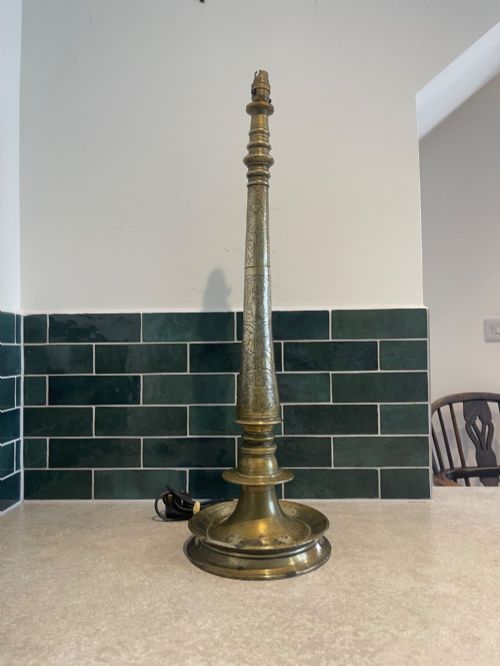
Metalwork pieces utilise cast brass, often paired with painted decoration to introduce colour and contrast. Fabric elements frequently complement these bases to complete the lighting structure.
One unexpected listing even sneaks in a red lacquer table alongside the lamps.
What Varies in Quality
Quality reveals itself in the precision of the hand-painted detailing and the depth of the carved woodwork. Finer examples display crisp application of lacquer and pigment that remains well-preserved across the body of the lamp.
The integrity of the primary materials, whether substantial brass or solid walnut and carved wood, dictates the tactile weight and enduring stability of the piece. Pairs also achieve higher distinction when the matching decorative motifs demonstrate consistent hand execution.
The Traditional Indian Table Lamp Glossary
- Anglo-Indian
- A descriptive term for decorative arts and furniture produced during the British period in India, often blending British furniture forms with local craftsmanship. These pieces frequently incorporate traditional regional techniques such as intricate carving and painted finishes.
- Kashmiri
- Pertaining to the Kashmir region, known historically for distinctive decorative arts including papier-mache objects and painted woodware. Lamps from this origin typically feature colourful floral or geometric surface patterns.
- Lacquer
- A durable resin finish applied in multiple layers to wood or papier-mache surfaces, providing both protection and a glossy sheen. Traditional red lacquer versions offer a striking visual centrepiece.
- Papier-mache
- A composite material made from paper pulp or reinforced paper layers mixed with glue, moulded into shape and dried before painting. It allows for lightweight yet sturdy lamp bases decorated with detailed pigments.
Traditional Indian Table Lamp: Frequently Asked Questions
How do I identify a Kashmiri lamp?
Kashmiri lamps are generally characterised by their use of papier-mache or carved wood substrates finished with hand-painted decorative motifs. These regional pieces often display distinct floral or patterned schemes applied directly to the body.
Examining the materials and painting style helps differentiate them from standard brass lighting options found within the same period.
What periods do these lamps date from?
The available selection spans the nineteenth century up through the 1930s, encompassing Victorian productions as well as pieces from the 1910s and 1920s.
Earlier nineteenth-century examples sit alongside twentieth-century items, reflecting evolving decorative tastes across several decades of production.
What materials are most common?
Wood and brass form the primary structural foundations, with walnut and carved wood frequently utilised alongside cast brass components.
Additionally, papier-mache and lacquer appear frequently in pieces originating from Kashmiri workshops.