


Vintage Kashmiri Lamp
These vintage kashmiri lamp examples bring rich hand-painted colour and intricate regional craftsmanship directly into an interior scheme.
Vintage Kashmiri Lamp
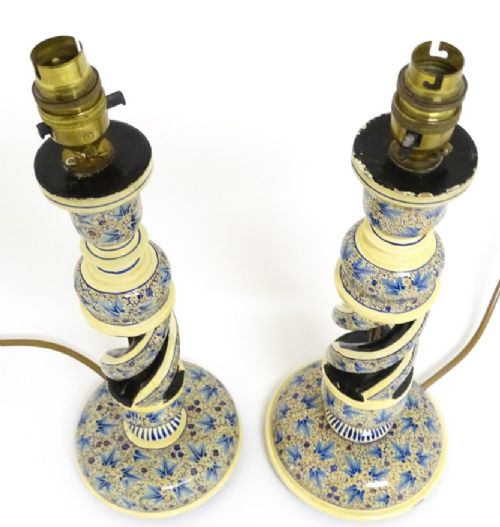
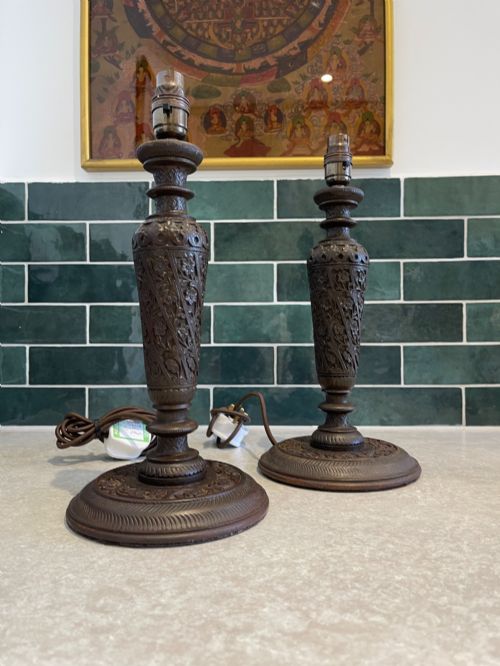
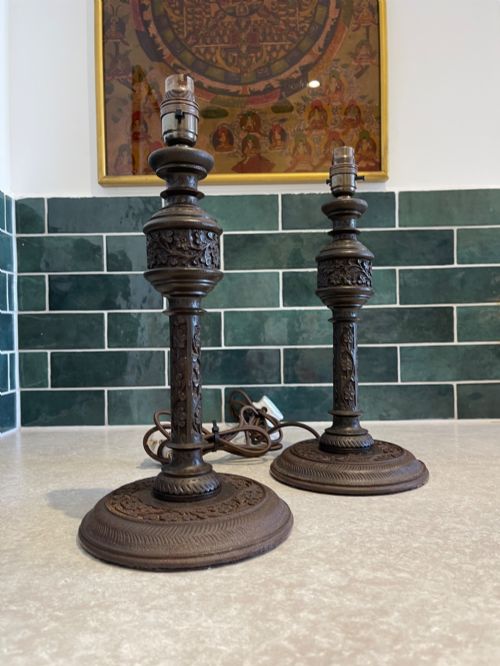
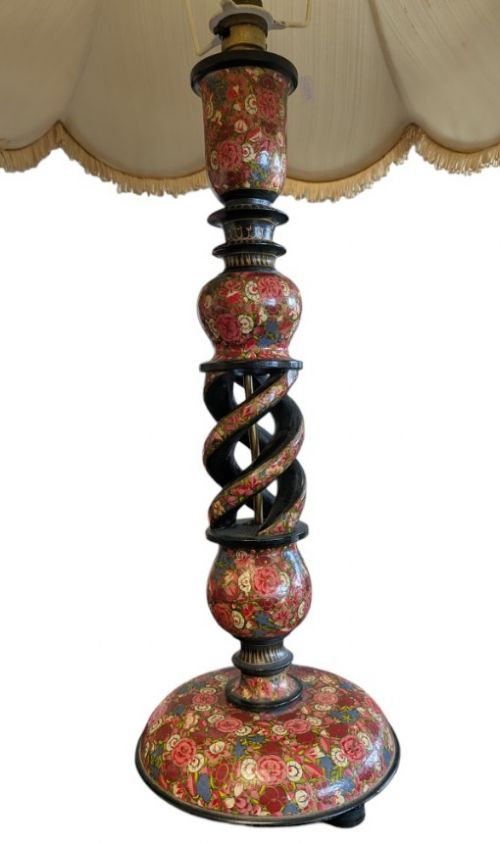
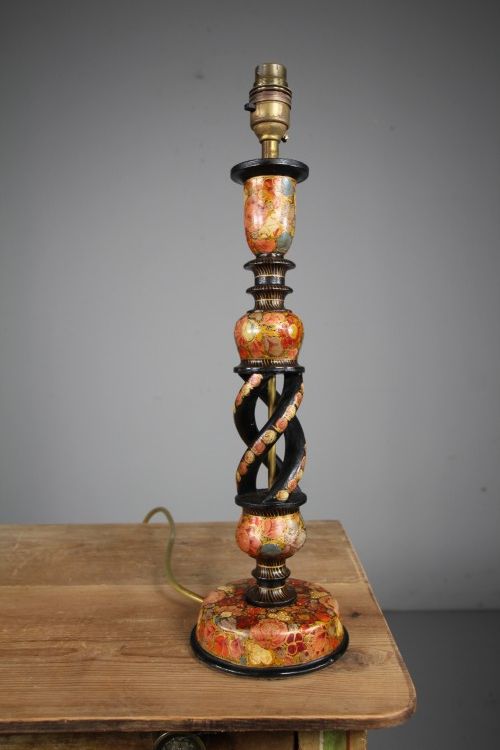
A vintage kashmiri lamp is a decorative lighting piece originating from the Kashmir region, typically taking the form of a table lamp or a standard floor lamp. Collectors seek these items for their distinct regional ornamentation, which often includes hand-painted motifs and carved wooden structures.
The selections available here span from the late nineteenth century through the 1930s, encompassing distinct eras such as the 1900s, 1910s, and 1920s. Buyers will frequently encounter table lamps alongside occasional tall floor lamps, showcasing both Anglo-Indian aesthetics and Kashmiri Folk Art traditions.
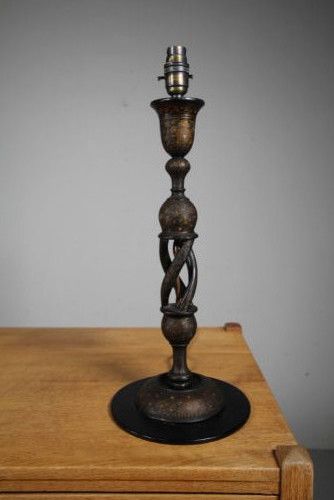
Makers and artisans utilised local materials to create both slender twist columns and substantial turned bodies. These objects function as primary focal points within a room, combining practical illumination with traditional surface decoration.
How they were made
Makers constructed these lamps using wood, walnut, and moulded papier-mache as the primary foundational materials for the bodies and columns. Artisans shaped carved wood through detailed hand-chiselling, producing textured surfaces and twisted silhouettes.
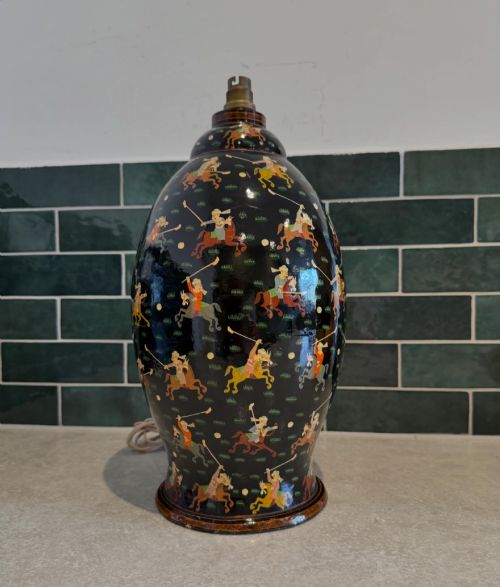
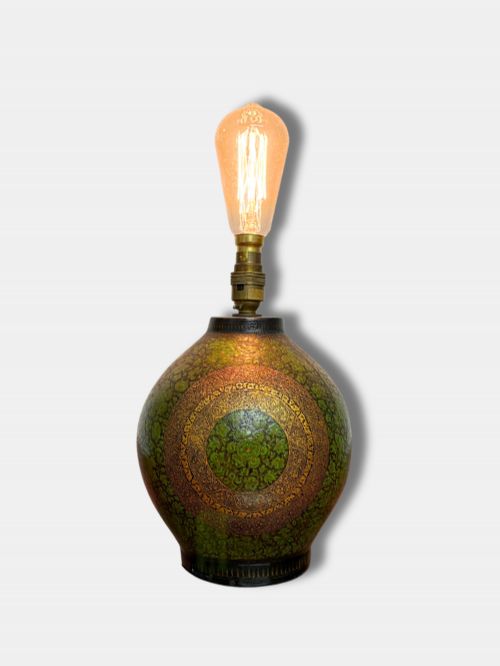
Surface decoration relies heavily on hand-painting techniques applied over lacquer or directly onto prepared wooden and papier-mache bases. Guilders added gilt gold highlights alongside green, blue, and cream pigments to accentuate the intricate patterns.
Papier-mache lamp bodies prove that paper pulp can outlast solid timber when treated with heavy layers of traditional lacquer.
What varies in quality
The refinement of the hand-painted detailing dictates the upper tiers of quality, distinguishing precise floral or folk art motifs from simpler execution. Crispness in carved woodwork, particularly along twisted columns and turned sections, signals superior artisan skill.
The integrity of the original lacquer and gilt gold embellishment preserves the visual impact of the piece over time. Substantial scale, such as in tall standard lamps or enormous table forms, also separates standard domestic pieces from grander examples.
The Vintage Kashmiri Lamp Glossary
- Papier-mache
- A composite material made from paper pulp or layers of paper bound with adhesive, moulded and dried before painting. This technique allows for lightweight yet durable lamp bodies.
- Anglo-Indian
- A design style reflecting the aesthetic fusion of British tastes with traditional Indian craftsmanship during the colonial period. Many Kashmiri lamps exhibit these blended decorative characteristics.
- Gilt
- A thin layer of gold applied to the surface of wood or papier-mache to create metallic highlights. It catches the light and frames the painted colour scheme.
- Twist
- A column shape carved with a spiral rotation running vertically up the shaft. This form creates dynamic movement and shadow along the lamp base.
Vintage Kashmiri Lamp: Frequently Asked Questions
What periods do these lamps come from?
The available lighting spans from the late nineteenth century through the early twentieth century, specifically covering the 1880s to the 1930s.
Most examples date from the 1900s to the 1920s, reflecting traditional craft periods documented in the region.
Are these lamps rewired for modern use?
Many examples have been updated with modern electrical wiring to ensure they meet current safety standards for domestic interior placement.
Buyers should inspect individual listings to confirm whether specific rewiring work has been completed.
What materials were used to build them?
Artisans predominantly utilised wood, walnut, brass, and papier-mache to form the structural bodies of these decorative pieces.
Surfaces were then finished with lacquer, fabric elements, and detailed hand-applied paint.
How do I identify Kashmiri Folk Art styles?
Kashmiri Folk Art styles are typically recognised by their vibrant hand-painted floral motifs, distinct regional colour palettes, and patterned surface decoration.
Pieces often combine gilt gold highlights with green, blue, or cream backgrounds.