



Blue Gold Table Lamps
These blue gold table lamps bring together rich colour and metallic warmth, offering a striking focal point for any interior.
Blue Gold Table Lamps
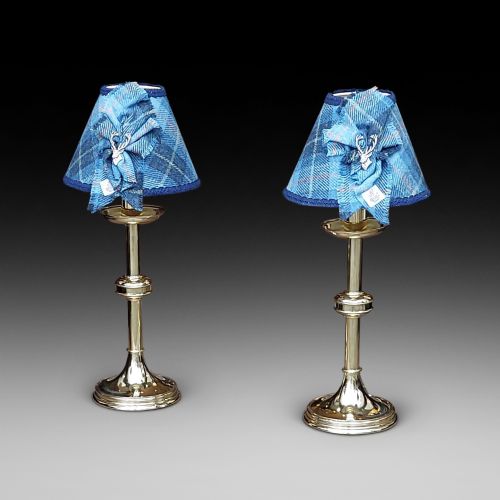
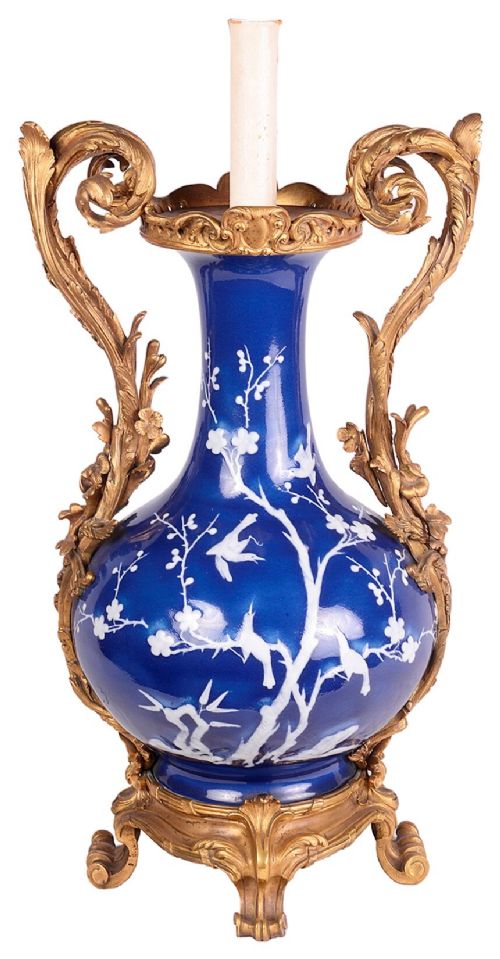
Blue gold table lamps encompass a varied range of decorative lighting pieces shaped by periods from the nineteenth century into the nineteen-thirties. You meet forms spanning classical column designs, converted candlesticks, and painted vases.
The selection here includes examples styled in the neoclassical, Louis XVI, Gothic revival, and Edwardian chinoiserie manners. Many pieces originate from adaptations of earlier candlesticks, jars, and vases fitted for illumination.
How they were made
Makers utilised brass, gilt bronze, ormolu, and wood to construct the sturdy foundations of these lamps. Surface decoration often combines deep blue paint or faux lapis lazuli with metallic gilding.
Fabric elements frequently complete the construction, paired with glass or papier-mâché components in specific regional pieces such as Kashmiri works.
Listings feature periods from the nineteenth century through the nineteen-thirties, utilising brass, gilt bronze, ormolu, and fabric.
What varies in quality
Quality rests upon the crispness of the cast metal mounts and the depth of the blue coloration across the body. Finer examples display meticulous detailing in ormolu or gilt bronze rather than simpler brass casting.
The harmony between the original object, such as a Chinese vase or a William IV column, and its later conversion dictates the overall integrity of the piece.
The Blue Gold Table Lamps Glossary
- Ormolu
- Gilded bronze, where a finely ground high-carat gold mercury amalgam is applied to a bronze object. This technique was widely utilised in neoclassical and Louis XVI style pieces.
- Faux lapis lazuli
- A simulated finish imitating the deep blue and golden flecks of natural lapis lazuli stone. It appears on nineteenth-century columns.
- Ecclesiastic
- Pertaining to the church, describing Gothic style metalwork derived from liturgical items such as candlestands. These bring architectural weight to domestic settings.
- Chinoiserie
- European artistic styles reflecting Chinese artistic influences, popular during the Edwardian period. It incorporates painted motifs on lamp bodies.
Blue Gold Table Lamps: Frequently Asked Questions
Are these lamps converted from older objects?
Many examples begin life as candlesticks, tobacco jars, or vases before receiving wiring for modern use. This practice allows older decorative items to find a practical place in contemporary rooms.
Conversion methods vary depending on the period, ranging from nineteenth-century brass fittings to twentieth-century adjustments.
How do I place them in a room?
The rich blue and gold tones suit sideboards, console tables, or desks where they provide both task and accent lighting. Their decorative presence works well against neutral walls or paired with complementary textiles.
Matching pairs function effectively on either side of a fireplace or at opposite ends of a large surface.
What periods do these lamps represent?
The selection spans from the Victorian and William IV eras through Edwardian designs up to nineteen-thirty. Each decade brings distinct stylistic influences, from Gothic revival severity to Art Deco lines.
Identifying the period usually depends on the metal casting style and the nature of the blue ground.
What materials make up the bodies?
Construction relies heavily on metals including brass, gilt bronze, and ormolu, often paired with glass, wood, or papier-mâché. The blue element frequently arrives via painted surfaces, cobalt glazes, or simulated stone finishes.
Fabric shades typically top the structure, diffusing the light cast by the bulb.