
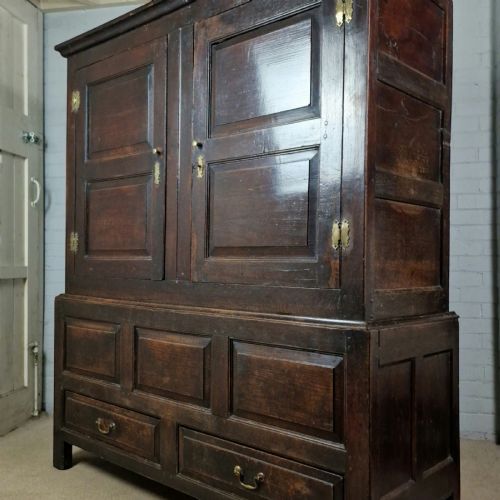
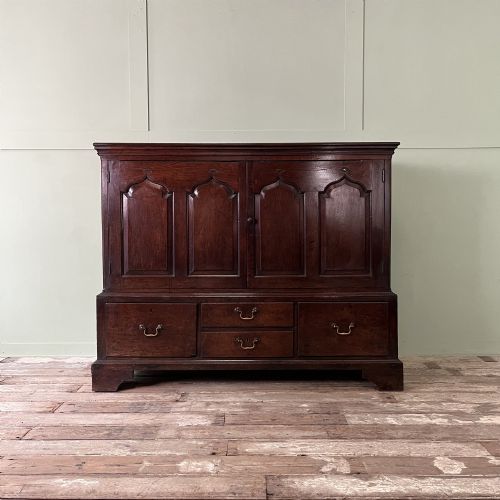
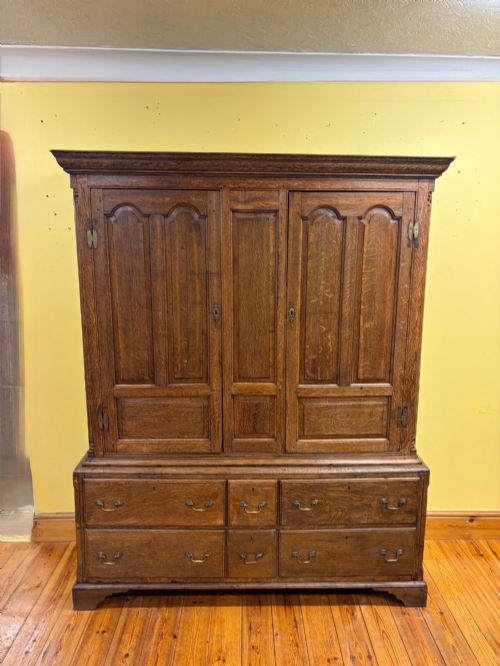
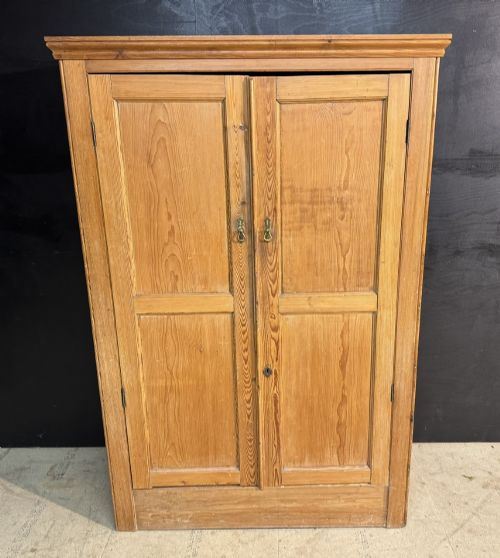


Traditional Housekeeper Cupboard
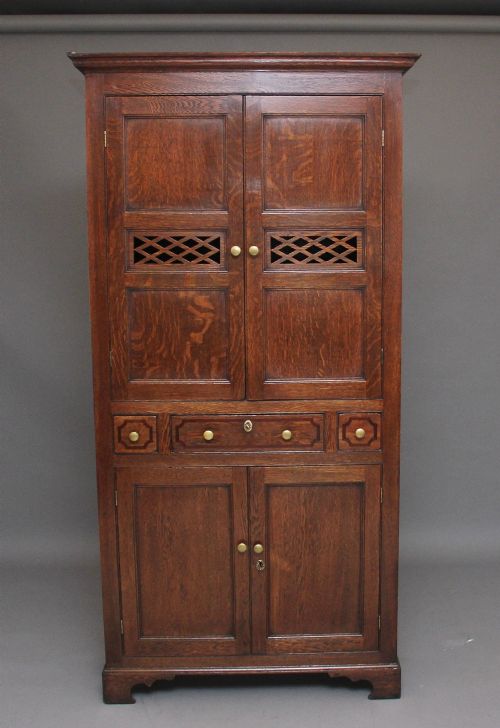
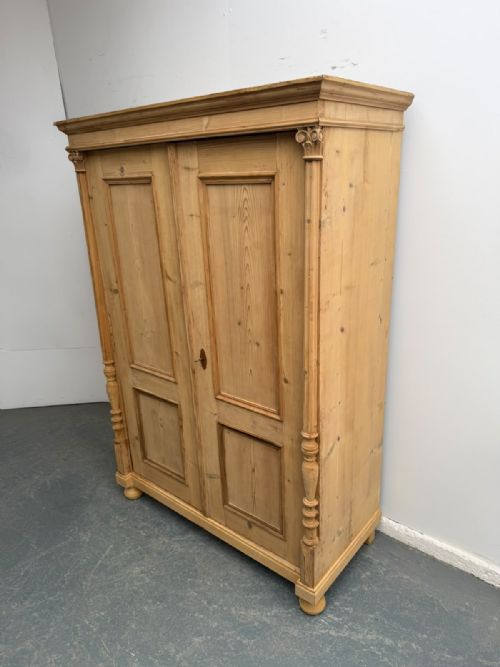
A traditional housekeeper cupboard is a sturdy domestic storage piece designed for provisions and linen, built to anchor a large country kitchen.
Traditional Housekeeper Cupboard
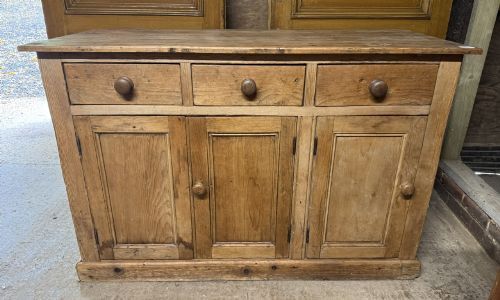
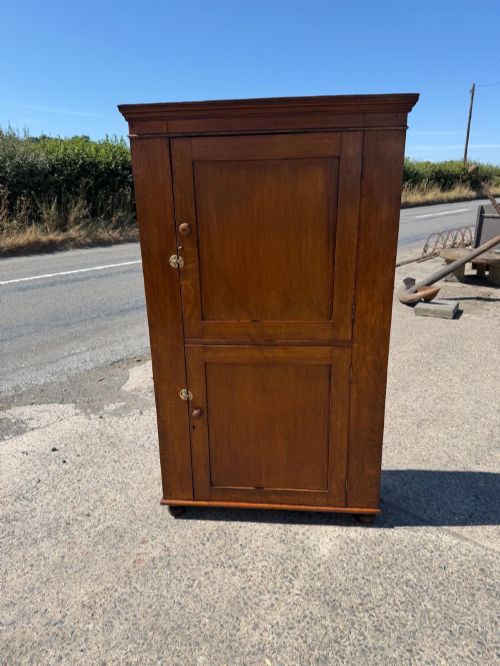
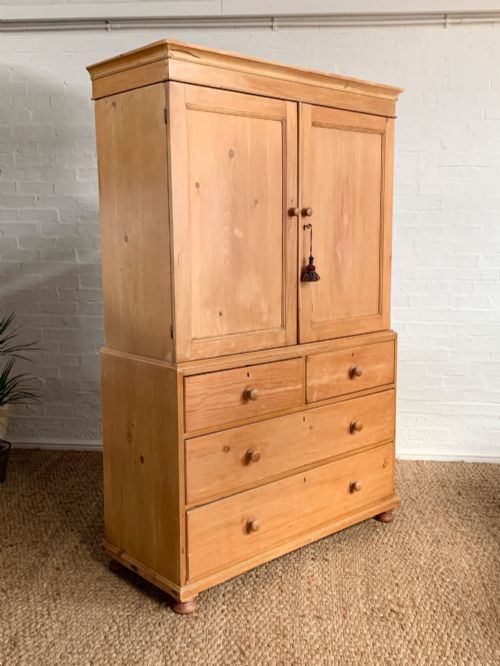
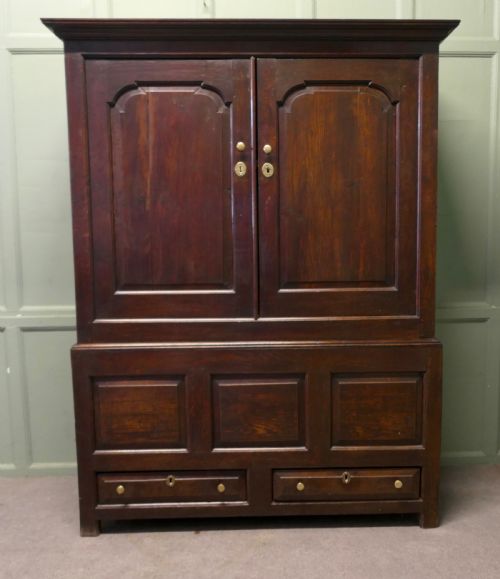
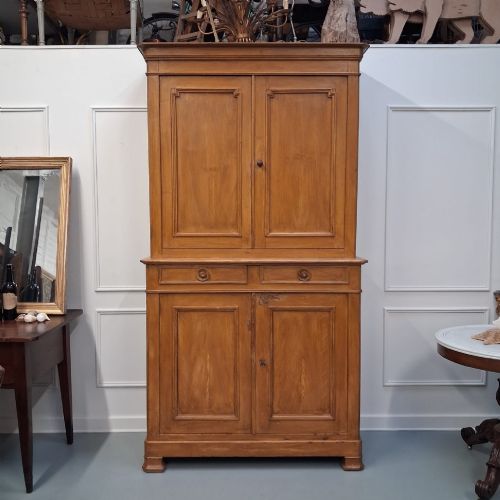
A traditional housekeeper cupboard is primarily encountered in robust timber forms, spanning the eighteenth and nineteenth centuries with strong roots in Georgian and Victorian country houses. These pieces often take the form of tall two-door cabinets, linen presses, or larder cupboards intended for heavy household service.
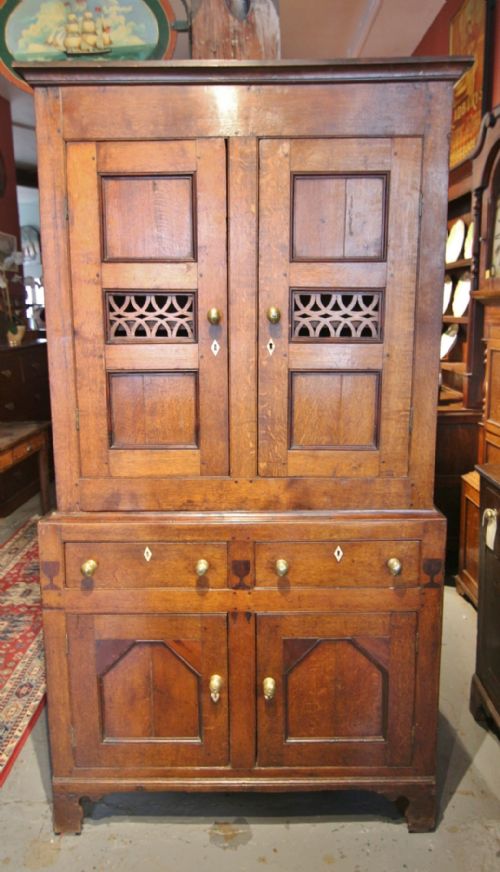
Regional vernacular styles emerge clearly across the selection, featuring Welsh, English, French, and Hungarian variants. Alongside standard storage, the titles reveal specialised regional forms such as the bread and cheese food cupboard and the oak deuddarn.
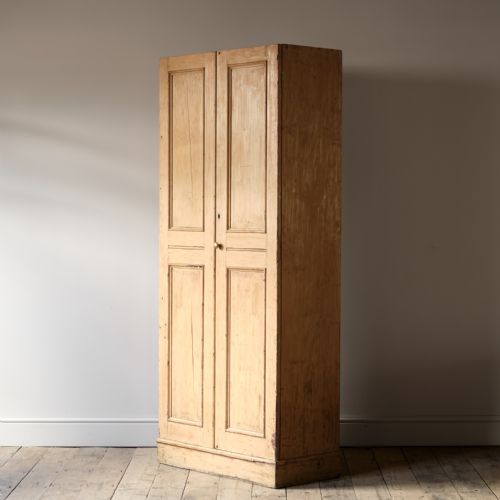
The most common version met on this page is the pine or oak kitchen and larder storage cupboard, often finished in period paint, scumble, or natural wax.
Materials and Construction
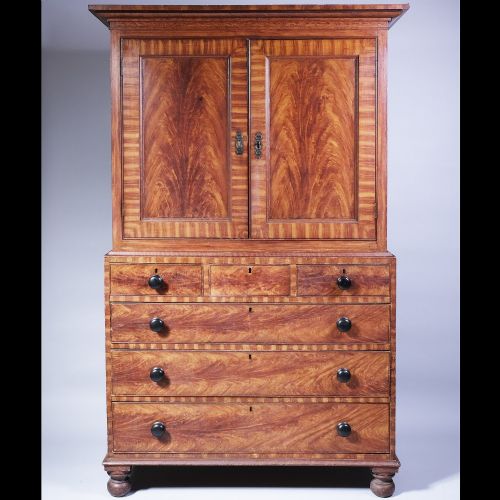
Construction relies heavily on solid timber, with pine and oak forming the vast majority of the carcases, supplemented by mahogany in later Georgian and Regency pieces. Iron and brass hardware, including handles and hinges, provide functional reinforcement to heavy doors.
Surface finishes vary from plain waxed wood to historic scumble paint, painted schemes, and stripped pine surfaces. Vented panels and specialised interior shelving address the original domestic requirement for storing food and textiles safely.
Some nineteenth-century kitchen cupboards retain their original ventilation vents designed specifically to keep bread and cheese fresh.
Judging Quality
Quality rests on the integrity of the timber and the honesty of the surface finish, whether an original painted coat or a well-maintained waxed oak grain. Pieces retaining their original brass hardware and functional interior fittings command greater respect.
Proportion and scale distinguish fine vernacular joinery from utilitarian workshop builds. Regional detailing, such as inlaid decoration or balanced two-door elevations, marks out the superior examples of the type.
The Traditional Housekeeper Cupboard Glossary
- Housekeeper cupboard
- A large storage cabinet traditionally used by a housekeeper to store linen, dry goods, and household provisions. These pieces typically feature deep shelving enclosed by double doors.
- Linen press
- A tall piece of furniture comprising upper cupboard storage for folded textiles and lower drawer banks. They frequently appear in oak and mahogany across the eighteenth and nineteenth centuries.
- Scumble paint
- A decorative surface technique using a translucent glaze manipulated over a lighter base coat to imitate finer wood grains. It appears on nineteenth-century vernacular furniture.
- Deuddarn
- A traditional Welsh two-section cupboard featuring enclosed shelving compartments. It is a distinct regional form rooted in early oak vernacular cabinet-making.
- Larder cupboard
- A tall ventilated storage cabinet designed for food preservation before mechanical refrigeration. They often include panelled doors with small ventilation apertures.
Traditional Housekeeper Cupboard: Frequently Asked Questions
What is a traditional housekeeper cupboard used for?
These cupboards were designed for storing household provisions, dry goods, and domestic linens in large country houses. Their deep interior shelves kept everyday household stores organised and protected.
Today, they function brilliantly as freestanding kitchen larders, utility room storage, or statement wardrobes in large bedrooms.
How do I date an antique housekeeper cupboard?
Dating relies on timber selection, construction methods, and hardware styles observed across the piece. Eighteenth-century examples typically feature heavy oak framing and hand-cut joinery.
Nineteenth-century versions frequently utilise pine or mahogany, sometimes bearing original painted surfaces or later Victorian alterations.
Are these cupboards made of solid wood?
The pieces listed here are built from traditional timbers including pine, oak, and mahogany. Carpenters utilised solid boards for doors, carcases, and internal shelving.
This robust construction explains why these heavy utility cupboards have survived centuries of domestic service.
How do I care for a painted or waxed finish?
Waxed pine and oak surfaces benefit from occasional feeding with a traditional beeswax polish applied with a soft cloth. Avoid placing them near direct heat sources to prevent timber movement.
Painted surfaces should be dusted gently and kept dry to preserve the historic finish.