

Traditional Horse Painting
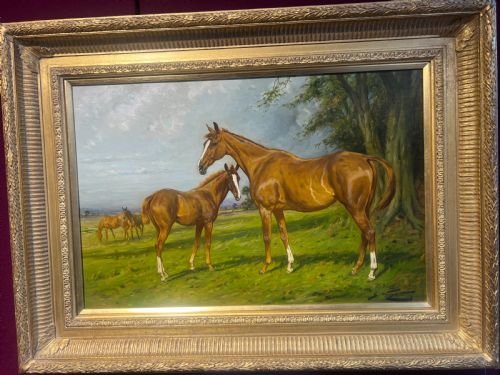
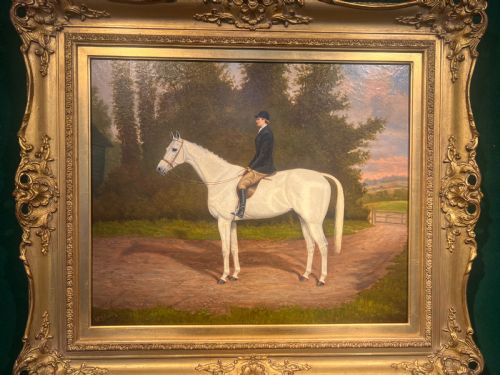
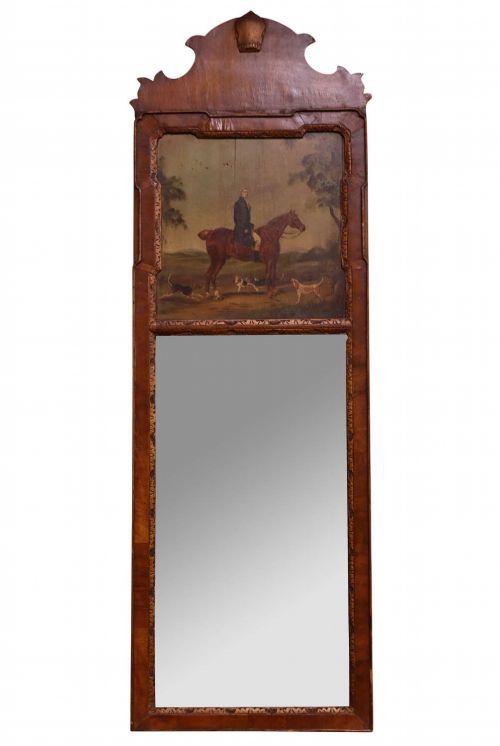
Traditional horse painting encompasses centuries of equine portraiture and sporting art, capturing the noble physique of hunters, racers and farm animals on canvas.
Traditional Horse Painting
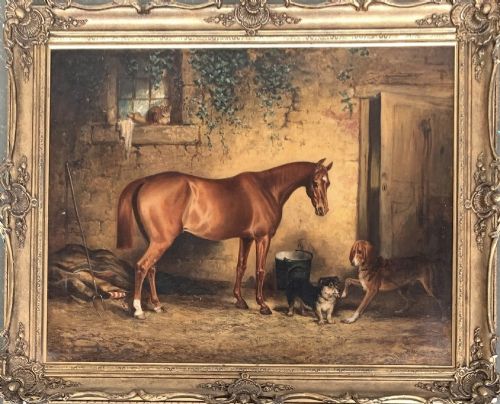
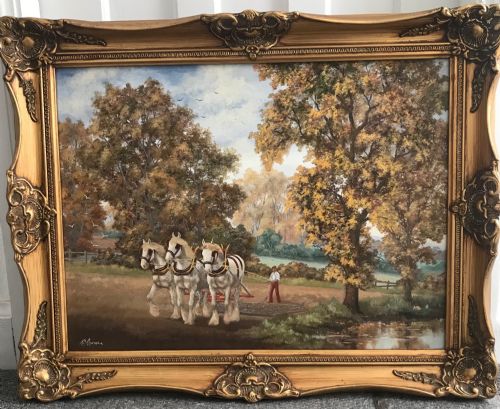
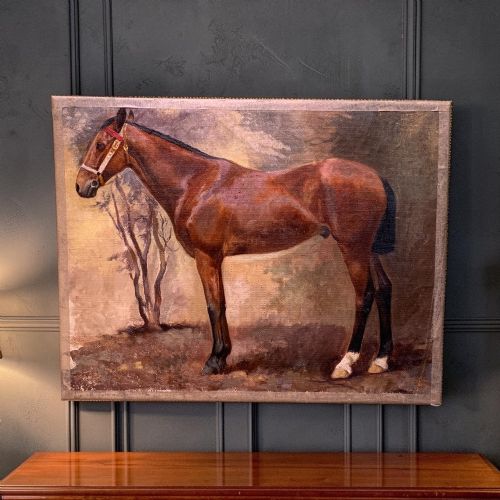
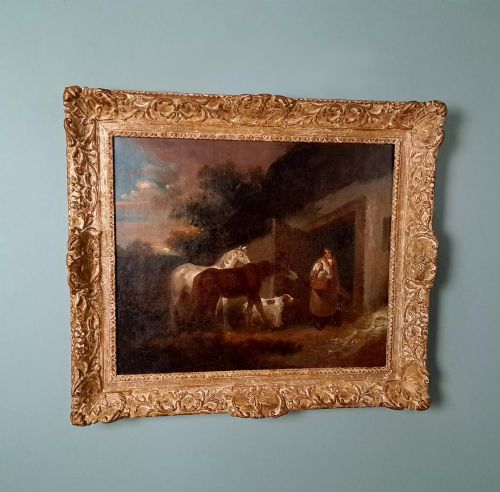
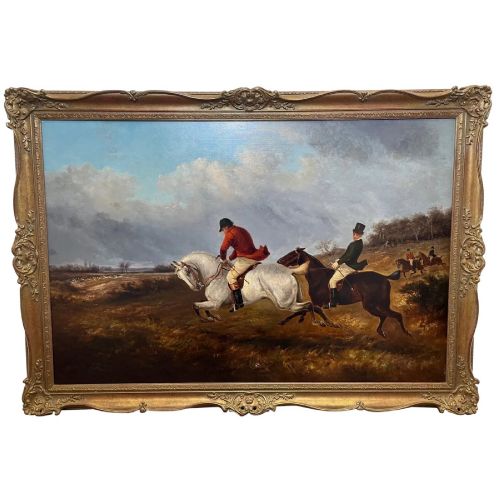
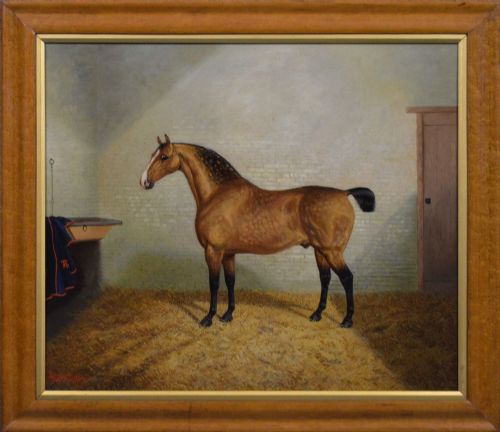
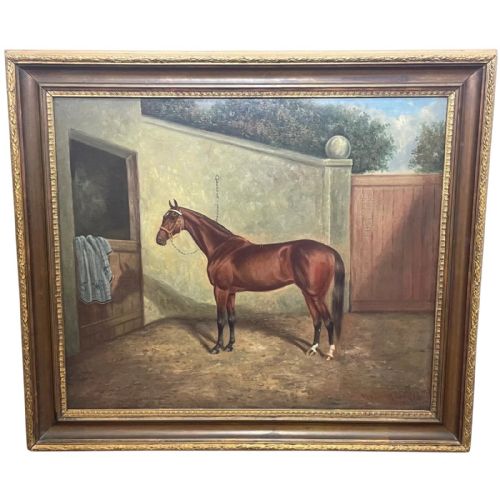
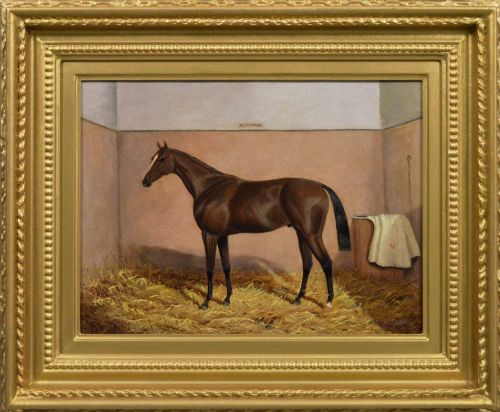
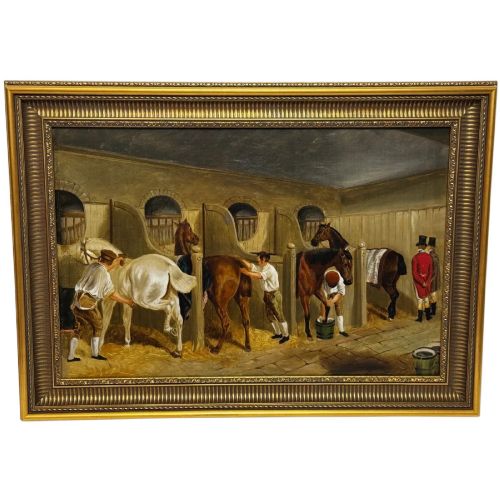
Traditional horse painting involves oil on canvas works spanning from the Georgian and Victorian eras through to the mid-twentieth century. Buyers searching this phrase look for realistic portrayals of equines, ranging from solitary stable portraits of prized racehorses to sweeping rural hunting scenes.
The selections on this page concentrate heavily on nineteenth-century and early twentieth-century British realism, alongside distinct folk art interpretations and regional British equestrian pieces. These works record individual animals, famous derby winners and daily rural working life with meticulous detail.
Materials and methods
Artists relied primarily on oil paint applied to prepared canvas or wooden panels, utilising rich pigments to render the muscular definition and glossy coats of horses. Gilt and giltwood frames frequently complement these works, adding a formal architectural border suited to period domestic interiors.
Makers layered oil paints to build depth in both the animal subjects and the accompanying pastoral or stable backgrounds. Pigments captured subtle variations in dappled, bay and chestnut hides, while maintaining precise proportions characteristic of equine anatomy during specific decades.
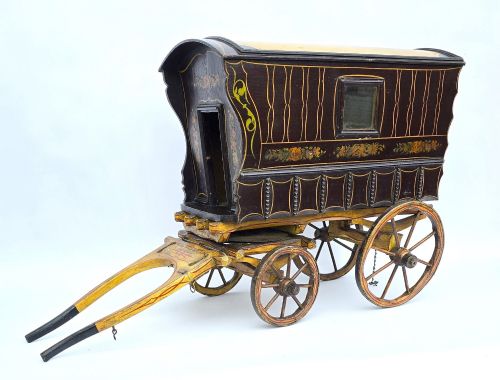
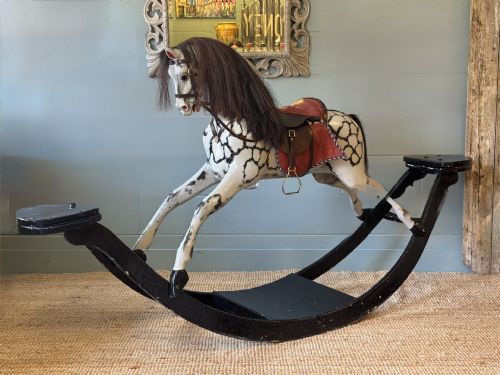
One recorded artisan left behind a painted wooden caravan model alongside traditional equestrian portraits.
Assessing quality and execution
Quality rests upon the artist's command of anatomical accuracy and the expressive character given to the animal rather than mere age alone. Superior canvases demonstrate a fluent understanding of bone structure, muscle tension and light playing across the horse coat.
The handling of the background scenery and the preservation of the original gilt frame significantly influence the distinction between standard decorative pieces and masterworks of British sporting art.
William Joseph Shayer Senior·Thomas Smythe·Albert Clark·G and J Lines of London·Henry Barraud·John Alfred Wheeler·George Morland
The Traditional Horse Painting Glossary
- Equestrian art
- Depictions of horses and riders within sporting, military or rural contexts. This genre forms the core of nineteenth-century British painting traditions.
- Oil on canvas
- A painting medium using pigments suspended in drying oils applied to stretched woven fabric. It allows for rich blending and deep tonal graduation.
- Giltwood
- Wood carved and surfaced with thin gold leaf or gold powder. Frames utilising this finish frequently accompany formal period portraits.
- Stable portrait
- An intimate painting focusing on a single horse within its resting environment. These works frequently record the specific name and lineage of the animal.
Traditional Horse Painting: Frequently Asked Questions
How do I date a horse painting?
Dating relies heavily on the artist's recorded working dates, the style of the clothing worn by any human figures, and the construction methods of the stretcher and frame. Canvas types and written inscriptions on the reverse also offer reliable chronological markers.
Examining the underlying preparation layers and pigment choices further helps narrow down whether a piece originates from the Georgian, Victorian or later periods.
What is the difference between a racehorse and a hunter portrait?
Racehorse portraits generally depict named champions with specific track records, often standing in profile or shown mid-gallop during a race. Hunter portraits tend to emphasise sturdy conformation, stamina and companionship with riders in rural field settings.
Both styles reflect the distinct social pursuits of their respective eras, utilising different compositional formats to highlight the animal's utility.
How should I hang and light an oil painting?
Oil paintings on canvas require stable indoor humidity levels and protection from direct, prolonged sunlight to prevent the pigments from fading or the canvas from warping. Positioning the piece away from direct heat sources preserves both the paint layer and the wooden stretcher.
Dedicated picture lights utilising low-heat LED bulbs provide even illumination without subjecting the delicate nineteenth-century surfaces to thermal stress.
Are these paintings always signed by the artist?
Signatures appear frequently on works by established artists, though many period pieces remain unsigned or carry only contemporary handwritten notes on the stretcher bars. Attribution then relies on stylistic comparisons, brushwork analysis and documentary provenance.
Unsigned paintings from recognised schools still hold historical value if the technical execution matches the documented standards of the era.