



Traditional Highland Oil Painting
These traditional highland oil painting works capture remote northern peaks and misty lochs, bringing nineteenth-century romance straight to your wall.
Traditional Highland Oil Painting
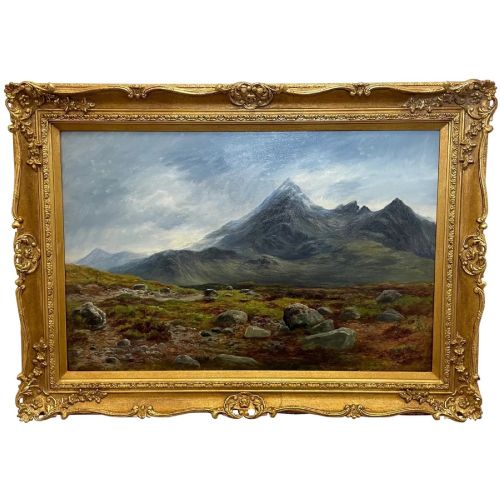
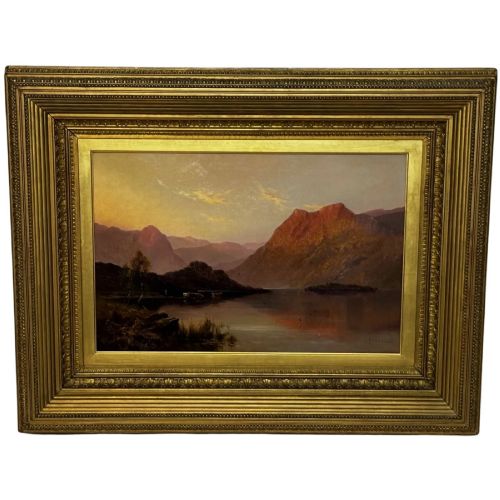
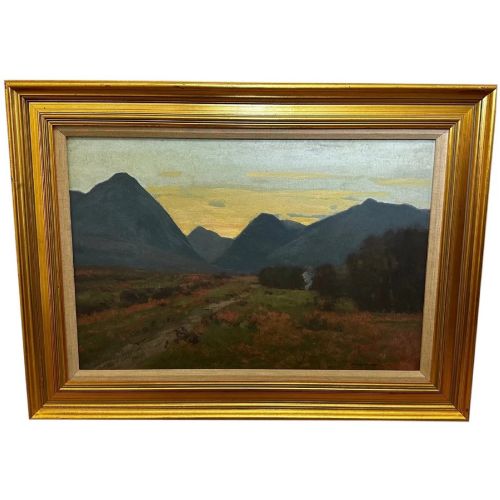
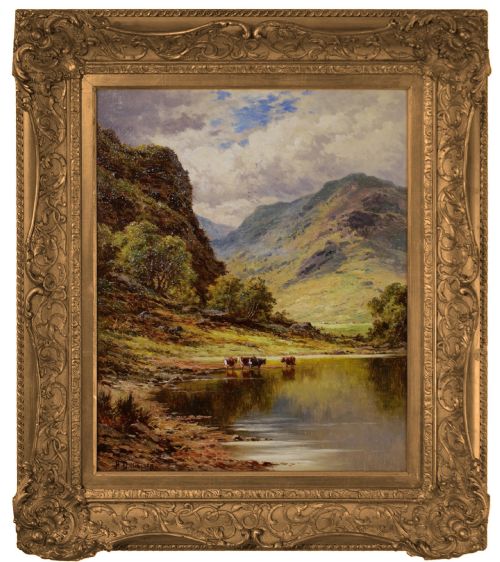
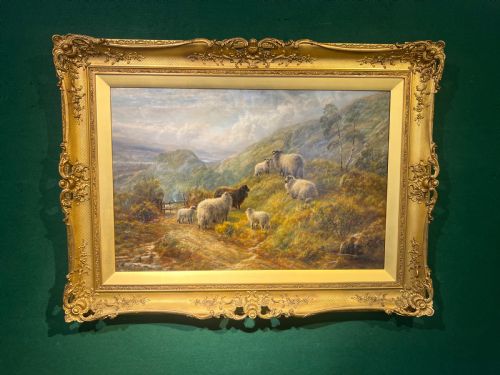
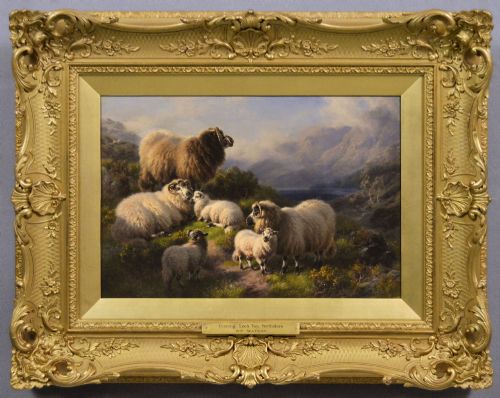
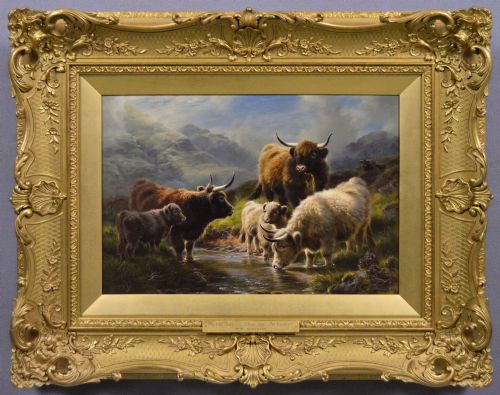
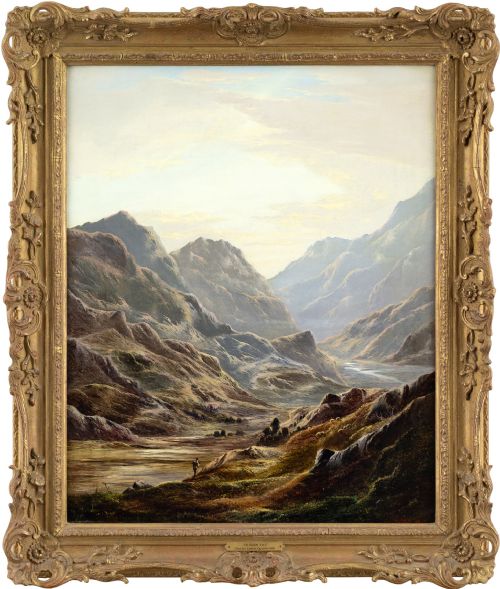
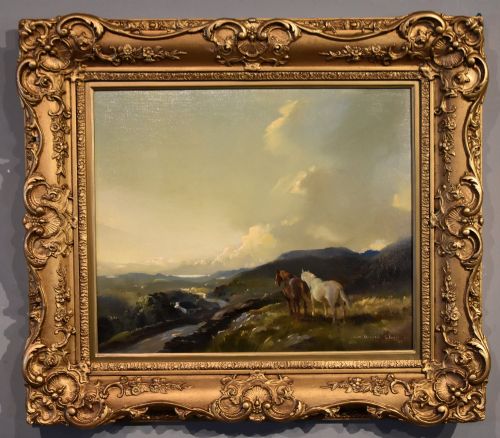
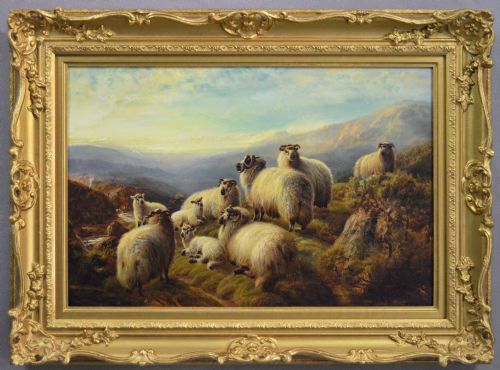
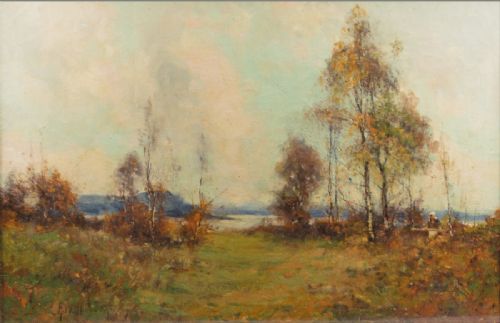
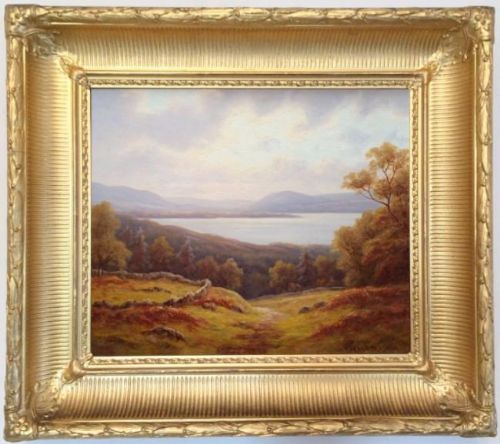
When you search for a traditional highland oil painting, you encounter nineteenth-century and early twentieth-century canvases depicting dramatic Scottish mountain scenery, placid lochs, and rustic bothies. These works frequently record pastoral scenes populated by shaggy highland cattle or sheep resting near water, reflecting a deeply romanticised view of rural life.
The prevalent examples on this page date from the Victorian era through the 1930s, executed within the traditions of Scottish Impressionism, the Scottish School, and British Realism. Painters of this period favoured expansive vistas of peaks like Ben Lawers alongside quiet watercourses under changing skies.
Beyond pure landscapes, this selection encompasses rural portraiture and animal studies, such as sporting dogs and children dressed in tartan kilts. These framed canvases and wood panels connect directly to regional artistic societies and academic traditions of the period.
How traditional highland oil painting works were made
Makers applied oil paint using traditional brushes and palette knives onto prepared supports of canvas or wood panel. These grounds received layers of gesso to seal the fabric or wood before the artist laid down compositions in oil.
Finished works found protection within heavy giltwood and gesso frames, often elaborately moulded to complement the grand scale of the landscapes. The combination of oil pigment on canvas or panel ensured rich tonal depth and lasting durability.
Several canvases record highland sheep taking an unexpected morning rest while passing showers sweep across Ben Lawers.
What varies in quality
The distinction between standard works and exceptional examples lies in the confidence of brushwork and the atmospheric handling of Scottish light and weather. Superior pieces capture shifting mist, evening sunlight on water, and the naturalistic anatomy of highland cattle with distinct vivacity.
Compositional balance and the preservation of original giltwood framing significantly influence the overall character of a piece. Works bearing signatures from established academic painters of the Scottish School demonstrate greater command over narrative and scale.
William Beattie-Brown RSA·Tom Campbell·Alfred Fontville de Breanski Jr·George Houston RSA RSW·Henry H. Parker·Robert Watson·William Watson Jnr·Charles Leslie·Vernon DeBeauvoir Ward·Alexander Wellwood Rattray·Everett Watson Mellor·Archibald Kay RSA RSW·Henry Robinson Hall·William Henry Mander·Henry Hillier Parker·William Grant Murray·James Bell Anderson·Sidney Yates Johnson·John Charles Tunnard·Charles Jones·Nasmyth·George Melvin Rennie·George Turner·John W Morris·Alfred de Breanski Snr
The Traditional Highland Oil Painting Glossary
- Oil on Canvas
- A painting technique where oil-based pigments are applied to a woven fabric support stretched over a wooden frame. This method allows for subtle blending and rich texture.
- Gesso
- A traditional paint mixture consisting of a binder mixed with chalk, gypsum, or pigment, used to prepare wood panels or canvases for painting. It creates a smooth, stable surface for oil application.
- Giltwood
- Wood carved and covered with a thin layer of gold leaf or gold paint. It frequently forms the ornate frames surrounding Victorian landscape paintings.
- Scottish Impressionism
- An artistic approach developed in the late nineteenth and early twentieth centuries focusing on loose brushwork and natural light. Practitioners recorded outdoor scenes with heightened attention to atmospheric effects.
- Wood Panel
- A rigid wooden support used instead of canvas for painting. Panels offer a firm surface that prevents the flexing associated with stretched fabrics.
Traditional Highland Oil Painting: Frequently Asked Questions
How do I date a traditional highland oil painting?
Examine the style of the giltwood frame, the stretcher construction behind the canvas, and any visible artist signatures or exhibition labels. Nineteenth-century works often display specific academic abbreviations after the painter's name, such as RSA or RSW.
Material choices like wood panels versus fine-weave canvas also point towards specific decades within the Victorian and Edwardian periods. Comparing costume details or cattle breeds depicted can further narrow down the production era.
Where should I hang these landscape paintings?
Position these artworks away from direct sunlight and damp environments to protect the oil pigments and gesso frames. Traditional highland scenes suit principal reception rooms or studies where their substantial scale can be appreciated.
Ensure the hanging wall is strong enough to support heavy giltwood frames without placing the painting above active heat sources. Adequate ambient lighting enhances the atmospheric depth of the oil on canvas surface.
What subjects appear most often in these works?
Mountainous Scottish terrain, misty lochs, and remote moorlands dominate the imagery in this category. Highland cattle and sheep resting near streams are frequent focal points within the broader landscape.
Rarer compositions include rural bothies, figures in traditional tartan clothing, and sporting dogs in moorland settings.
How do I care for an antique oil painting?
Dust the surface and the carved gesso frame gently with a soft, dry brush on a regular basis. Avoid using chemical cleaning solutions or water directly on the canvas or the giltwood.
Keep indoor humidity and temperature levels stable to prevent the canvas or wood panel from warping. Professional conservation is recommended for any structural repairs or deep cleaning.