


Victorian Mountain Canvas Painting
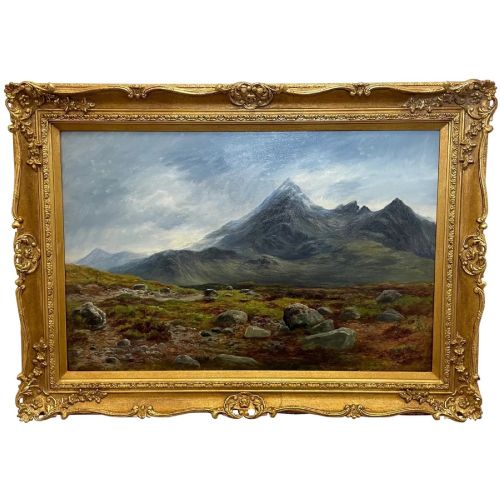
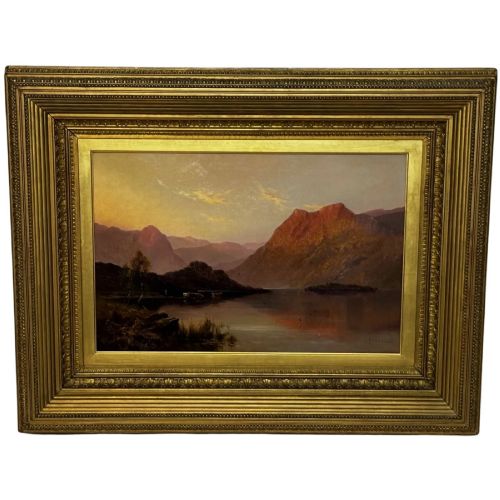
A victorian mountain canvas painting captures the dramatic topography of British and European highlands in oil, offering buyers a window into nineteenth-century romantic landscape traditions.
Victorian Mountain Canvas Painting
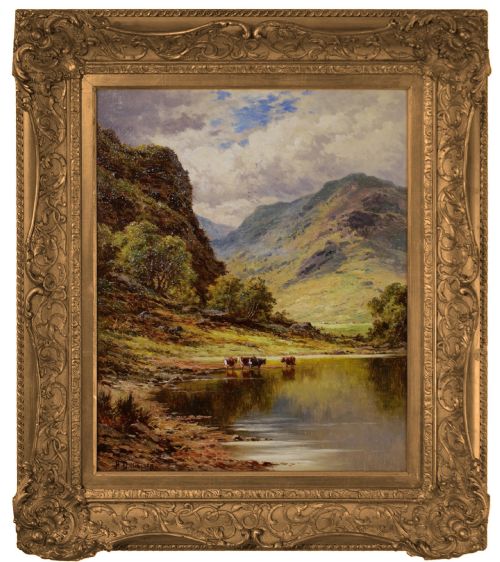
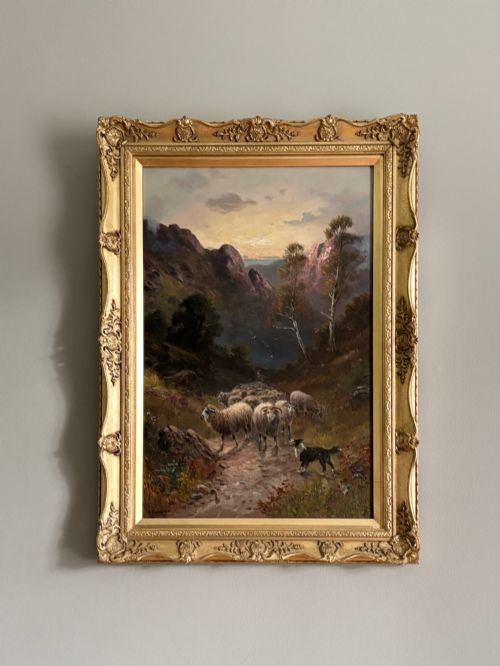
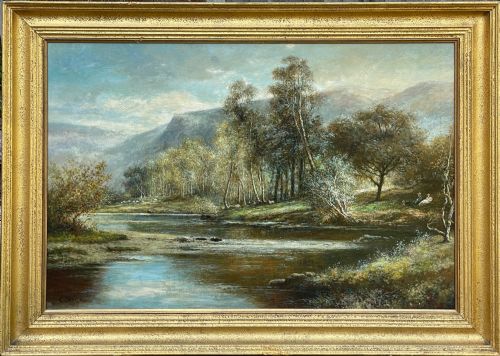
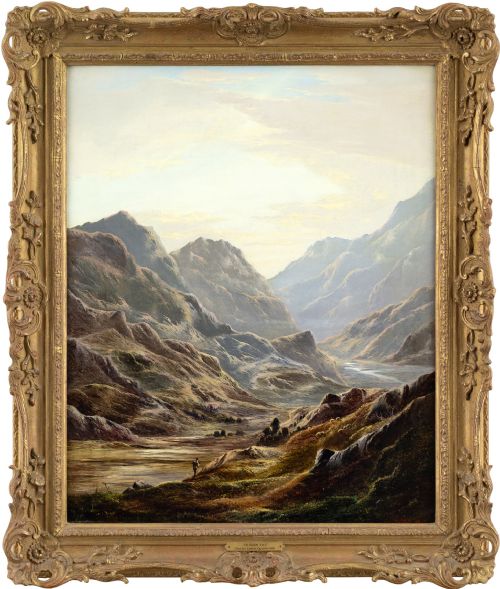
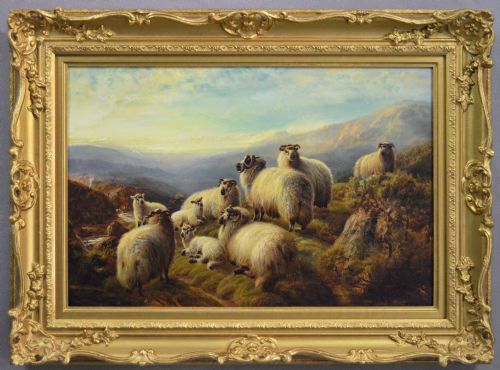
When searching for a victorian mountain canvas painting, collectors encounter framed artworks depicting highland cattle, rushing rivers, and craggy peaks across Scotland, Wales, and the Lake District. These canvases emerge predominantly from the nineteenth century, reflecting an era obsessed with the sublime majesty of untouched wilderness.
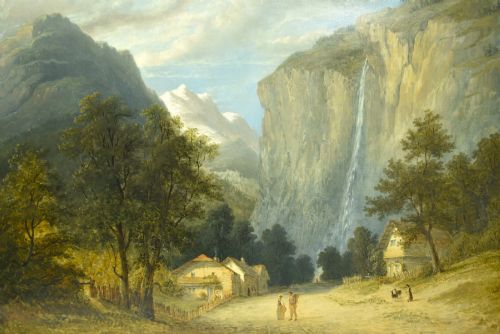
The prevailing formats on this page range from intimate pastoral studies to expansive framed views of Swiss falls and Bavarian castles. Artists of the period favoured specific regional topography, frequently returning to Snowdonia, the Trossachs, and Alpine valleys to record shifting weather and local fauna.
How they were made
Makers applied oil paint directly to stretched canvas supports, building luminous atmospheric effects through layered glazes and opaque impasto. Canvases were secured within heavy wooden frames embellished with moulded gesso and giltwood finishes.
Pigments captured the subtle tones of mountain mists, deep waters, and sunlit crags, relying on the natural texture of the fabric to hold the oil medium. Traditional joinery and pinned construction anchored the wooden stretchers behind each finished composition.
Several canvases faithfully record stubborn highland cattle standing firmly in the path of nineteenth-century rain showers.
What varies in quality
The distinction between standard works and masterworks rests upon the artist's command of light, geological accuracy, and atmospheric depth. Superior canvases demonstrate confident brushwork in rendering natural elements like turbulent water and highland fleece, whereas lesser examples rely on formulaic foliage and repetitive compositions.
The integrity of the original canvas support and the preservation of the surface varnish dictate the visual strength of the piece. Works retaining their period giltwood frames with minimal gesso loss command greater appreciation among collectors.
William Beattie Brown·Alfred Fontville de Breanski·Henry H Parker·Charles Leslie·Robert Watson·John Grenville Fennell·William Henry Mander·Sidney Richard Percy·Thomas Spinks·Walter J Watson·John Douglas Perrett·Karl Herrle·Stephen Enoch Hogley·Gustave De Brianski·Benjamin Williams Leader·Charles Jones·Louis Bosworth Hurt·Robert John Hammond·William Mellor·Edward John Niemann·Samuel Hart Turpin
The Victorian Mountain Canvas Painting Glossary
- Giltwood
- Wood carved and coated with a thin layer of gold leaf or metallic powder. This material frequently frames nineteenth-century landscape art.
- Gesso
- A plaster mixture applied to wooden frames and moulded into decorative relief patterns. It provides a smooth base for subsequent gilding.
- Impasto
- Paint applied thickly to a canvas so that it stands proud of the surface. This technique adds tactile dimension to highlights on water and rock.
- Stretcher
- The internal wooden frame that holds the canvas taut. Traditional examples utilise corner keys to adjust the tension of the fabric.
Victorian Mountain Canvas Painting: Frequently Asked Questions
How do I care for my canvas painting?
Keep oil paintings away from direct sunlight and fluctuating humidity to prevent the canvas from sagging and the paint from cracking. Dust the surface gently with a soft, dry brush without applying pressure to the pigment.
Avoid using liquid cleaners or moisture on the painted surface or the giltwood frame. Professional conservators should handle any deeper cleaning or varnish removal.
Were these paintings always framed in giltwood?
Most nineteenth-century landscapes were paired with ornate wooden frames finished in gesso and gilt to complement the academic style of the period. These frames were integral to the presentation and helped isolate the distant horizon for the viewer.
Some surviving works retain their original maker stamps on the reverse of the stretcher or frame. Replacements occur, but period-appropriate frames remain standard for fine art of this era.
How can I tell regions apart in these landscapes?
Artists relied on specific geographical markers, such as the distinct jagged silhouette of Welsh peaks like Snowdon or the rolling heather-clad expanses of the Scottish Highlands. Inscriptions on the reverse of the canvas or the wooden stretcher frequently identify the exact valley or lake.
Cattle, sheep, and local figures depicted in traditional dress also offer clues to the intended locale. Highland cattle and specific Scottish lochs dominate the northern subjects.
What defines the Romanticism style in these works?
Romanticism focuses on the emotional response to untamed nature, often emphasising awe, isolation, and the sublime power of weather over human figures. Mountain passes, stormy skies, and misty lakes serve as primary vehicles for this intense mood.
Skies often feature dramatic lighting effects, such as passing summer showers breaking over distant ridges. This approach prioritises atmospheric drama over strict topographical mapping.