


Traditional Glass Door Bookcase
A traditional glass door bookcase brings architectural dignity and visible order to a room, protecting volumes behind timber framing and clear panes.
Traditional Glass Door Bookcase
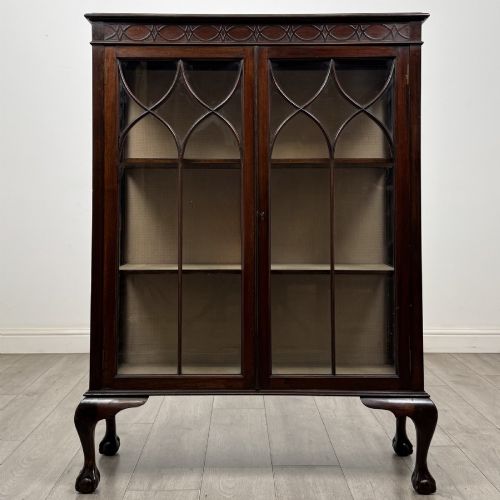
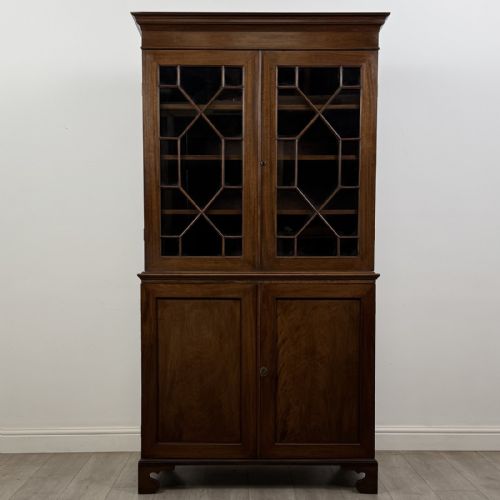
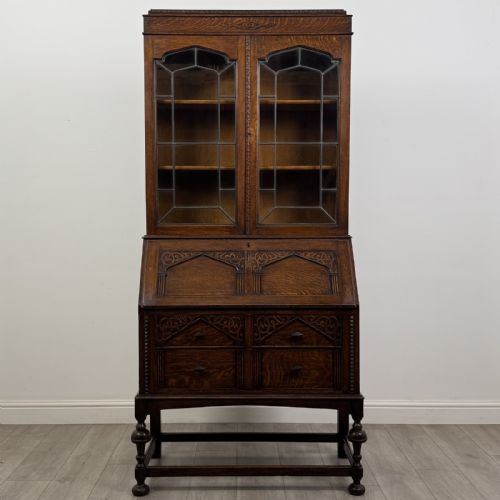
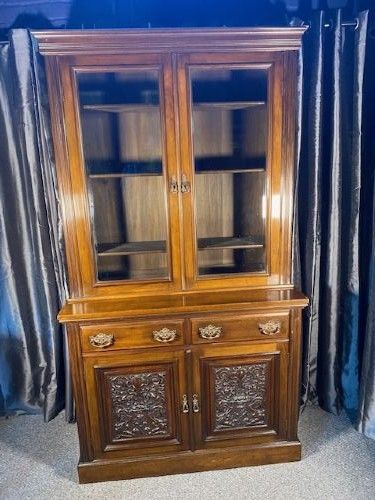
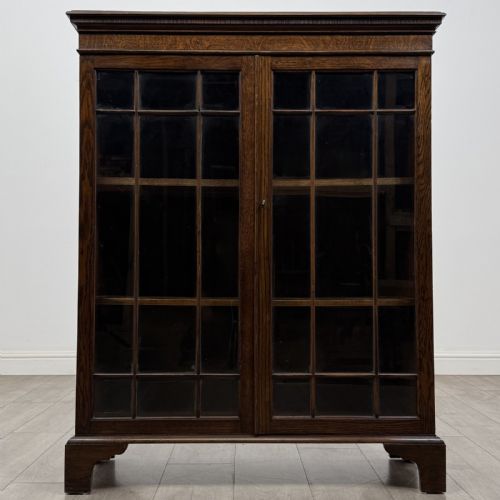
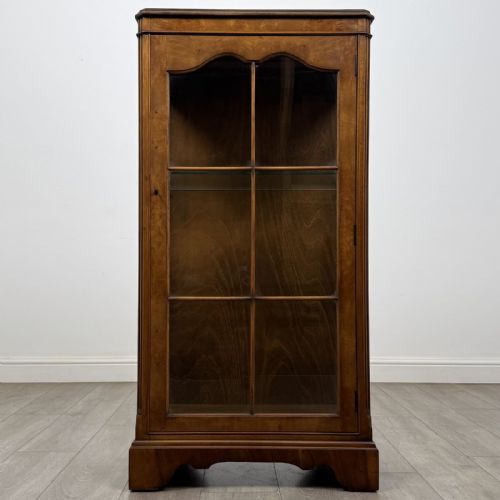
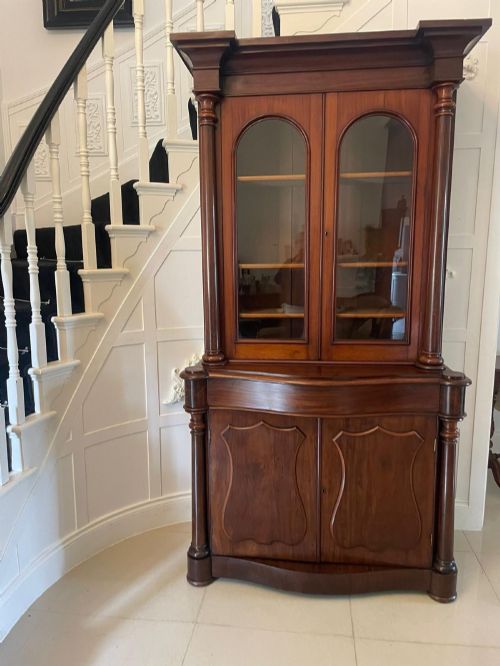
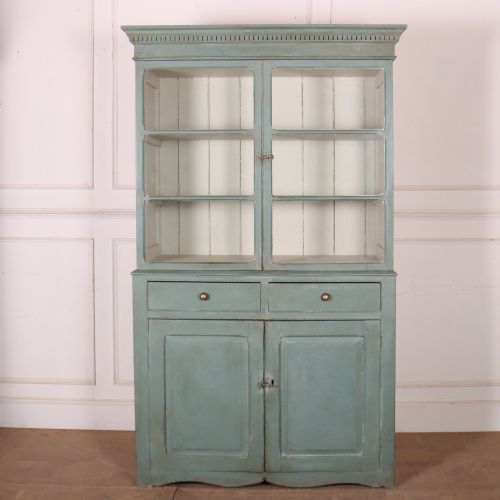
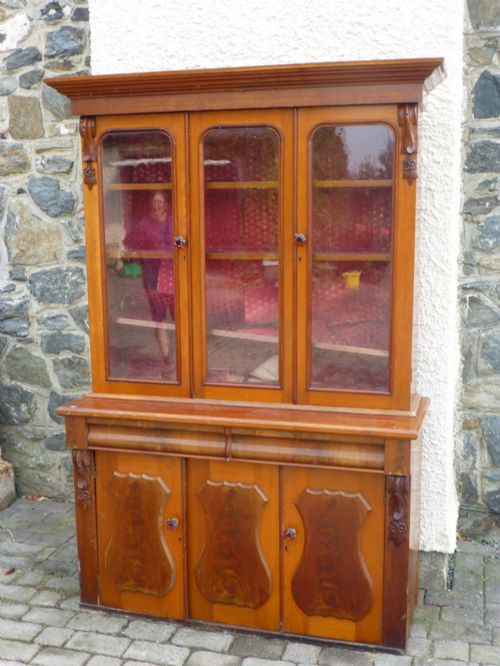
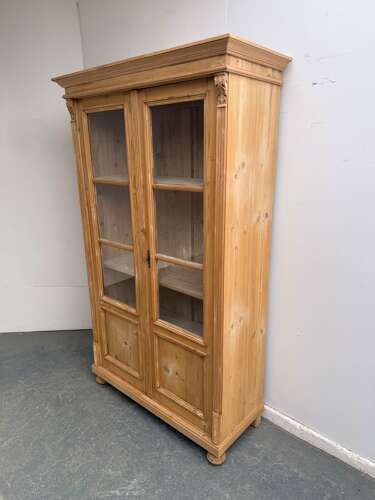
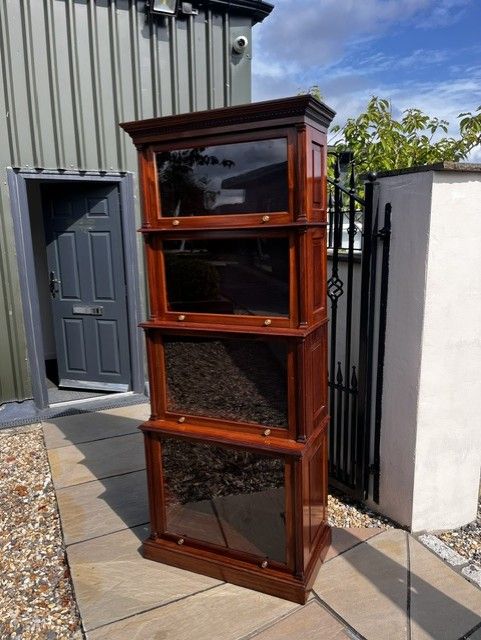
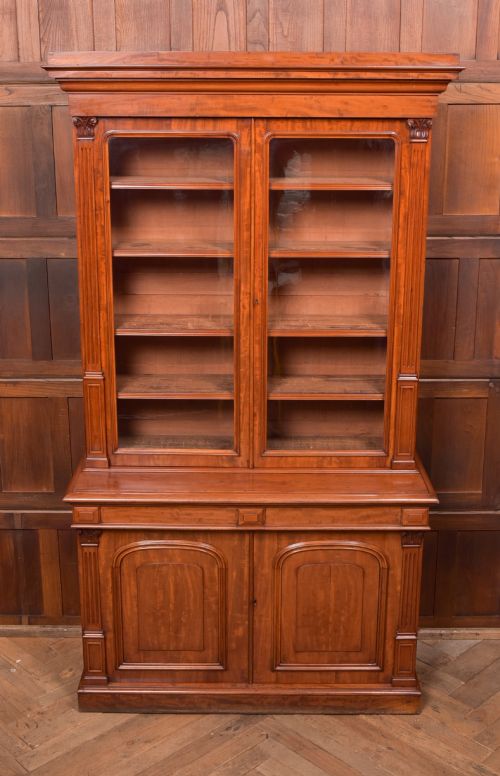
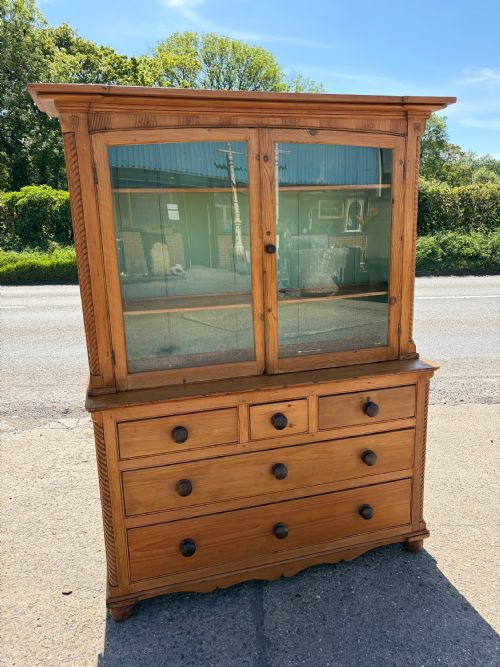
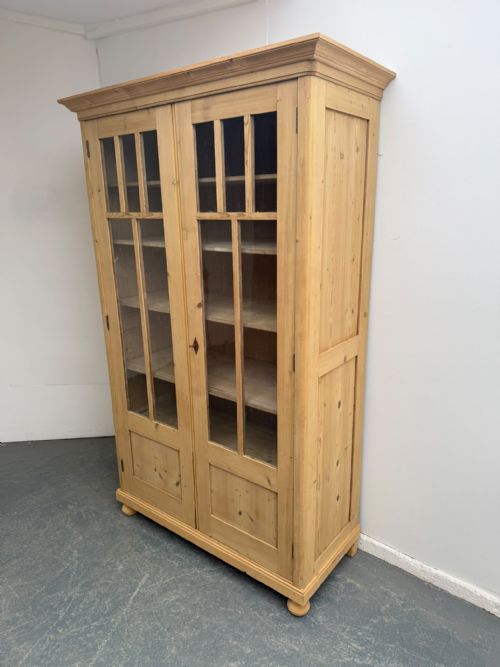
When you search for a traditional glass door bookcase, you encounter substantial timber furniture designed to hold books and display wares behind glazed panels. The pieces on this page span the Victorian and Edwardian eras through to the interwar period, taking the form of tall library cabinets, bureau bookcases, and kitchen dressers.
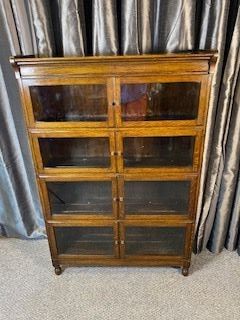
Mahogany and pine dominate the forms seen here, accompanied by examples in oak and walnut. These units range from large two-section library bookcases with glazed tops to compact barrister stacking systems and regional Welsh dressers featuring glazed upper cupboards.
How they were made
Cabinet makers constructed these traditional glass door bookcase pieces using solid hardwoods like mahogany and oak, alongside utilitarian softwoods such as pine. Joinery relied on traditional methods to support heavy shelving and the weight of glass doors.
Glazing techniques varied from simple multi-pane arrangements to intricate astral designs and leaded work, paired with brass hardware and iron fittings. Timber surfaces received polished finishes, wax treatments, or retained historical paint layers.
Traditional Glass Door Bookcase Retail Price Guide 2026
Typical asking prices for traditional glass door bookcase among the pieces listed under this phrase on Sellingantiques today, from the lower quarter to the upper quarter. They describe what is for sale here now, not the wider market.
What varies in quality
The distinction between tiers of quality rests upon timber selection, such as figured mahogany or burr walnut versus plain pine, and the ambition of the architectural proportions. Cabinetry featuring crisp carving, inlaid detailing, and well-balanced cornices commands greater attention.
Construction integrity and glass preservation define the standard of survival. Original glass panes, well-fitted doors that operate smoothly, and robust internal shelving separate standard utility items from finer library pieces.
The Traditional Glass Door Bookcase Glossary
- Astral glazed
- A method of dividing glass into smaller panes using slender wooden bars called astragal bars, creating geometric patterns across the door front.
- Barrister stacking bookcase
- A modular office bookcase featuring multiple tier sections with upward-lifting glass doors that slide into the cabinet.
- Bureau bookcase
- A dual-purpose piece combining a sloping writing desk flap below an upper glazed bookcase or display cabinet.
- Cornice
- The ornamental moulded projection that crowns the top of a tall bookcase or cabinet.
- Glazed top
- The upper section of a cabinet fitted with glass doors, designed for displaying books or china above a solid base.
Traditional Glass Door Bookcase: Frequently Asked Questions
How do I date a wooden bookcase?
Dating relies on timber choices, construction methods, and stylistic cues present in the cornices, feet, and door mouldings.
Earlier pieces often display hand-sawn timbers and specific period veneers, whereas later interwar items show standardised manufacturing traits.
Are the glass panes original?
Original glass often reveals minor imperfections, waviness, or small bubbles trapped within the material during early manufacture.
Flat, flawless glass replacement panes typically indicate modern reglazing work.
How do I care for antique mahogany?
Maintenance involves applying quality beeswax sparingly and buffing gently with a soft cloth to nourish the wood surface.
Keep timber furniture away from direct heat sources and strong sunlight to prevent warping and fading.
Can I adjust the shelf heights?
Many traditional bookcases feature fixed wooden shelving integral to the structural rigidity of the carcass.
Some later or modular examples incorporate adjustable shelf brackets or removable tiers for flexible storage.