
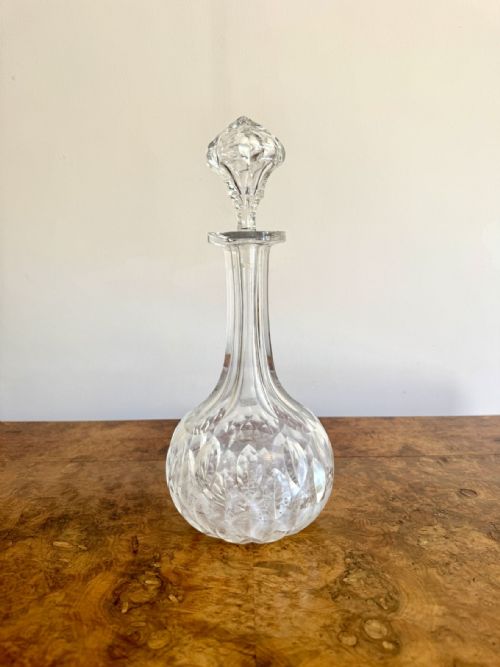


Traditional Glass Carafe
These traditional glass carafe selections bring heavy lead crystal and cut glass forms directly to the table from Victorian and Edwardian dining rooms.
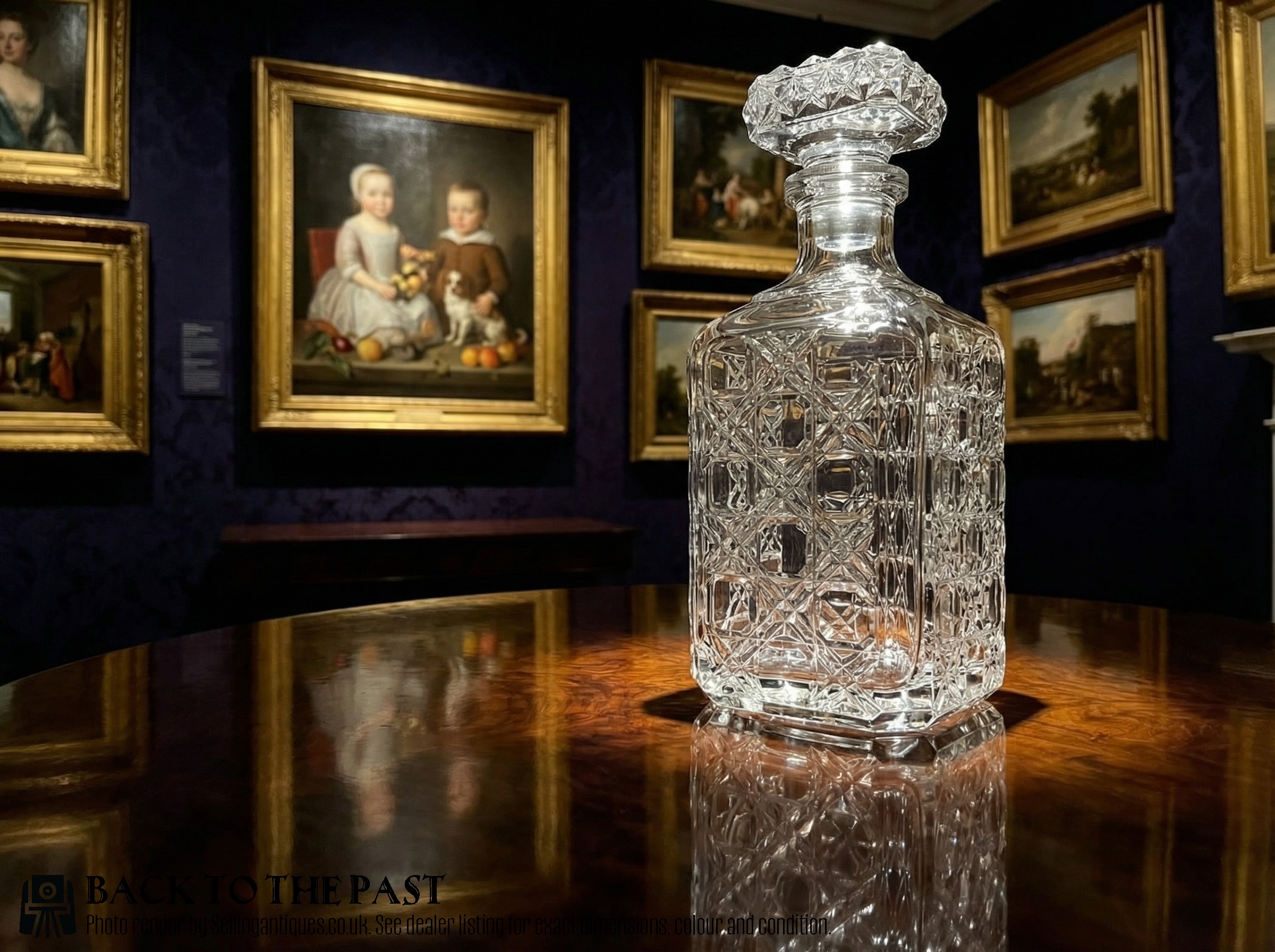
Traditional Glass Carafe
When buyers search for a traditional glass carafe, they are looking at heavy vessels designed to hold wine or spirits during dining and entertaining. The pieces listed here span the nineteenth century and the Edwardian period, taking the form of decanters and carafes.
The most common version to meet on this page is the Edwardian or Victorian cut glass decanter. These range from bell-shaped bodies to tall silhouettes shaped by earlier Regency and nineteenth-century hands.
How they were made
The primary materials recorded across these listings are cut glass, lead crystal, and clear glass. Artisans shaped these vessels through hot glass forming before applying deep wheel cuts and engravings to the exterior surfaces.
Production relied on heavy lead crystal recipes that allowed for sharp facets and brilliant light refraction. Many examples feature detailed surface work, combining plain clear glass bodies with intricate geometric cutting.
A heavy Victorian decanter makes an unmistakable thud when placed down on a solid mahogany dining table.
What varies in quality
Quality rests in the crispness of the glass cutting and the weight of the material itself. Fine examples demonstrate deep, clean facets that catch the light evenly without blurring or softness in the geometric patterns.
The distinction between standard vessels and superior pieces lies in the clarity of the crystal and the proportion of the form. Tall profiles and balanced pairs require higher skill in the blowing and cutting stages.
The Traditional Glass Carafe Glossary
- Cut Glass
- Glass shaped and patterned by holding it against a rotating abrasive wheel. This technique creates deep facets and geometric designs across the surface of the vessel.
- Lead Crystal
- Glass containing a high proportion of lead oxide, which increases weight, brilliance, and workability for deep cutting. It forms the heavy body of many traditional decanters.
- Decanter
- A stoppered glass vessel used for holding and serving wine or spirits. They appear frequently in nineteenth-century and Edwardian dining settings.
- Regency
- An English design period spanning the early nineteenth century. Pieces from this era often show distinct proportions and refined crystal cutting.
Traditional Glass Carafe: Frequently Asked Questions
How do I date a glass decanter?
Dating relies on observing the silhouette, the weight of the lead crystal, and the style of the glass cutting. Victorian and Edwardian examples often feature heavier bodies and distinct geometric facet patterns.
Changes in stopper design and base finishing also offer clues to the decade of manufacture. Comparing the form to documented nineteenth-century styles helps narrow the period.
What is the difference between a carafe and a decanter?
Decanters traditionally include a fitted glass stopper designed to seal spirits or wine for storage and serving. Carafes often feature an open neck without a stopper, though historical terminology frequently overlaps in antique listings.
Both serve similar functional roles on the dining table, with decanters tending toward heavier cut crystal forms. The presence of a matching stopper usually defines the decanter category.
How should I clean an antique glass decanter?
Cleaning requires lukewarm water and mild agents, avoiding sudden temperature changes that can crack old crystal. Soft bottle brushes help reach interior residues without scratching the delicate inner walls.
Harsh chemical detergents should be avoided to preserve the integrity of the antique glass. Thorough air drying ensures moisture does not linger inside closed vessels.
Did Victorians use these for wine daily?
Middle and upper-class Victorian households utilised cut glass decanters daily for decanting wine from cask bottles to the dining table. They formed an essential part of the formal dinner service and sideboard display.
Spirits and fortified wines were also housed in these heavy crystal vessels. Their presence reflected both utility and social ritual during nineteenth-century meals.