



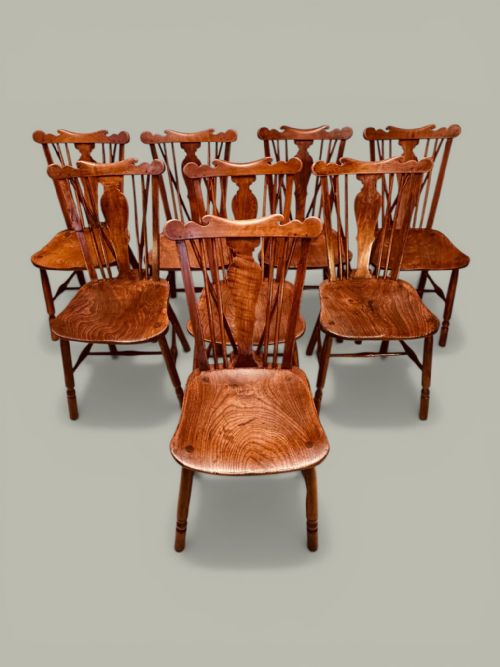


Traditional Fruitwood Chairs
Traditional fruitwood chairs are vernacular seating built from sturdy domestic timbers, prized for their warmth, rustic character and regional craftsmanship.
Traditional Fruitwood Chairs
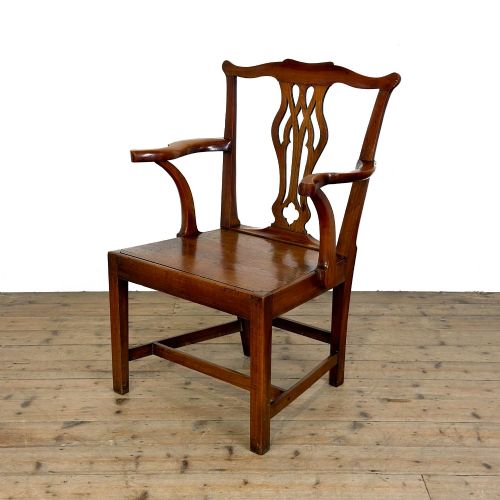
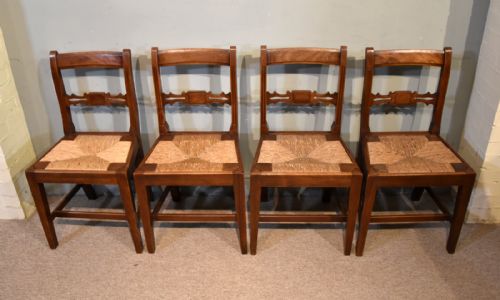
The selection encompasses diverse regional variations, including comb-back armchairs, spindle-back carvers, and rush-seat side chairs. Makers utilised native woods to build robust seating for everyday farmhouse and provincial use.
These pieces showcase the distinct grain and mellow tone of woods like cherrywood and applewood, often combined with elm, yew, or laburnum in Windsor construction. Sets of dining chairs and individual rocking chairs reflect the practical output of English and French regional cabinet makers.
How they were made
Makers built traditional fruitwood chairs using a combination of turned spindles, bent wood components, and solid plank seats. Workshops relied on native timbers such as fruitwood, elm, and beech, selecting each wood for its specific structural properties.
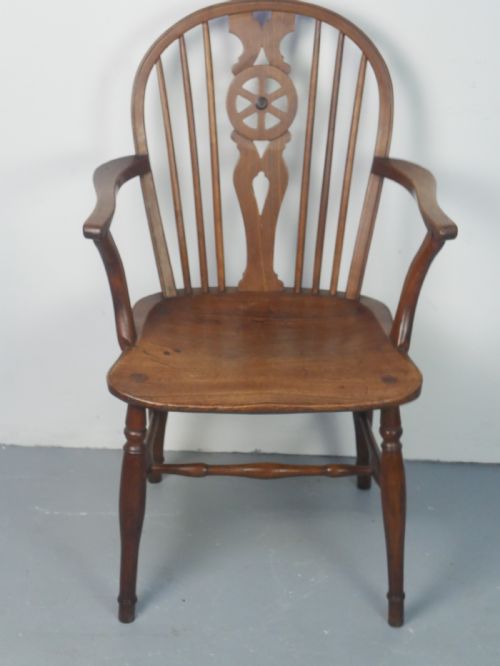
Windsor forms incorporated steam-bent hoops and sculpted saddles, while regional styles utilised mortice and tenon joinery to secure the legs and backs. The integration of contrasting woods, including yew and laburnum, provided both visual variety and structural strength.
Current listings feature eighteenth and nineteenth-century pieces, spanning Georgian, Regency, and Victorian country periods.
What varies in quality
Quality in traditional fruitwood chairs rests on the proportion of the turning, the comfort of the sculpted seat, and the integrity of the regional design. Finer examples display balanced proportions in the spindles and arms, alongside careful selection of timber matching.
The presence of multiple native woods within a single Windsor frame indicates a more ambitious workshop piece. Gradations in quality emerge through the subtlety of the spindle profiles and the depth of the saddle seat carving.
The Traditional Fruitwood Chairs Glossary
- Windsor armchair
- A wooden chair featuring a solid sculpted seat into which the legs and back spindles are directly fitted. This form often incorporates a bentwood hoop or comb back.
- Carver chair
- An armchair, usually designed to match a set of smaller dining chairs, positioned at the head of a table. These pieces frequently feature open arms and sturdy spindle backs.
- Rush seat
- A seating surface woven from dried marsh rushes, providing a flexible and traditional pad. Such seats appear across various regional chair types from the eighteenth and nineteenth centuries.
- Comb back
- A Windsor chair back design where the vertical spindles extend upward to support a horizontal top rail resembling the teeth of a comb. This style offers both ergonomic support and distinct regional character.
- Vernacular primitive
- A term describing furniture made by local craftsmen for everyday domestic use, free from high-fashion academic styles. These pieces prioritise functional utility and local material availability.
Traditional Fruitwood Chairs: Frequently Asked Questions
How do I care for fruitwood?
Keep wooden seating away from direct heat sources and sudden temperature shifts to prevent timber splitting. Apply a suitable microcrystalline wax occasionally to nourish the grain and maintain the surface sheen.
Avoid placing chairs in damp environments, as moisture can weaken rush seats and joint structures over time. Regular dusting with a soft, dry cloth protects the historic patina.
Are these chairs comfortable for daily use?
Most vernacular seating was shaped to fit the human body, featuring scooped wooden saddles and supportive spindle backs. Dining and armchair variants offer sturdy support for everyday seating around a table.
Heavier Windsor forms provide a solid sit, though users often add loose cushions for extended lounging. The robust construction ensures they handle regular domestic life.
What is a Mendlesham chair?
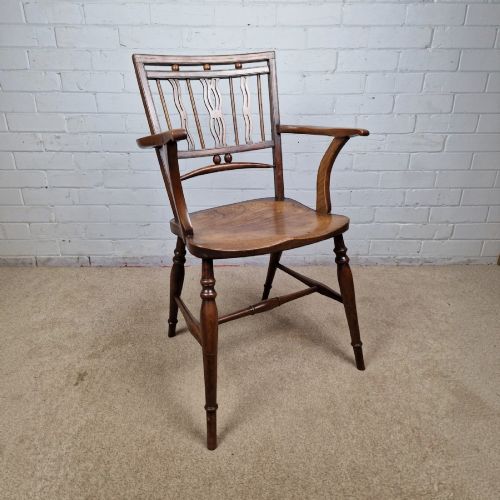
A Mendlesham chair is a distinctive type of regional armchair originating from Suffolk, typically constructed from fruitwood with elm seats. These pieces are recognised by their solid splats and refined country craftsmanship.
They represent a high point in English regional chairmaking during the eighteenth and nineteenth centuries. Collectors value them for their specific local attribution and elegant proportions.
How can I tell the age of a chair?
Examine the construction methods, tool marks, and timber wear patterns to gauge the period of manufacture. Hand-turned spindles and accumulated surface patination offer clear clues to age.
Comparing the design against documented regional styles helps narrow down the production era. Subtle shifts in arm shape and leg turning often distinguish eighteenth-century pieces from later nineteenth-century work.