

Antique Rush Side Chairs
Antique rush side chairs bring honest country craft and woven texture straight to the dining table.
Antique Rush Side Chairs
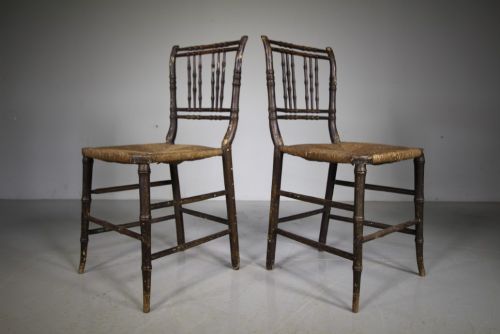
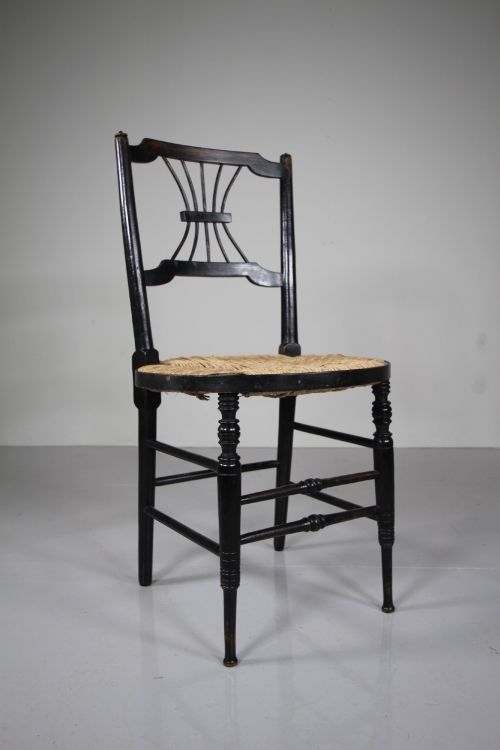
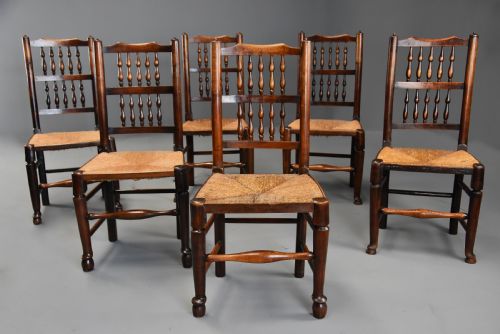
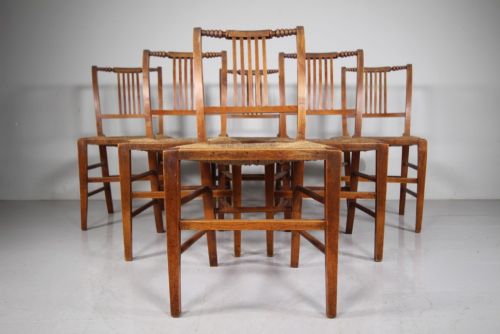
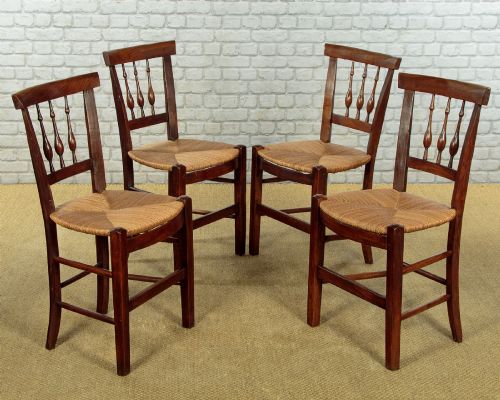
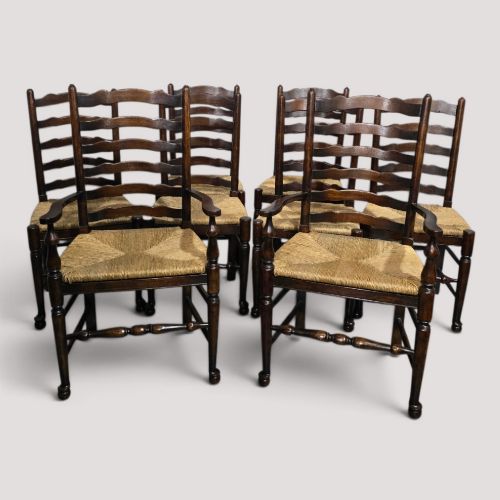
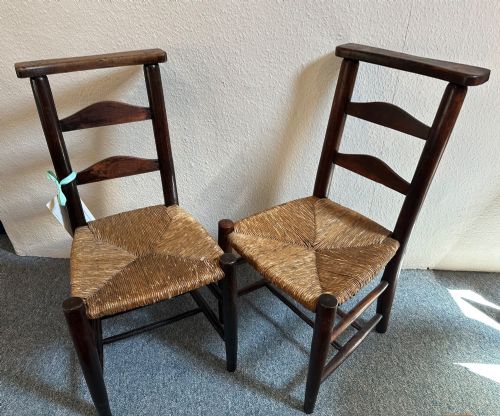
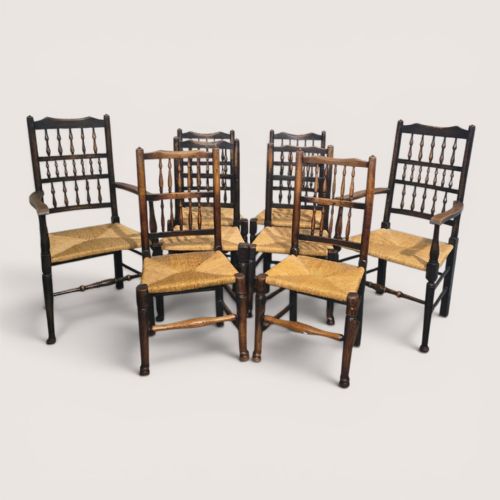
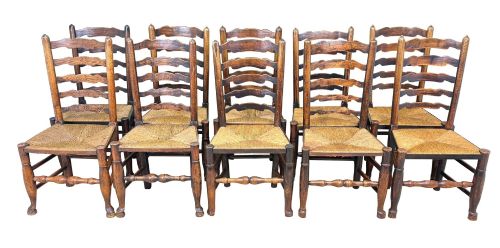
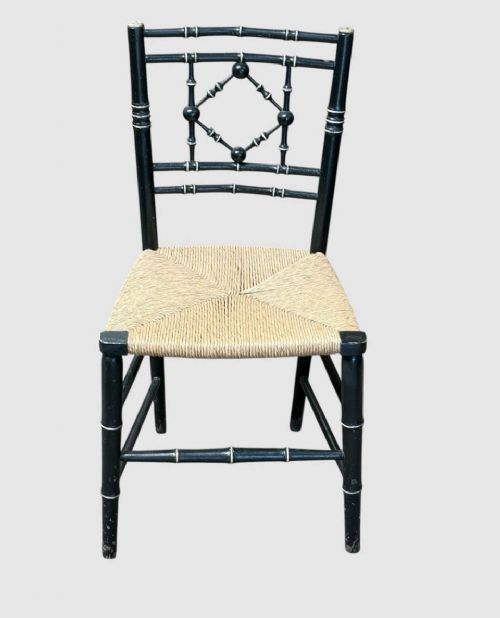
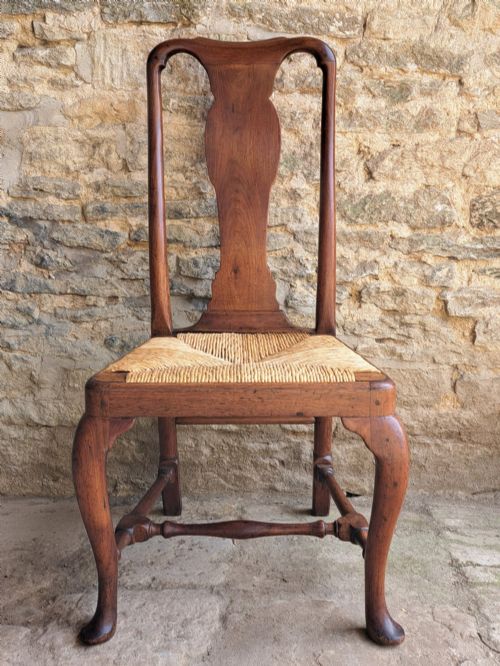
Antique rush side chairs are practical seating forms constructed primarily for dining rooms, kitchens and halls, defined by woven seating panels made from natural marsh rushes. These chairs appear predominantly in regional country styles, including English vernacular, ladder back and spindle back designs.
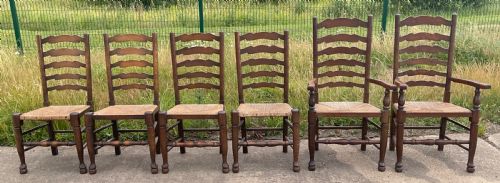
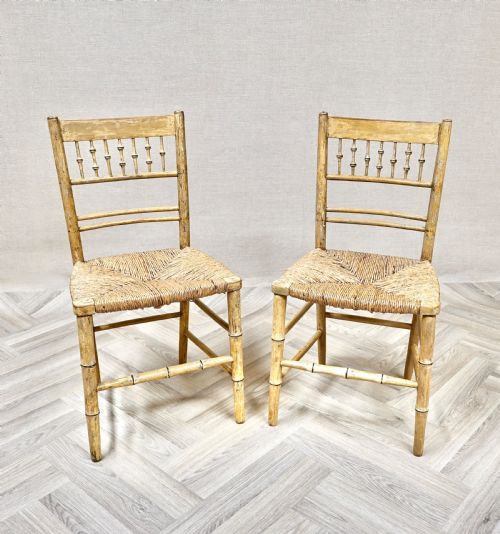
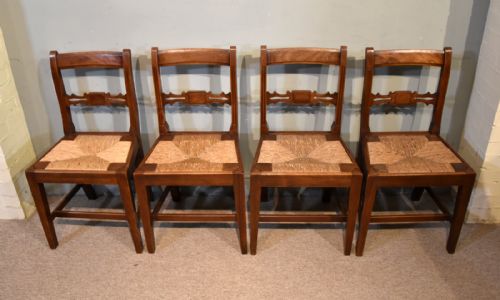
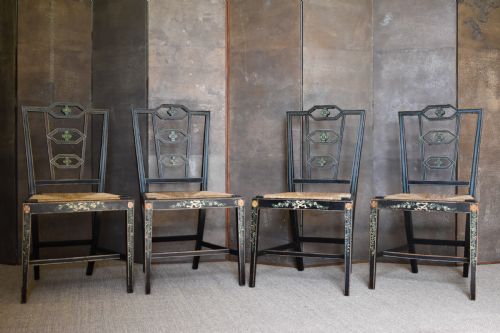
The selection ranges from early Georgian examples and Regency painted versions to 19th-century elm and ash country sets, alongside later Arts and Crafts interpretations. Buyers encounter single chairs, pairs and larger matched or harlequin sets suitable for daily use around a dining table.
How they were made
Cabinetmakers and rural bodgers utilised robust native timbers such as oak, elm, ash, fruitwood and beech for the frames, turning spindles on lathes and shaping ladder backs by hand. Traditional joinery relied heavily on pegged mortise and tenon joints to withstand the rigours of domestic service.
The characteristic seats were woven tightly using dried marsh rush over wooden framing rails, creating a resilient, flexible surface. Regional variations incorporated painted finishes, bamboo turnings or plaited straw known as súgán.
One recorded set carries a direct ecclesiastical connection, having been specifically manufactured for St Paul's Cathedral in London.
What varies in quality
Quality rests significantly on the integrity of the timber frame and the tightness of the original or period-correct rush weaving. Better examples retain their structural rigidity without excessive movement in the joints.
Proportion, refined turning of the spindles and the presence of a desirable surface patina elevate certain country pieces above standard utility seating.
William Morris·Rossetti·Ford Maddox Brown·Edward Gardener·Philip Webb
The Antique Rush Side Chairs Glossary
- Rush
- A marsh plant used for centuries to weave resilient, textured chair seats. It provides a natural, flexible surface that responds well to traditional seating methods.
- Ladder back
- A chair design featuring horizontal arched slats resembling a ladder between the rear upright posts. This form is common in vernacular country seating from the 18th and 19th centuries.
- Spindle back
- A chair style utilising multiple slender turned wooden vertical rods in the backrest. These members offer lighter visual weight and comfortable back support.
- Patina
- The deep surface sheen and mellow tone developed on wood over decades of handling and use. It indicates age and careful maintenance by past owners.
- Harlequin set
- A group of dining chairs sharing similar periods or styles but collected together rather than originally manufactured as one uniform set.
Antique Rush Side Chairs: Frequently Asked Questions
How do I care for antique rush seats?
Keep woven rush seats dry and away from direct heat sources to prevent the natural fibres from becoming brittle. Cleaning requires only a soft brush or a slightly damp cloth.
Avoid soaking the seating material with water, as excess moisture causes the rush to rot and weaken over time. Regular gentle dusting preserves the integrity of the natural weave.
Can I use these chairs every day?
Most antique rush side chairs were built as robust utility furniture for kitchens and dining rooms. Solid construction in woods like oak and elm makes them suitable for regular daily seating.
Check that the frame joints remain tight and the woven rush shows no major fraying before placing them into heavy daily rotation. Balanced weight distribution protects both the wooden stretchers and the woven panels.
What is a harlequin set of chairs?
A harlequin set consists of dining chairs that share matching stylistic traits, periods or materials but were gathered together over time rather than bought as a single factory batch. These groupings offer a characterful, collected aesthetic around a dining table.
Matching heights and general back silhouettes ensure the chairs sit harmoniously together despite minor variations in turning or timber grain.
How do I distinguish regional country styles?
Regional country chairs often display local timber choices and specific turning characteristics unique to their area of production. Lancashire, Cheshire and Irish workshops each developed distinct proportions and spindle arrangements.
Examining the wood species, such as local fruitwood or alder alongside standard elm and ash, often points directly to the geographical origin of the piece.