





Woven Seat Side Chairs
Woven seat side chairs combine traditional materials with practical domestic seating, appearing here in regional, arts and crafts, and period forms.
Woven Seat Side Chairs
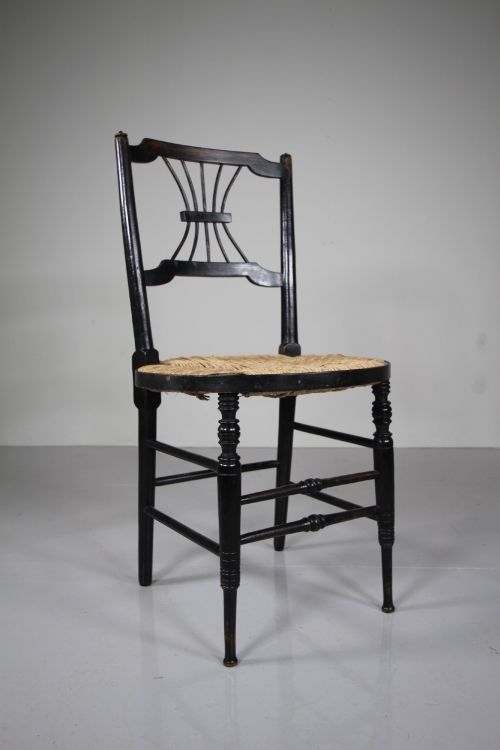
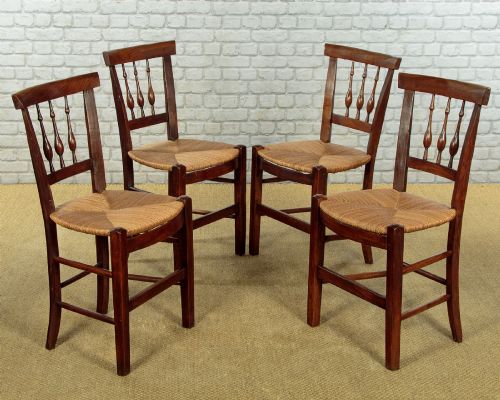
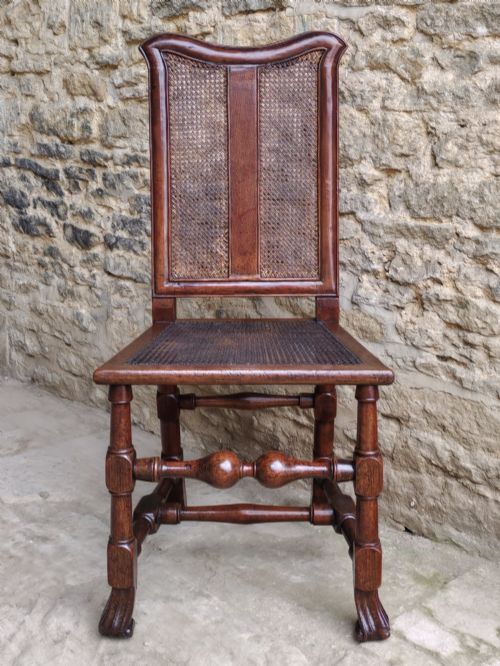
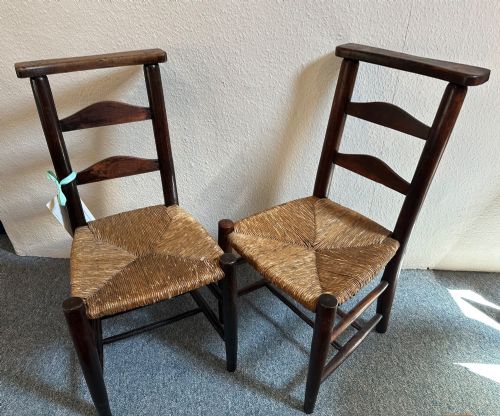
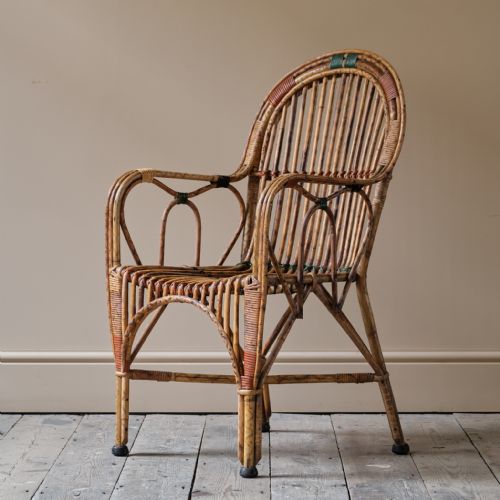
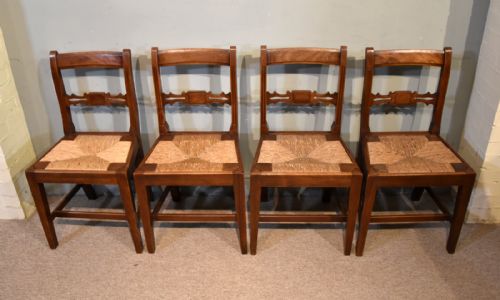
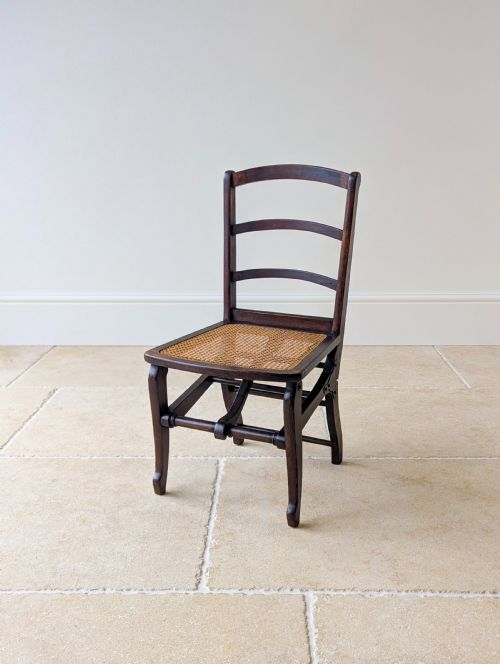
When buyers search for woven seat side chairs, they look for domestic seating constructed with plant-based webbing, cord, or rattan surfaces. The examples found here span from the eighteenth century through the twentieth century, taking forms such as country dining chairs, ladder backs, and high-back designs.
The regional and stylistic variations include English country pieces, French provincial models, and Arts and Crafts productions. Many items appear in sets, whilst others survive as single chairs or pairs intended for occasional use in halls or bedrooms.
How they were made
The frames rely on timbers such as elm, oak, beech, walnut, fruitwood, ash, and alder, shaped through turning, bending, and joinery. Makers utilised local woods suited to regional framing traditions, incorporating spindle backs, barley twist legs, and ladder backs.
Seats employ rush, cane, rattan, willow, plaited straw, and súgán, woven directly through or around the frame apertures. This construction method provides a flexible, supportive platform that distributes weight evenly across the seat frame.
One exceptional chair bears a direct ink stamp marking it for service inside St Paul's Cathedral.
What varies in quality
Quality rests upon the integrity of the timber framing and the tightness of the woven seating material. Superior examples maintain rigid joinery without excessive movement in the legs and stretchers.
The refinement of turning on the posts, the symmetry of ladder backs, and the even tension of the rush or cane work distinguish standard utilitarian seating from workshop productions associated with named designers.
William Morris·Edward Gardener·Philip Webb·Ford Madox Brown·Rossetti
The Woven Seat Side Chairs Glossary
- Rush
- A wetland plant material twisted into cords and woven into traditional chair seats. It provides a durable, textured surface common in country seating.
- Cane
- Split rattan peel woven into patterned mesh panels for chair seats and backs. This material offers a light appearance used extensively in period seating.
- Ladder back
- A chair back featuring multiple horizontal wooden slats between the upright posts. This structural design appeared frequently in vernacular country furniture.
- Bergère
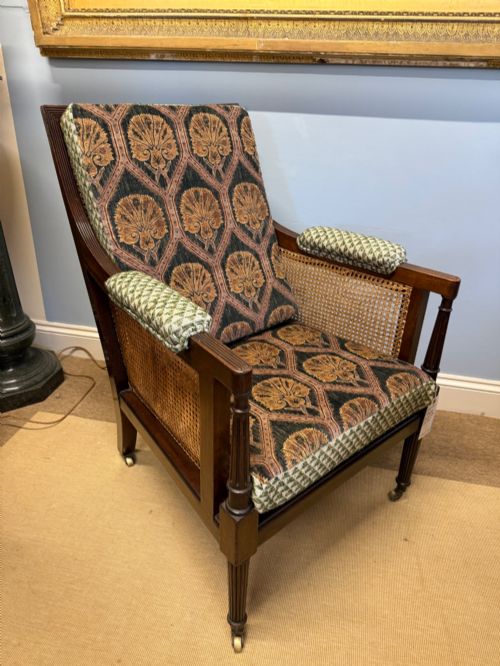
- An enclosed upholstered or cane-sided armchair with a wooden frame. These seats often incorporate woven cane panels on the back and sides.
- Súgán
- An Irish term for twisted straw or hay rope used for vernacular chair seating. It forms a sturdy, rustic woven pad on traditional chairs.
Woven Seat Side Chairs: Frequently Asked Questions
How do I clean a rush seat?
Use a dry brush to remove dust from the crevices of the twisted plant fibres.
Avoid excess water, as moisture causes natural rush to weaken and snap over time.
Can cane seats support daily use?
Traditional cane work possesses natural flexibility that accommodates regular sitting without immediate failure.
Heavier daily use suits tighter mesh patterns and sturdier hardwood frames.
How do I identify an Arts and Crafts chair?
Look for honest construction methods, exposed joinery, and an emphasis on traditional materials.
These pieces often feature ladder backs or rush seating tied to specific nineteenth-century design workshops.
Are mismatched dining sets period correct?
Country households historically gathered seating from various local sources rather than buying uniform sets.
Matched sets of six or eight represent more formal dining arrangements from later periods.