




Traditional Fruit Wall Art
Traditional fruit wall art brings centuries of classical still life and oil painting into domestic rooms through depictions of apples, grapes, and laden tables.
Traditional Fruit Wall Art
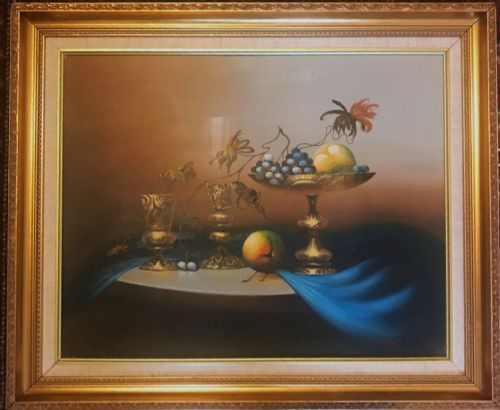
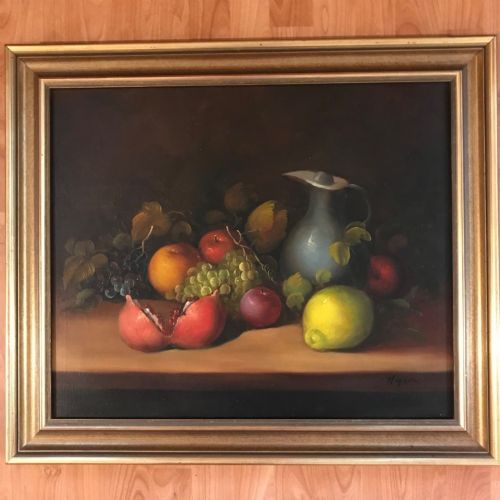
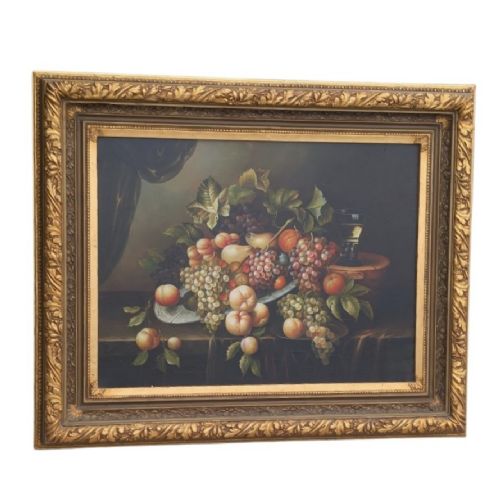
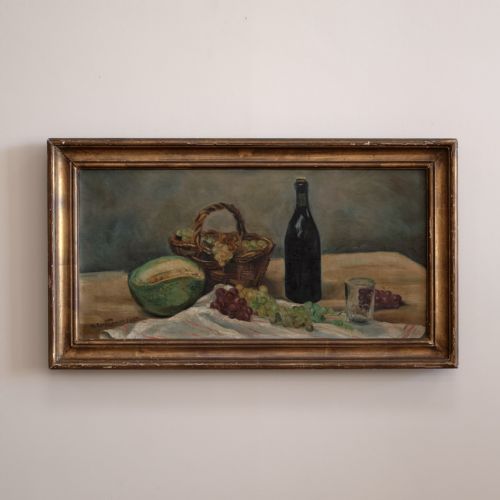
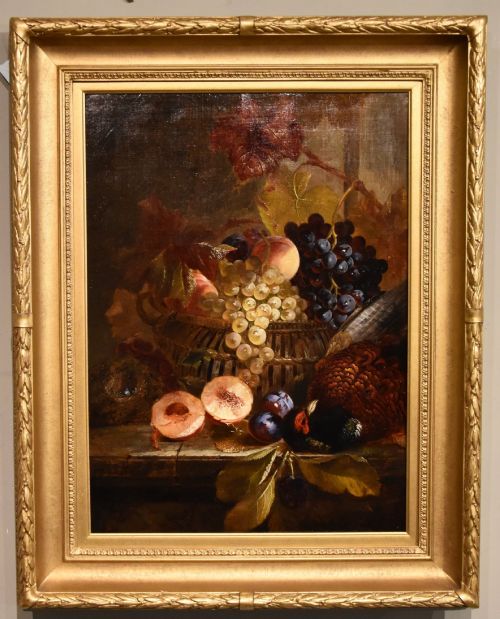
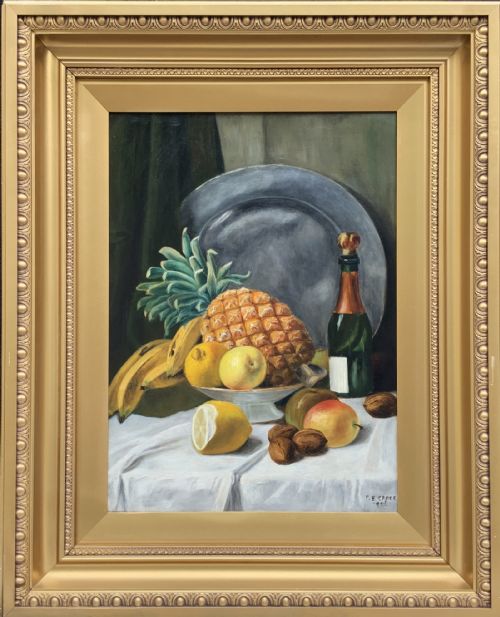
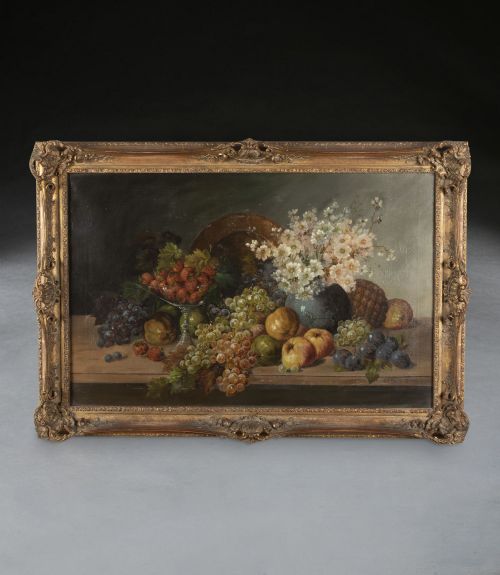
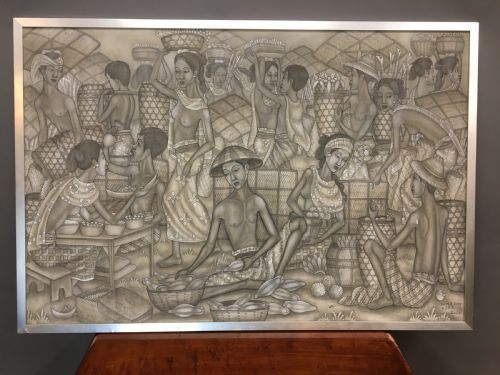
Traditional fruit wall art encompasses oil paintings, watercolours, and tempera works depicting natural arrangements of produce, often accompanied by vessels and game. These pieces emerge from the nineteenth century, the Edwardian era, and mid-twentieth century schools.
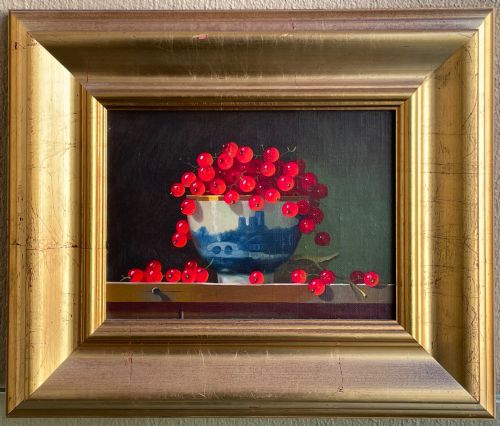
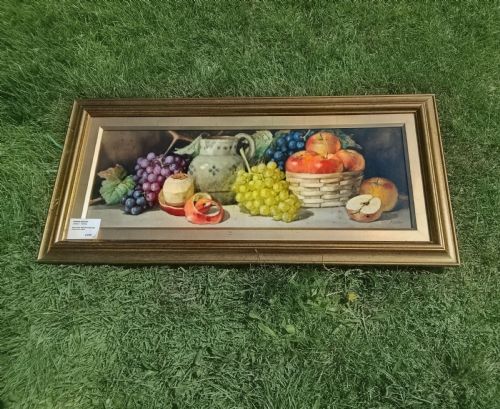
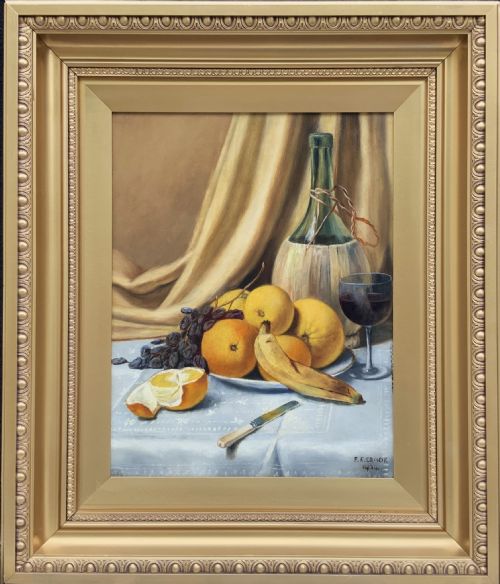
The most common formats on this page are oil on canvas and oil on wood panel, frequently framed in gilded wood or solid period mouldings. Subjects range from simple baskets of apples and grapes to elaborate larder and market scenes.
How traditional fruit wall art was made
Painters utilised oil paint or watercolour applied to prepared canvas, wood panels, or paper supports to render detailed textures of fruit skins and foliage. Canvases were stretched on wooden frames and frequently housed within elaborate gilt or giltwood frames.
Techniques span classical realism and baroque compositions, relying on tonal contrast to create depth in depictions of fruit, ceramics, and textiles.
Materials across the inventory include oil on canvas, oil paint, watercolour, tempera, gilt, gold leaf, and wood panels.
What varies in quality
Quality rests in the handling of light and shadow, the naturalism of form in the rendered fruit, and the preservation of the original paint surface. Finer works display meticulous brushwork in the depiction of translucent grapes, textured rinds, and reflective surfaces on ceramic jugs.
The material integrity of the primary support and the presence of a period-appropriate or original gilt frame contribute significantly to the standing of an individual canvas.
Jozsef Molnar·William Henry Ward·Ian Parker·Arthur Dudley·Evelyn Chester·Thomas Hooper·J.C. de Bruin·George Lance·James and William Ward
The Traditional Fruit Wall Art Glossary
- Still life
- An artwork depicting inanimate subject matter, typically commonplace objects such as fruit, flowers, and tableware. This genre forms the core of the available works.
- Giltwood
- Wood carved and coated with gold leaf or metallic gilt powder. Many nineteenth-century canvases are mounted in these decorative frames.
- Tempera
- A permanent, fast-drying painting medium consisting of coloured pigment mixed with a water-binder agent, such as egg yolk. It appears on canvas supports in specific school works.
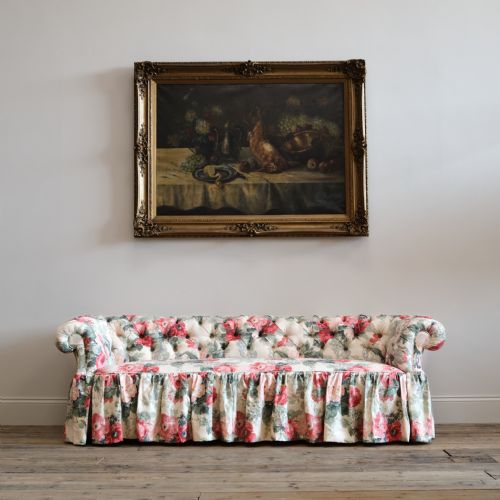
- Larder view
- A specialised sub-genre of still life painting focusing on provisions, game, and fruit arranged as if stored in a pantry. These compositions often emphasise domestic abundance.
Traditional Fruit Wall Art: Frequently Asked Questions
What subjects appear in these paintings?
The compositions predominantly feature arrangements of fruit such as apples, grapes, melons, and pomegranates. These are frequently paired with Chinese ginger jars, ceramic jugs, baskets, and occasionally dead game.
Secondary elements include flowers, walnuts, and red berries, creating balanced studies of colour and texture.
How do I date a piece?
Dating relies on the stylistic markers of the painting and the physical construction of the canvas and frame. Nineteenth-century works often exhibit classical realism and heavier giltwood frames, whilst mid-century pieces reflect simplified palettes and distinct canvas preparations.
Examining the stretcher bars, nails, and artist signatures provides further chronological context.
Where were these painted?
The works originate from various European traditions, including Dutch and English schools, alongside specific regional workshops like the Ubud School. Artists worked across different countries within classical realism and baroque frameworks.
This geographical breadth accounts for the variety in framing and canvas preparation.