
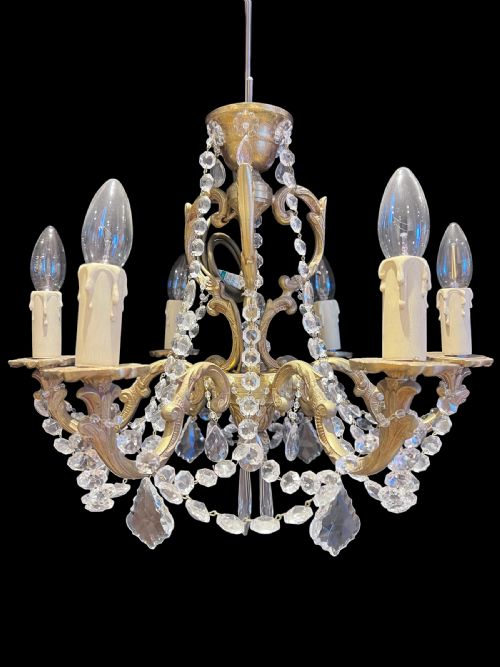

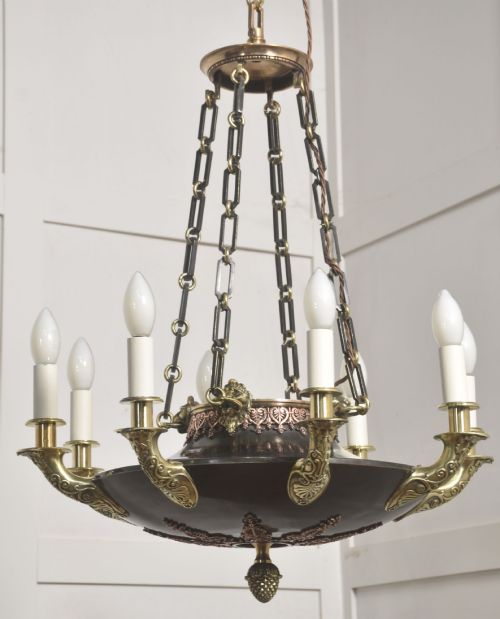
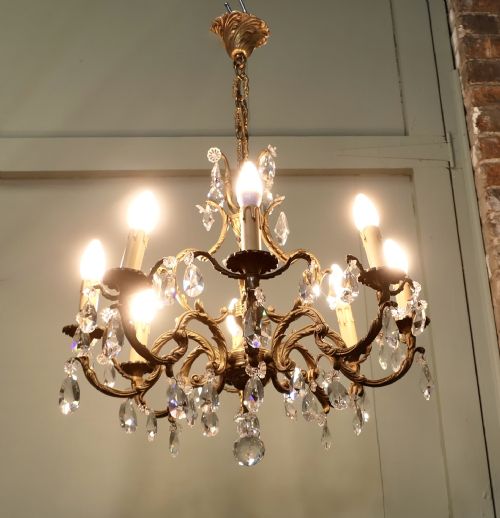
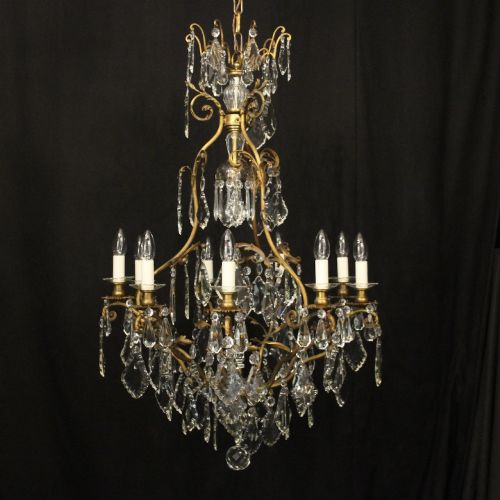
Traditional French Brass Chandelier
A traditional french brass chandelier brings warmth and proportion to a room, offering the unmistakable glow of antique metalwork and cut glass.
Traditional French Brass Chandelier
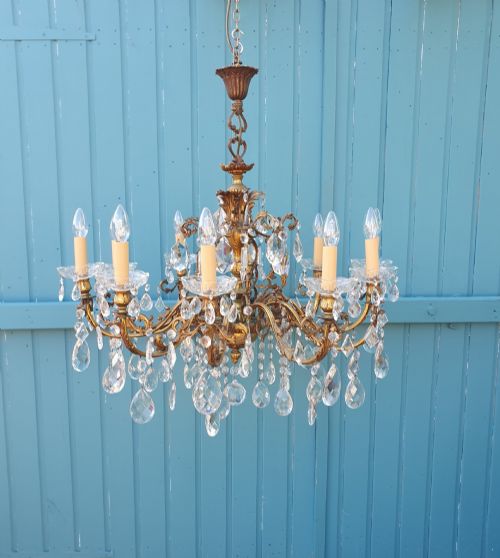
When you search for a traditional french brass chandelier, you are looking at overhead lighting fixtures that combine metal frames with glass or crystal drops. These pieces originate primarily from the nineteenth and early twentieth centuries, spanning periods such as the Edwardian era and the nineteen-twenties.
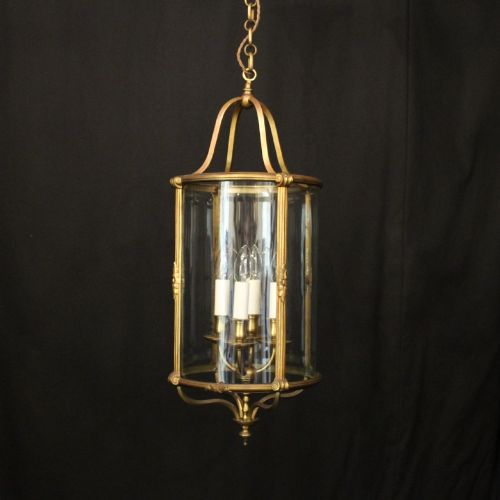
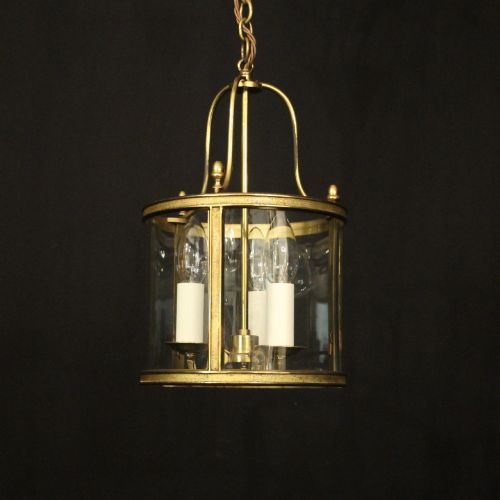
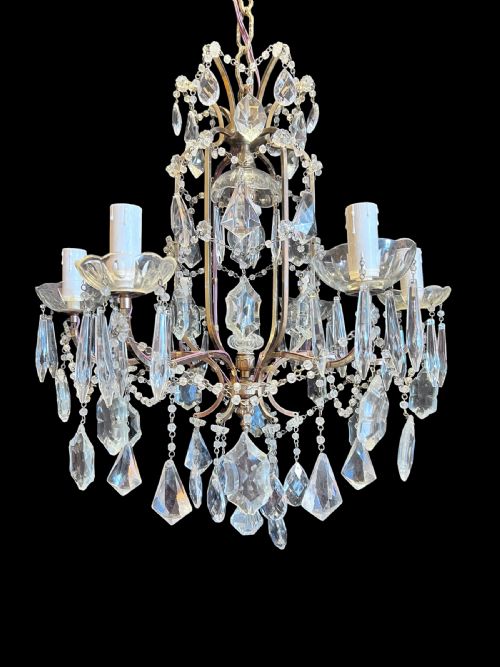
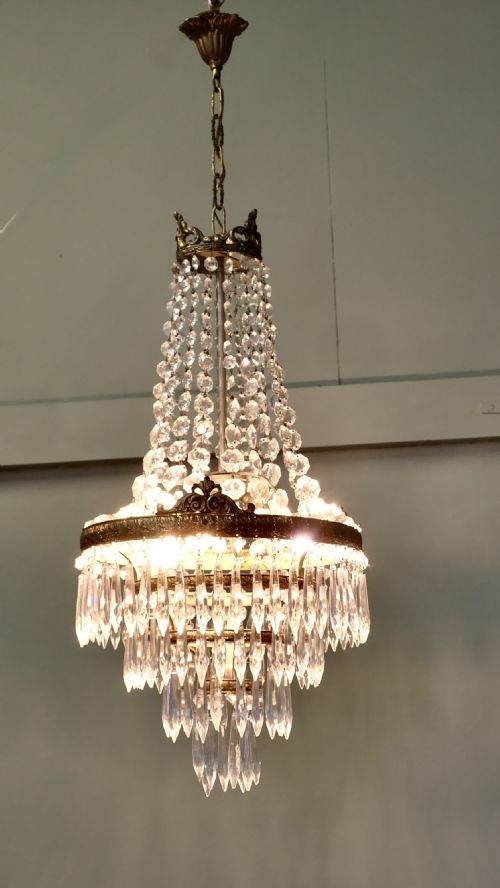
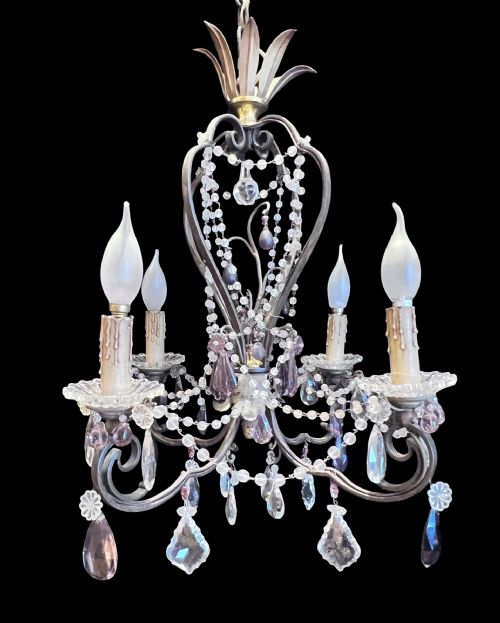
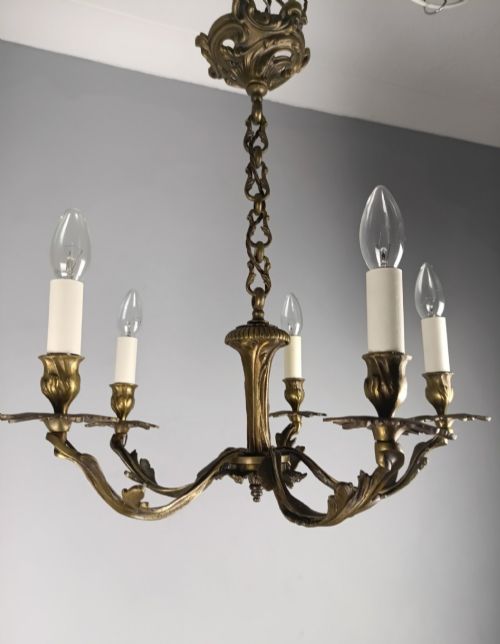
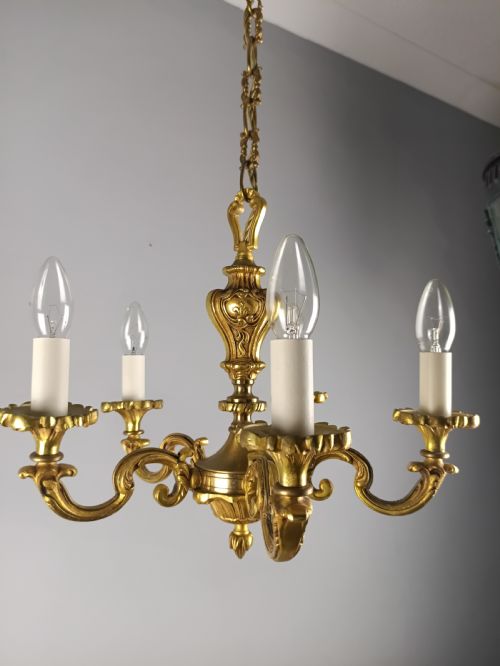
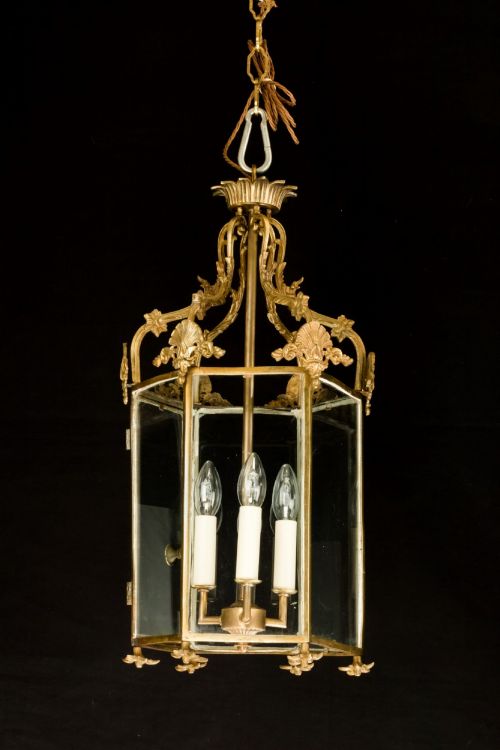
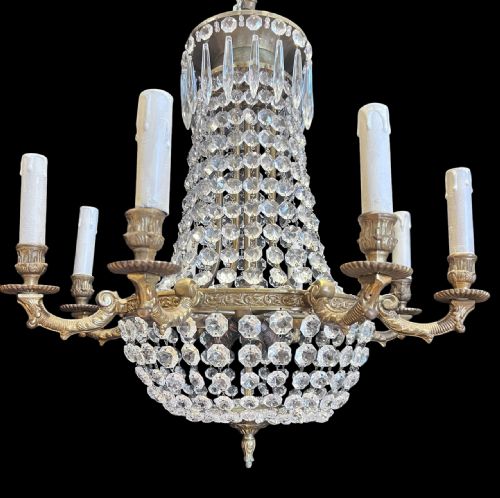
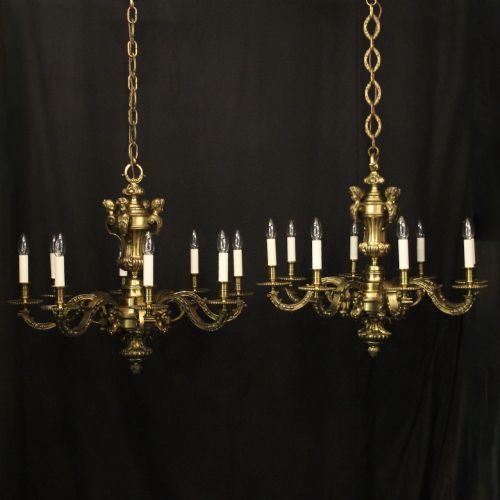
The most common versions met on this page are multi-light fittings fashioned from brass, gilt bronze, or gilded brass. They frequently incorporate hanging crystal lustres, teardrops, or waterfall configurations, alongside enclosed hall lanterns.
Styles range from restrained neoclassical designs to elaborate rococo revival and empire forms. Many pieces feature multiple candle-style arms, varying from intimate three-light arrangements up to grander configurations with sixteen or eighteen lights.
Materials and construction
Makers utilised cast and wrought brass, bronze, and copper as the structural backbone for these chandeliers. Gilding, silver plating, or dark patination was frequently applied to the metal surfaces to achieve specific decorative effects.
Crystals and glass drops were hand-cut and suspended from the metal frames using wire loops or pins. These transparent elements were deployed to refract light from the central candles or early electric bulbs, creating visual shimmer across the room.
Several pieces include coloured crystals, proving that historical interiors loved a splash of playful tint.
Distinguishing quality across the range
The standard of metal casting and chasing dictates much of the distinction in these chandeliers. Finer examples display crisp detail in the brass or bronze foliage and mounts, whereas simpler pieces rely on plain or repetitive stamped components.
The quality and completeness of the crystal elements also set pieces apart. Heavier, deeply cut crystal lustres that retain their matching drops and original patinated metal frames represent the higher tier of the selection.
The Traditional French Brass Chandelier Glossary
- Lustre
- A cut glass or crystal pendant hung from the arms or crown of a chandelier. These drops catch and multiply the light.
- Gilt Bronze
- Bronze metal that has been coated with a thin layer of gold leaf or gold paint. This finish provides a warm, enduring lustre.
- Hall Lantern
- An enclosed ceiling light designed for narrow spaces like corridors and entrances. They often feature glass panes set within a brass or bronze framework.
- Tent and Waterfall
- A specific crystal arrangement where strings of beads form an upper tent shape that cascades down into a wider waterfall effect. It creates a dense veil of glass around the frame.
- Rise and Fall
- A mechanical pulley system allowing the height of the chandelier to be adjusted. This practical feature was particularly useful for lighting candles or gas burners.
Traditional French Brass Chandelier: Frequently Asked Questions
How do I hang a heavy antique chandelier?
These fixtures require secure mounting into ceiling joists using a properly rated hook and heavy-duty electrical box. Professional installation is essential due to the combined weight of the metal and crystal.
Ensuring the ceiling can bear the load prevents structural damage and keeps the hanging fixture safe over time.
Can these chandeliers be wired for modern electricity?
Most antique fittings are adapted for modern electrical wiring while retaining their original appearance. Rewiring involves running heat-resistant cable through the internal channels of the brass arms.
Small candle-style LED bulbs are commonly used to replicate the soft warmth of early lighting without generating excessive heat.
How do I clean a crystal chandelier?
Cleaning involves wiping each glass piece with a specialist spray cleaner and a soft cloth while the chandelier hangs. For a deeper clean, individual crystals are carefully detached, washed in warm soapy water, and dried before reattachment.
Regular dusting with a feather duster helps maintain the sparkle between deeper cleaning sessions.
What is the difference between Empire and Rococo styles?
Empire style draws on classical Roman and military motifs, featuring symmetrical lines, laurel wreaths, and restrained geometric balance. It feels formal and architectural.
Rococo style embraces asymmetry, flowing organic curves, scrollwork, and natural leaf motifs. It offers a more exuberant and ornate visual weight.