
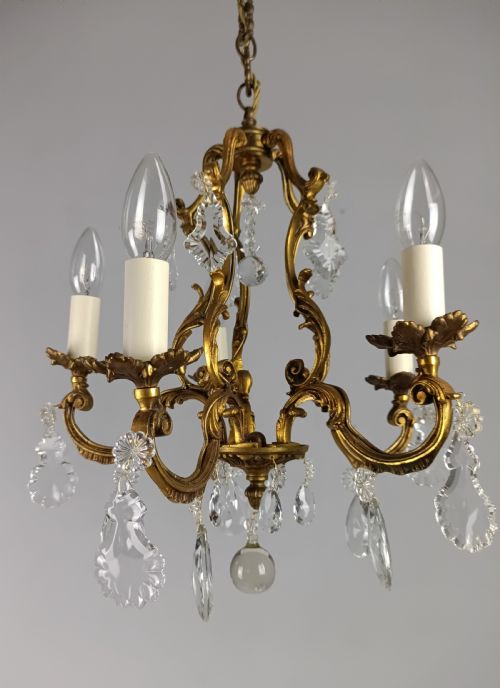


Five Light Brass Pendant
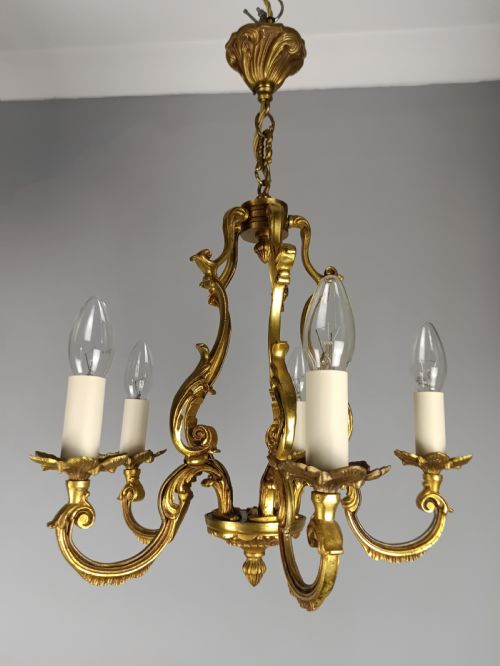
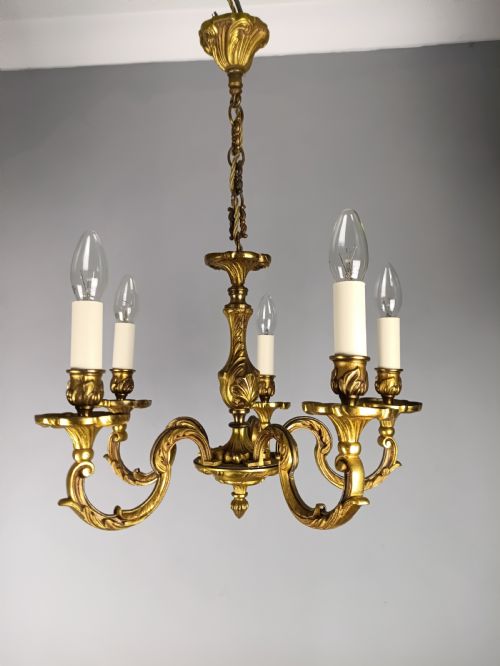
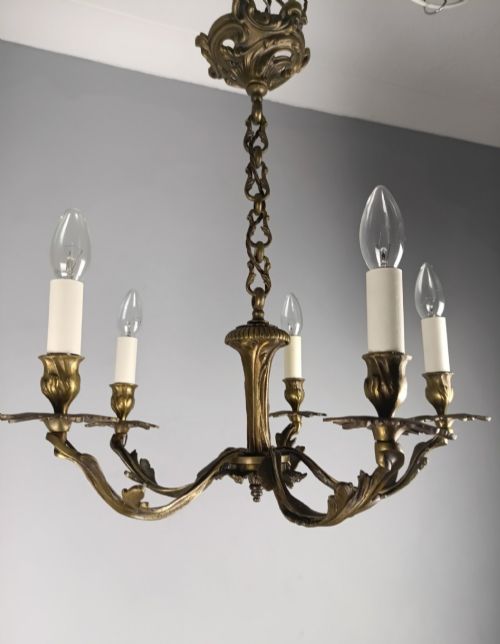
These five light brass pendant chandeliers bring focused, multi-armed illumination to a room, offering the warmth of polished metal paired with classic forms.
Five Light Brass Pendant
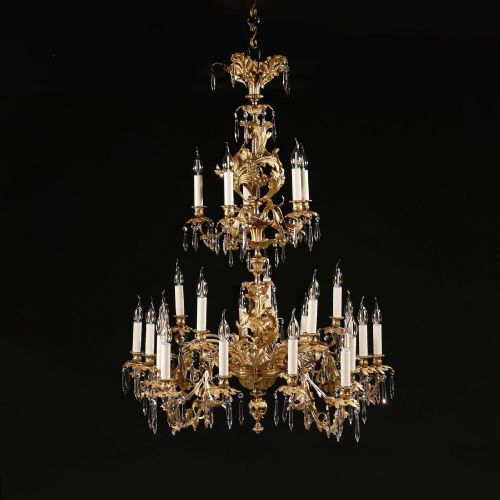
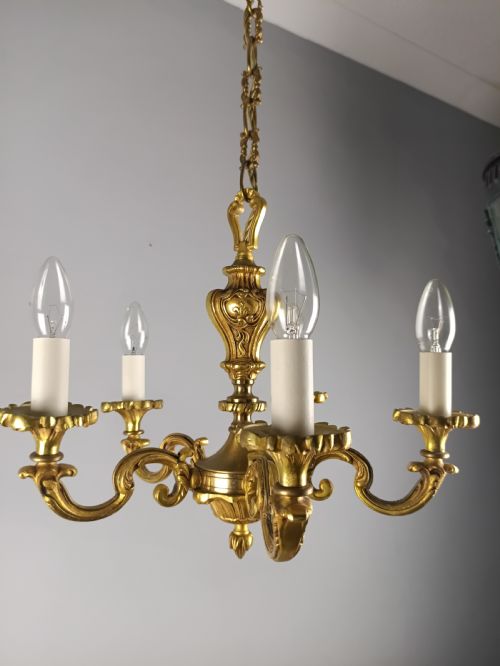
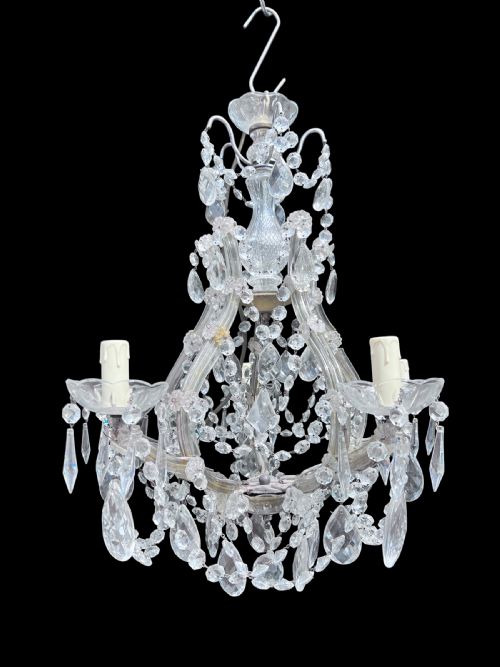
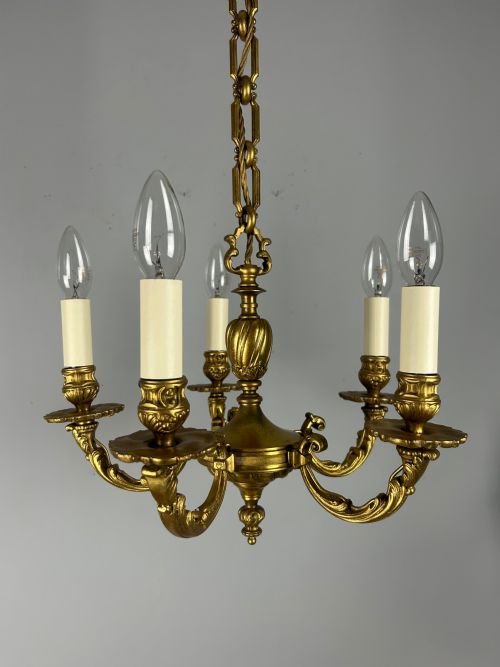
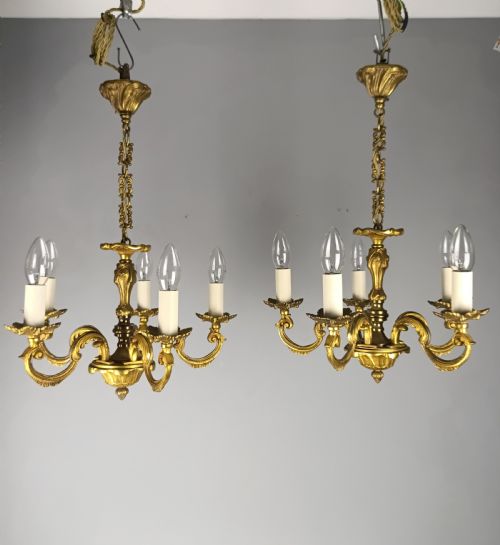
A five light brass pendant or chandelier provides a balanced, multi-branched light source suited to central placement in principal rooms. These ceiling fixtures range from Edwardian brass arms to French gilt bronze and Italian examples.
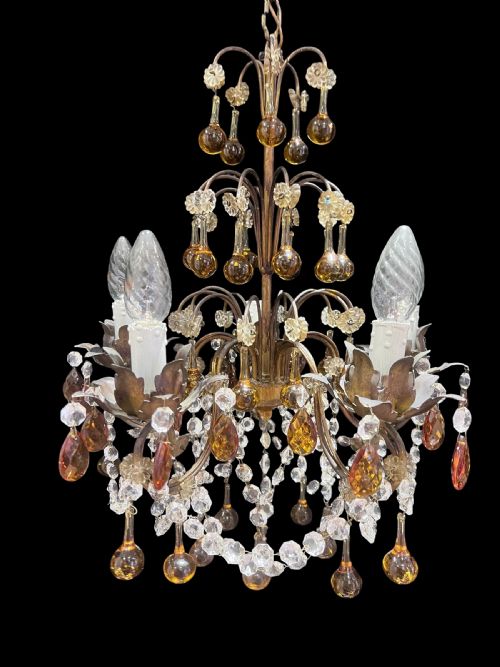
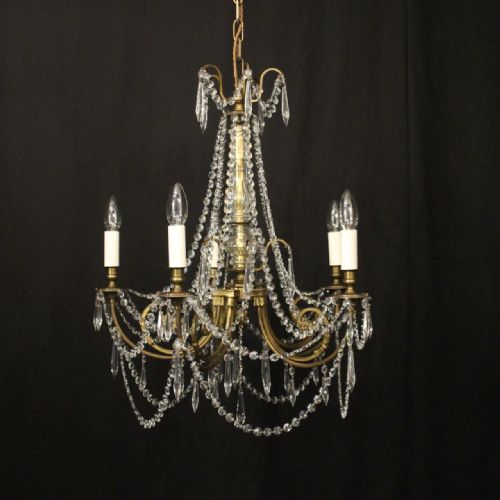
The pieces on this page lean heavily toward early twentieth-century designs, particularly from the 1920s and 1930s, alongside nineteenth-century works. French and Italian styling dominates, featuring Rococo flourishes, crystal drops, and classical forms.
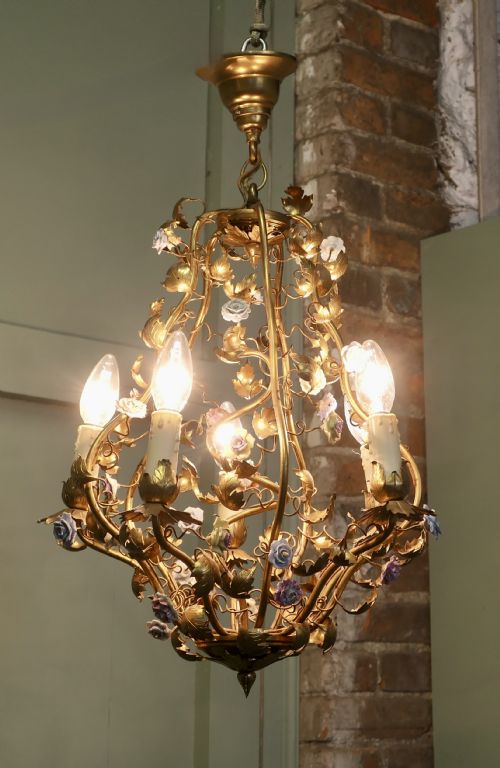
Buyers will encounter ceiling lights utilising five branches, arms, or bulbs, constructed primarily from brass, gilt bronze, and patinated metals. Many incorporate glass elements, crystals, or ceramic floral details to diffuse the illumination.
Materials and construction
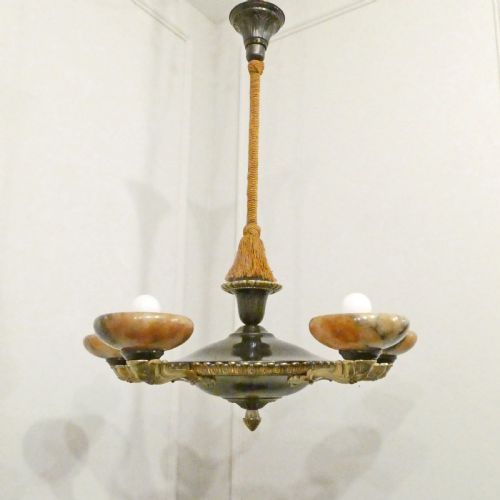
Metalwork forms the structural backbone of these fixtures, utilising cast brass, gilt bronze, and patinated bronze. Workshops shaped these metals into branching arms, birdcage frames, and decorative mounts.
Glass and crystal embellishments frequently accompany the metal structure, appearing as cut glass drops, coloured crystals, and alabaster bowls. Ceramic components also emerge in specific floral-decorated French models.
Materials span solid brass, gilt bronze, and patinated metal, paired frequently with cut crystals and glass.
Distinctions in craftsmanship
The standard of a five light brass pendant rests upon the crispness of the metal casting and the depth of the gilding or patination. Heavier bronze and brass frames with finely chased detailing exhibit superior handwork compared to simpler pressed metal variations.
The integration of decorative elements such as cut crystals, alabaster, and ceramic flowers dictates the refinement of the piece. Higher tier examples maintain cohesive styling across every structural branch and suspension component.
The Five Light Brass Pendant Glossary
- Gilt bronze
- Metal cast and coated in a layer of gold. It provides a rich, durable surface finish seen on many French chandeliers.
- Chandelier
- A branched suspended ceiling light designed to hold multiple bulbs or candles. These fixtures disperse illumination across a wider area.
- Alabaster
- A fine-grained, translucent stone used for bowls and shades. It diffuses light softly throughout the space.
- Crystal
- High-clarity glass cut into facets to refract light. It enhances the visual sparkle of period lighting fixtures.
- Patinated bronze
- Metal treated to produce a darkened or antiqued surface finish. This technique adds depth and historical character to the bronze body.
Five Light Brass Pendant: Frequently Asked Questions
How do I install a heavy brass chandelier?
These fixtures require secure ceiling joist attachment due to the weight of solid brass and bronze components. A qualified electrician should manage the structural hanging and wiring.
Ensuring the junction box supports the specific mass of gilt bronze or crystal elements prevents ceiling damage over time.
What rooms suit a five arm pendant?
A five branch ceiling light fits dining tables, living rooms, and grand hallways where balanced downward illumination is necessary. The spread of five arms distributes light evenly without overwhelming moderate spaces.
Ceiling height dictates the drop length, ensuring the fixture hangs safely above walkways while remaining a focal point.
How do I clean gilt brass and crystal?
Dusting the metal arms with a soft dry cloth preserves gilt surfaces and patinated finishes. Avoid abrasive cleaners that strip delicate gold leaf or patination.
Crystal drops may be washed gently with mild soapy water while attached, provided the power is completely disconnected beforehand.
How do I identify an Edwardian brass light?
Edwardian fixtures typically display restrained classical proportions, simple polished brass arms, and less ornate casting than earlier nineteenth-century styles. They reflect the lighter interiors popular in the early 1900s.
Comparison with French Rococo or Art Deco listings reveals the distinct absence of heavy cascading crystal tiers or asymmetric foliage.