







Traditional Floral Wall Picture
A traditional floral wall picture brings botanical colour and painterly depth into a room, offering centuries of still-life artistry for your walls.
Traditional Floral Wall Picture
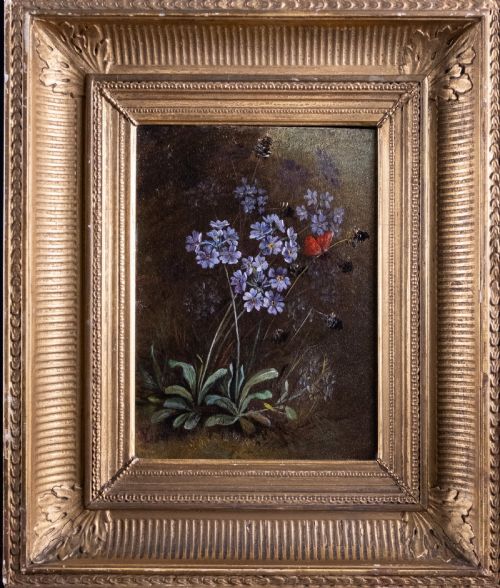
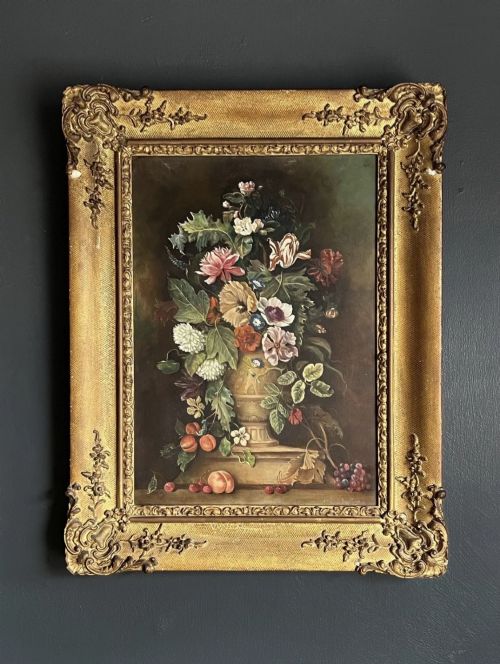
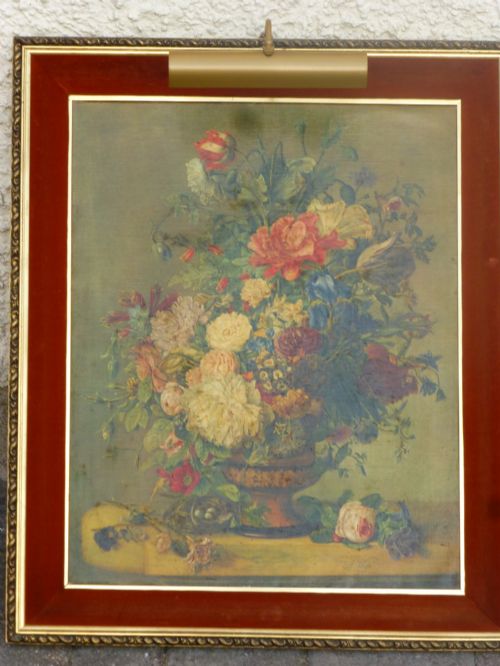
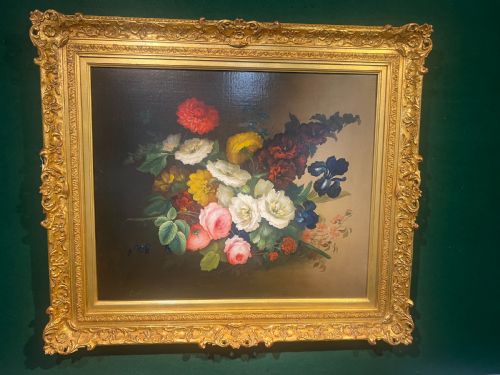
A traditional floral wall picture encompasses oil paintings, watercolours, oleographs, and needlework tapestries celebrating botanical subjects. These works span from the eighteenth century through the Victorian era and into the mid-twentieth century, capturing blossoms in oil on canvas, paper, and glass.
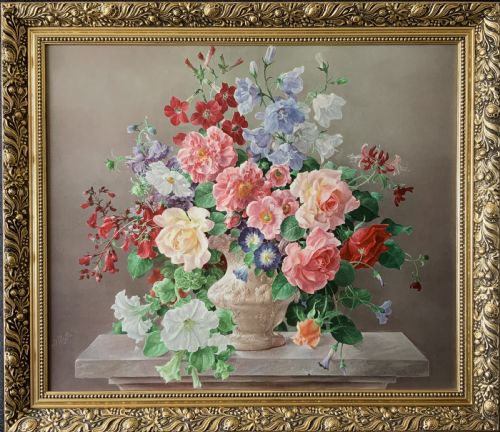
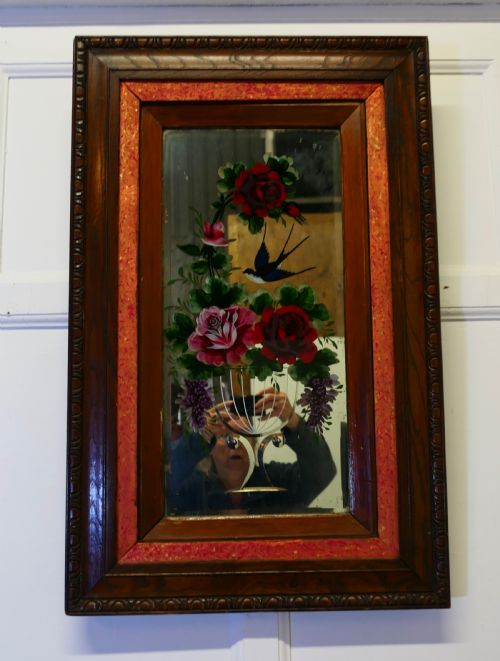
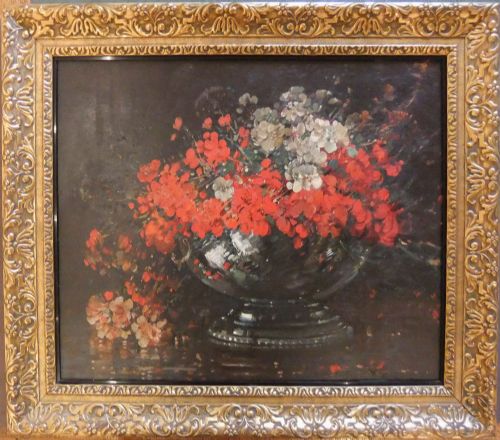
The most common examples encountered here are oil paintings and watercolours rendered in Victorian, Baroque, and Dutch Golden Age styles. You will find framed canvases depicting vases of roses, lilies, and chrysanthemums alongside detailed needlework pictures and reverse-painted mirrors.
Makers range from listed nineteenth-century artists to anonymous folk artisans working in canvas, gesso, and wood. Their creations vary from grand oil paintings in gilt gesso frames to delicate miniature studies and stitched samplers.
Materials and construction methods
Artists built these works using oil paint or watercolour applied to canvas, paper, and occasionally glass. Canvases are stretched over wooden frames and frequently housed in ornate gilt gesso or giltwood surrounds.
Alternative interpretations utilise textile and print techniques, including needlework tapestries, stitched samplers, and oleographs printed after established artists. Mirror works incorporate reverse painting and etching directly onto glass plates decorated with floral motifs.
Traditional Floral Wall Picture Retail Price Guide 2026
Typical asking prices for traditional floral wall picture among the pieces listed under this phrase on Sellingantiques today, from the lower quarter to the upper quarter. They describe what is for sale here now, not the wider market.
Materials recorded across current works include canvas, gesso, gold leaf, glass, and wood.
Factors determining quality
Quality rests primarily on the fineness of the brushwork and the naturalism of the floral composition. Superior oil paintings exhibit subtle tonal gradations in petals and foliage, while lesser works rely on rigid outlines and flat colour fields.
The physical framing contributes significantly to the overall merit of the piece. Hand-carved and gilded gesso frames dating to the period elevate an oil painting, whereas later replacement frames alter the object's integrity.
Anton Weiss·Harold Clayton·Edwin Steele·Pierre-Joseph Redouté·Henry Schouten·Emily Selinger·Theresa Sylvester Stannard·George Frederick Nicholls·Fred Merriman·Kershaw Schofield
The Traditional Floral Wall Picture Glossary
- Oleograph
- A mechanical print on canvas designed to imitate an oil painting. These prints replicate the texture and appearance of genuine brushwork.
- Gesso
- A plaster-like mixture applied to wooden frames before gilding. It provides a smooth base for intricate moulded ornamentation.
- Needlework Picture
- A decorative textile piece created using yarn or thread on canvas. These works often employ various stitch techniques to render floral scenes.
- Reverse Painted Glass
- A technique where the artist applies paint to the rear side of a glass panel. When viewed from the front, the image gains a glossy, preserved finish.
- Baroque
- An artistic style characterised by drama, rich detail, and deep chiaroscuro. In floral painting, it manifests as lush, overflowing arrangements against dark backgrounds.
Traditional Floral Wall Picture: Frequently Asked Questions
How do I hang a heavy oil painting safely?
Ensure the wall fixings match the weight of the wooden frame and canvas. Use picture wire rated well above the mass of the piece and anchor directly into wall studs where possible.
Position the centre of the picture at eye level to achieve the correct visual balance in the room.
Should I re-frame an antique floral painting?
Original frames provide historical context and contribute to the character of the artwork. Retaining period gesso or giltwood surrounds maintains the integrity of the piece.
Only replace a frame if it suffers from structural instability that threatens the safety of the canvas.
How do I clean a painted canvas?
Dust the surface gently with a soft, dry brush to remove loose particles. Avoid using water, household cleaners, or chemical solvents on historic oil paint.
Consult a professional conservator if the paint layer requires deeper cleaning or stabilisation.
What lighting suits these paintings best?
Display these works away from direct sunlight to prevent the fading of oil pigments and watercolours. Controlled picture lights mounted above the frame highlight the detail without causing heat damage.
Ambient room lighting often suffices for pieces housed behind glass.