


Traditional Floral Tapestry Carpet
These traditional floral tapestry carpet examples bring centuries of woven artistry and botanical motifs into a room, offering both warmth and history underfoot.
Traditional Floral Tapestry Carpet
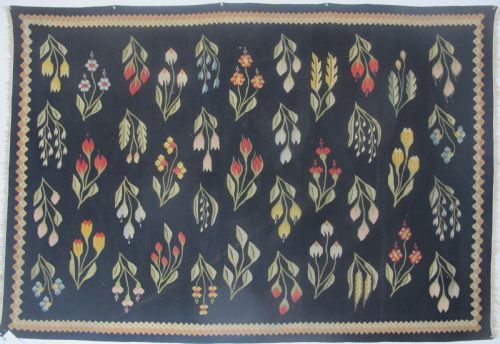
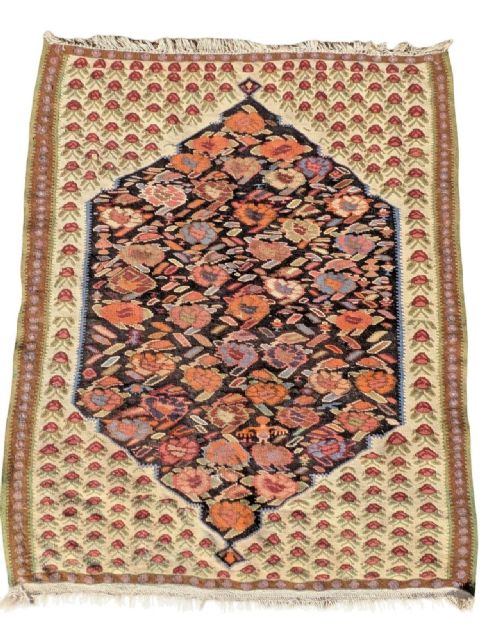
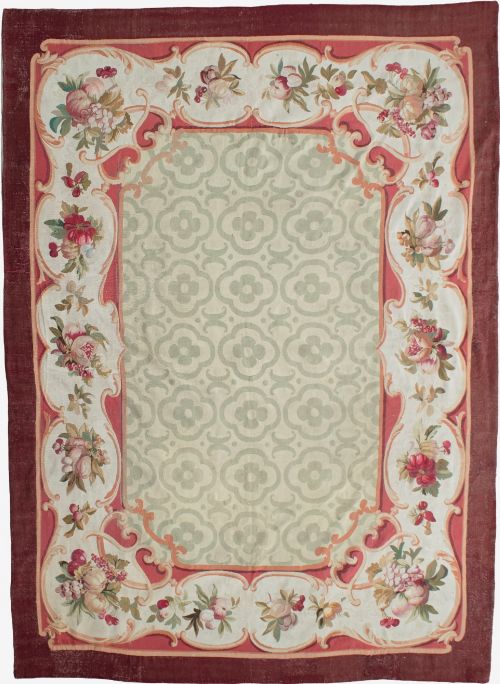
A traditional floral tapestry carpet brings together woven textiles from various European and international traditions, spanning periods from the nineteenth century through the 1940s. These pieces include rugs, flatweave rugs, needlepoint rugs, and wall hangings decorated with botanical and floral themes.
Shoppers most frequently encounter Bessarabian kilims and Portuguese needlepoint carpets alongside French Aubusson weaves. The selection also includes Scandinavian rya textiles and crewelwork wall hangings, each carrying distinct regional characteristics from periods such as the 1850s, 1890s, and early twentieth century.
How they were made
These textiles utilise natural materials including wool, cotton, canvas, and linen as the primary foundations for their intricate constructions. Artisans employed flatweaving, needlepoint, and tapestry techniques to build dense surfaces and durable structures.
Regional workshops applied distinct methods, from the flatweave construction seen in Bessarabian kilims to the detailed stitchwork of Portuguese needlepoint and French Aubusson carpets. The combination of sturdy backing materials and fine working threads ensured that these botanical designs endured across generations.
Listings feature periods from the nineteenth century through the 1940s, utilising wool, cotton, canvas, and linen.
What varies in quality
The standard of a traditional floral tapestry carpet depends heavily on the precision of the weave and the complexity of the botanical design. Finer execution in needlepoint or flatweave techniques results in crisper floral motifs and greater structural integrity across the rug.
Materials also play a role, as the density of the wool and the quality of the foundation canvas dictate how well the textile holds its shape and colour over time. Pieces executed in established styles like French Rococo or Iberian traditional work demonstrate varying degrees of artisan skill and regional authenticity.
The Traditional Floral Tapestry Carpet Glossary
- Kilim
- A flatwoven carpet or rug produced without a pile, commonly associated with Eastern European and Bessarabian traditions. These textiles rely on tightly interlocked horizontal and vertical threads.
- Aubusson
- A style of French woven carpet or tapestry originating from the town of Aubusson, often featuring neoclassical or floral motifs. They are typically woven without a pile in the manner of a heavy tapestry.
- Needlepoint
- A type of canvas work where yarn is stitched through a stiff open-weave mesh foundation by hand. Portuguese examples showcase this dense, textured method.
- Flatweave
- A general term for rugs and carpets constructed by interweaving warp and weft threads without creating a raised pile. This method produces a thin, durable textile.
- Crewelwork
- A type of embroidery using wool yarn on a sturdy linen or cotton backing fabric. It appears in decorative wall hangings and textile floor coverings.
Traditional Floral Tapestry Carpet: Frequently Asked Questions
How do I clean a traditional floral tapestry carpet?
These delicate textiles require gentle care, typically limited to professional specialist cleaning rather than standard domestic washing. Regular light vacuuming without a rotating brush helps remove surface dust without disturbing the wool or canvas fibres.
Avoiding direct, harsh sunlight prevents the natural dyes in the floral motifs from fading over time. Placing the carpet in low-traffic areas or using it as a wall hanging preserves its structural integrity.
What is the difference between a kilim and an Aubusson?
A kilim is a flatweave textile primarily originating from Eastern European traditions, characterised by geometric or stylised floral patterns formed by interlocking wefts. They offer a simpler, flat texture without a pile.
An Aubusson is a French woven carpet that mimics the appearance of a pictorial tapestry, frequently displaying elaborate floral and architectural designs. These pieces derive from specific weaving traditions in France dating back to the nineteenth century and earlier.
Can these carpets be hung on walls?
Many of these textiles, particularly lighter needlepoint pieces and crewelwork items, function effectively as wall hangings as well as floor coverings. Hanging distributes the weight evenly and reduces physical wear from foot traffic.
Specialist mounting using a fabric sleeve or non-damaging clips ensures the canvas and linen foundations remain unsupported by single points of stress. This display method also showcases the botanical designs at eye level.
How are different periods identified?
Dating relies on stylistic clues such as the specific floral composition, regional weaving techniques, and the types of backing materials used. Nineteenth-century Aubusson pieces often feature distinct French Rococo influences, whereas pieces from the 1920s and 1930s show shifts in folk art interpretation.
Examining the fibre content, such as the spin of the wool and the tightness of the cotton or linen foundation, provides further context. Comparing the construction methods to documented regional styles helps narrow down the decade of creation.