






Traditional Floral Picture
A traditional floral picture brings botanical studies and garden arrangements indoors, offering lasting colour through canvas, paper, and needlework.
Traditional Floral Picture
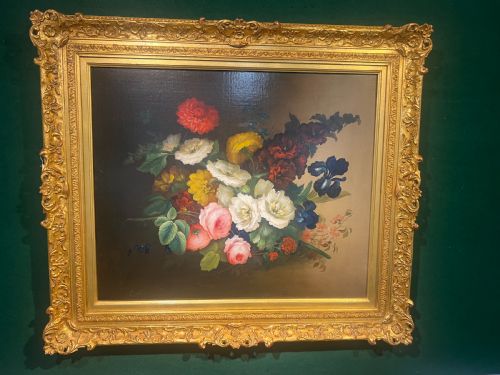
A traditional floral picture captures blooms and garden scenes across centuries, ranging from oils on canvas to delicate watercolours. Buyers seeking these works will encounter Victorian botanical pieces alongside Dutch Golden Age style arrangements and folk art needlework.
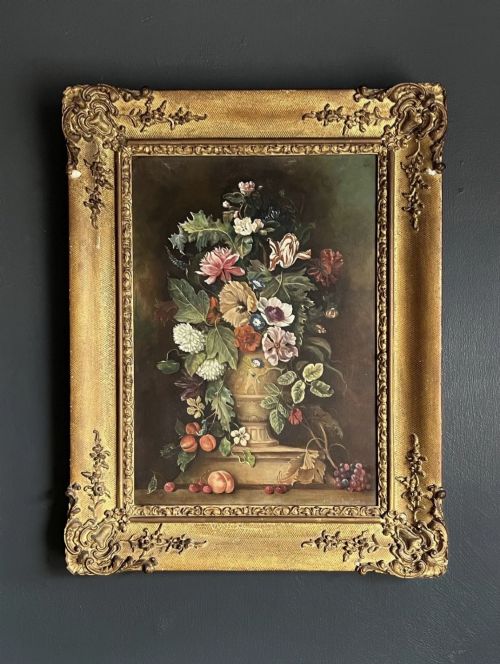
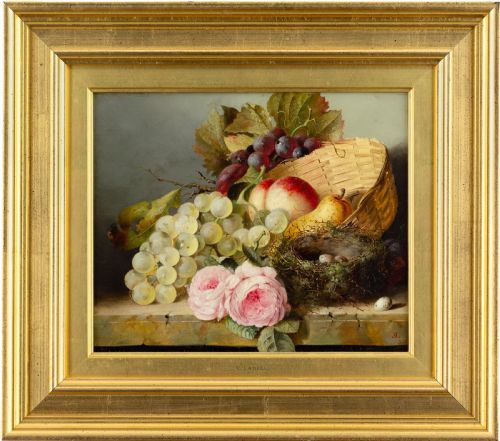
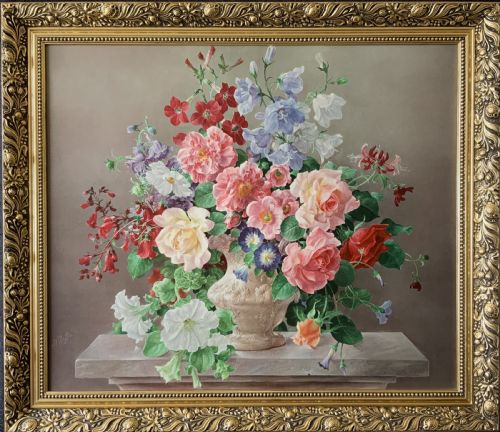
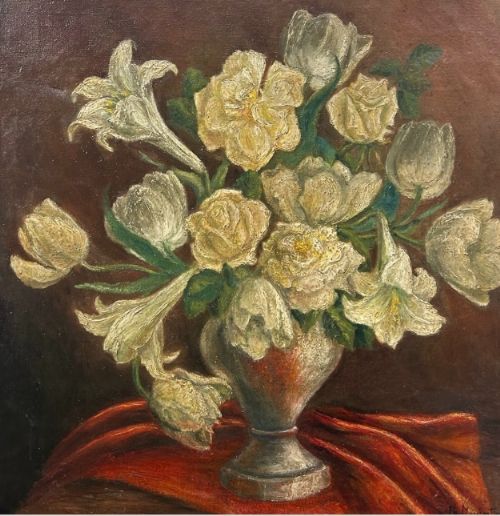
The selections span oil paintings of fruit and vases, watercolour studies of gladioli and azaleas, and stitched samplers. Victorian examples often feature chrysanthemums and hand-painted fruit, while mid-century canvases bring white lilies and yellow roses into domestic spaces.
Framing plays a significant role in defining the character of these works, with gilt gesso frames and giltwood wall mirrors appearing alongside simpler wooden surrounds. Scale varies from miniature still life paintings to large needlework tapestries.
Materials and construction
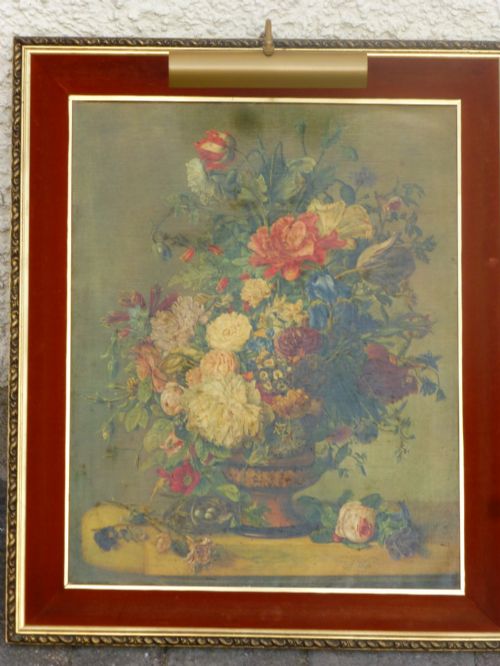
Artists painted these subjects using oil paint and watercolour on canvas or paper surfaces, occasionally employing oleograph printing techniques to reproduce detailed compositions. Canvases are frequently stretched and housed within ornate gilt gesso frames.
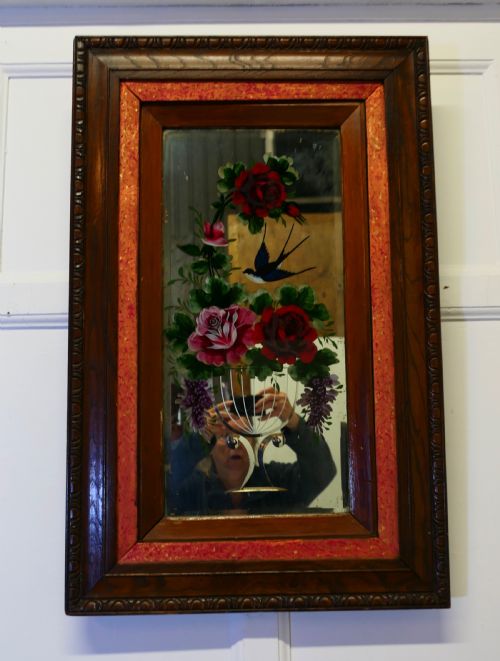
Needlework pictures and stitched samplers utilise textiles and threads to build textured floral patterns of large proportions. Mirrors incorporate glass combined with reverse painting and etching to display decorative roses.
Listings feature oil on canvas, watercolour, and glass alongside traditional framing materials such as gesso and wood.
Distinctions in quality
Execution of brushwork and depth of composition set individual paintings apart, particularly in oil studies where handling of light upon petals and leaves reveals the hand of the artist. The fidelity of detail in botanical elements distinguishes accomplished works from simpler decorative prints.
Condition of the medium and the integrity of the original frame influence the standing of a piece. Works retaining their period gilt gesso frames preserve their historic context more completely than those with later replacements.
Anton Weiss·Edward Ladell·Harold Clayton·Edwin Steele·Robin MacKertich·Henry Schouten·Pierre-Joseph Redouté·Emily Selinger·Jane Utley·Theresa Sylvester Stannard·George Frederick Nicholls·Fred Merriman·Kershaw Schofield
The Traditional Floral Picture Glossary
- Oleograph
- A mechanical print textured to imitate the surface brushstrokes and appearance of an oil painting. These prints often reproduce popular still life compositions from earlier decades.
- Gesso
- A plaster-like mixture applied to wooden frames before gilding or painting to create smooth decorative mouldings. It provides the foundation for intricate relief ornamentation.
- Sampler
- A piece of needlework created to demonstrate proficiency in various stitches and thread techniques. Traditional examples frequently incorporate floral motifs alongside alphabets or verses.
- Reverse painting
- A technique where an artist applies pigment to the back of a glass panel so the image is viewed through the front. This method produces a glossy, protected surface often seen in decorative mirrors.
Traditional Floral Picture: Frequently Asked Questions
What subjects do these pictures show?
These works depict botanical studies, vases of flowers, and garden landscapes. Common motifs include white lilies, yellow roses, chrysanthemums, and fruit arrangements.
Some pieces extend beyond simple floral arrangements to include country houses, thatched cottages, and birds' nests alongside botanical specimens.
How do I hang a heavy needlework tapestry?
Large needlework tapestries require even weight distribution across a sturdy wooden batten or mounted rod. Securing the backing fabric firmly prevents sagging over time.
Ensure the hanging hardware engages directly with wall studs or uses appropriate wall anchors capable of supporting the textile's full weight.
How do oil paintings differ from watercolours here?
Oil paintings utilise pigment suspended in drying oil on canvas, offering rich colour saturation and visible brush texture. They often sit within heavy gilt gesso frames.
Watercolours employ water-soluble pigments on paper, producing lighter, translucent botanical studies that typically require protective glass framing.
Where were these floral pictures displayed?
These pieces historically hung in domestic reception rooms, parlours, and country house drawing rooms. Their botanical and garden themes brought exterior nature into interior living spaces.
Smaller decorative pairs suited intimate private chambers, while larger canvases and tapestries anchored main living areas.