
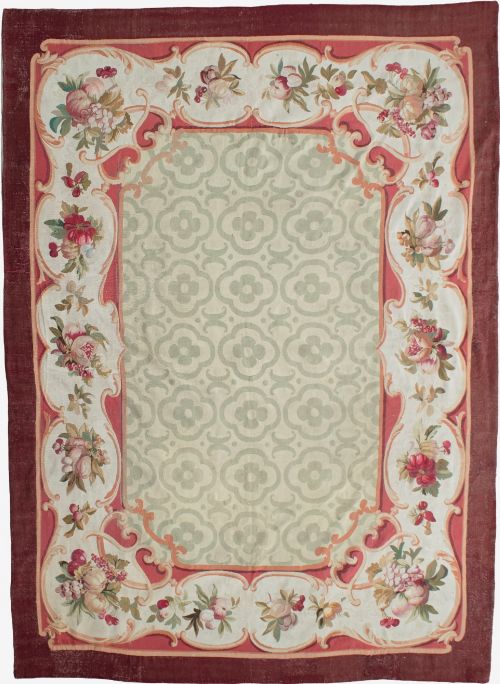
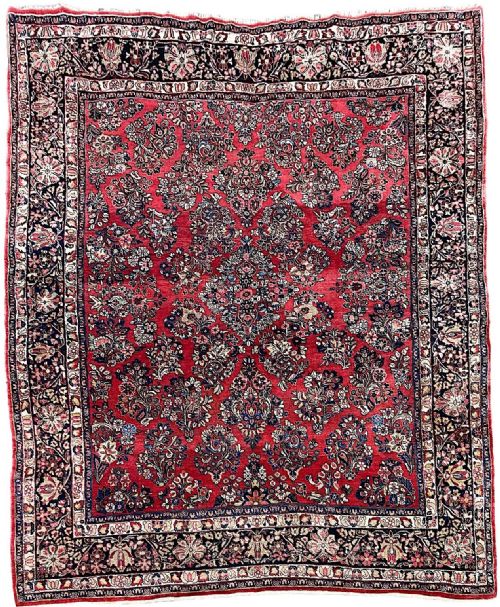
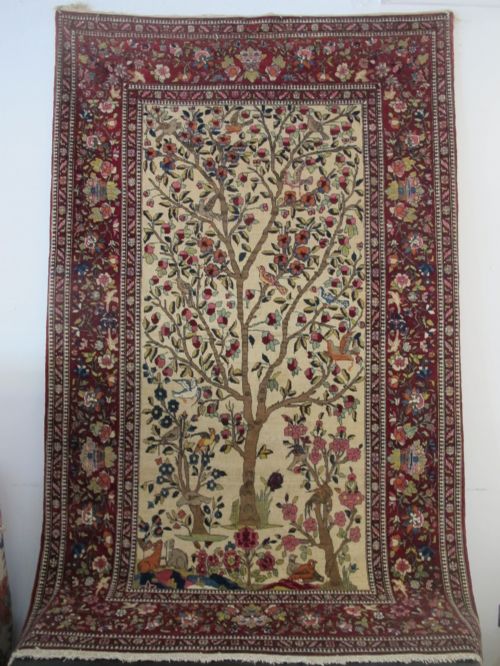


Traditional Floral Border Rug
A traditional floral border rug brings enduring pattern and rich colour to a room, drawing on centuries of weaving heritage from Persia, Turkey, France, China and Bessarabia.
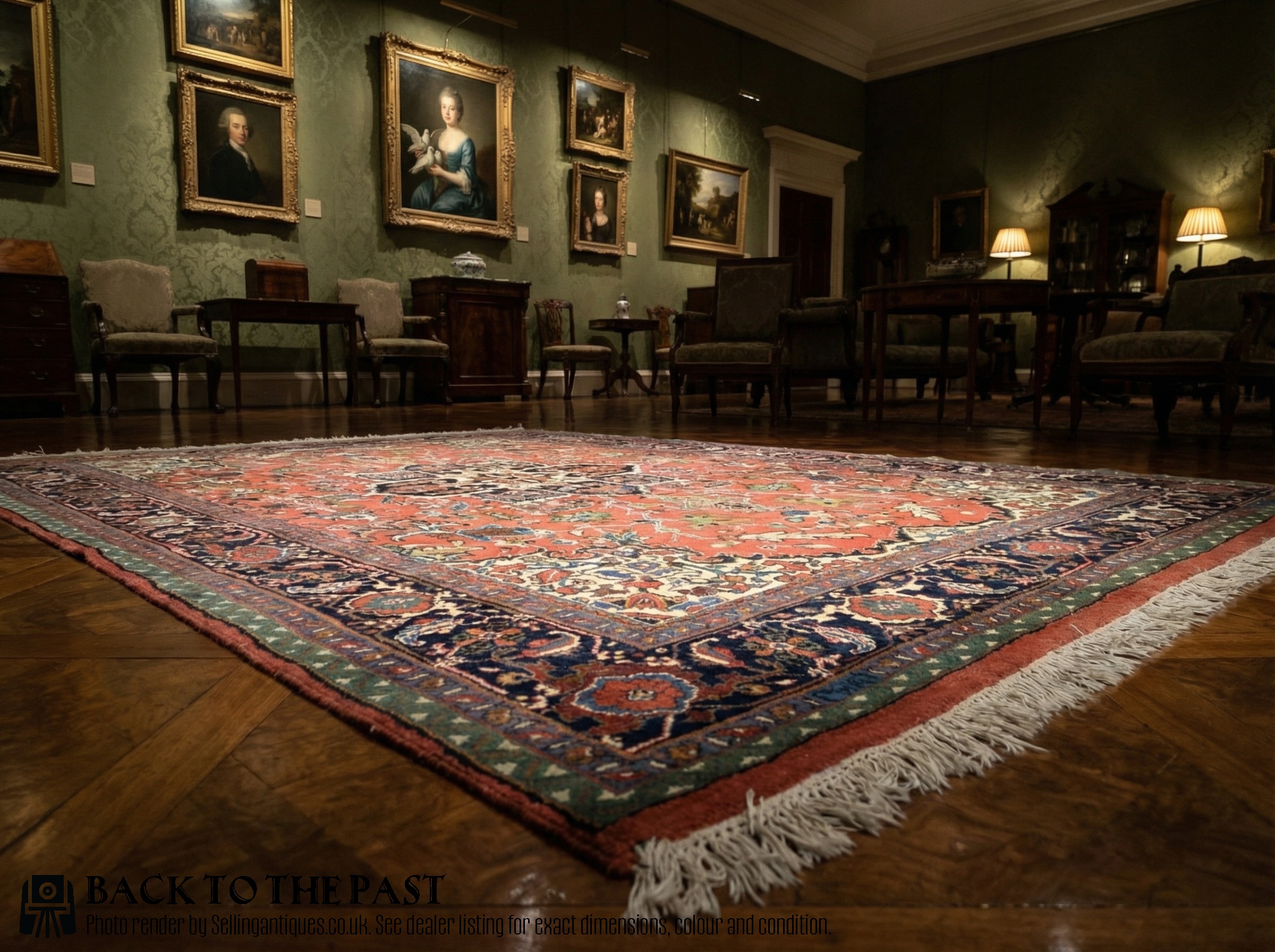
Traditional Floral Border Rug
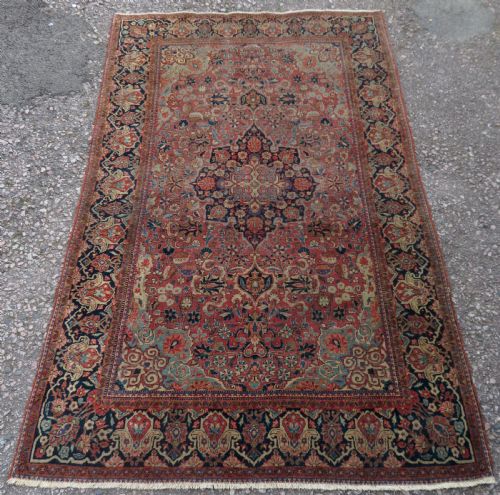
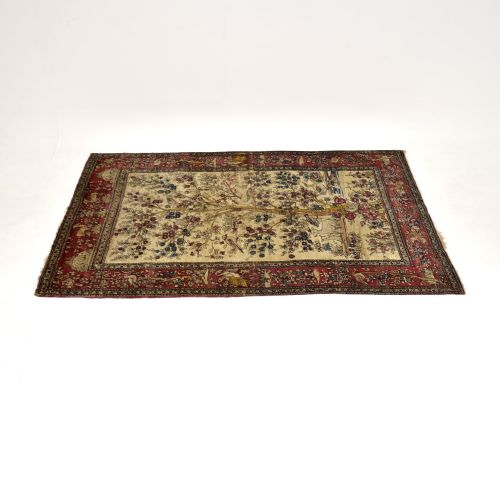
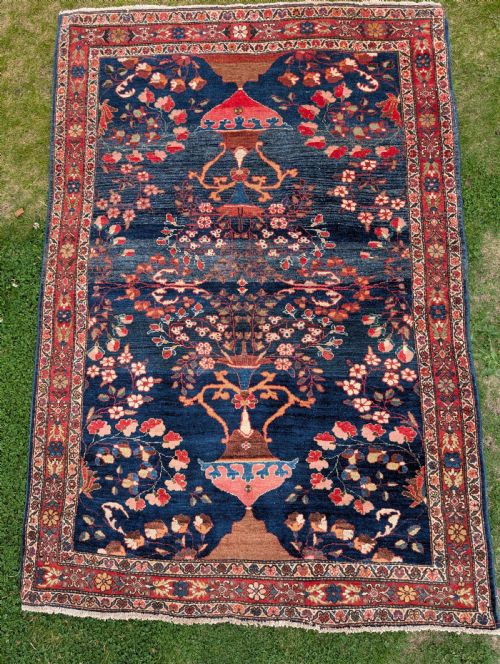
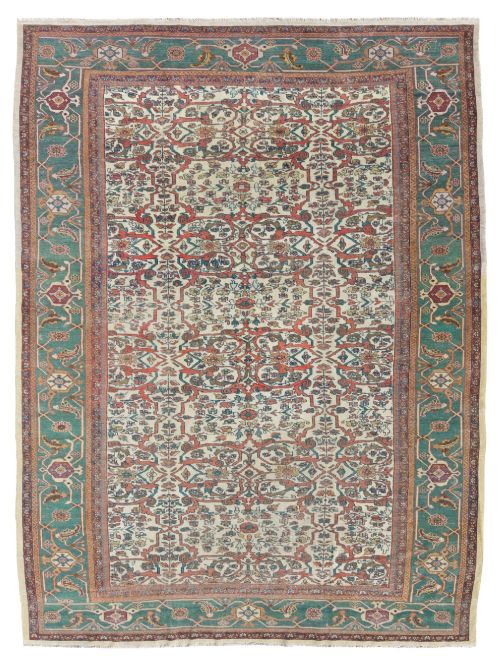
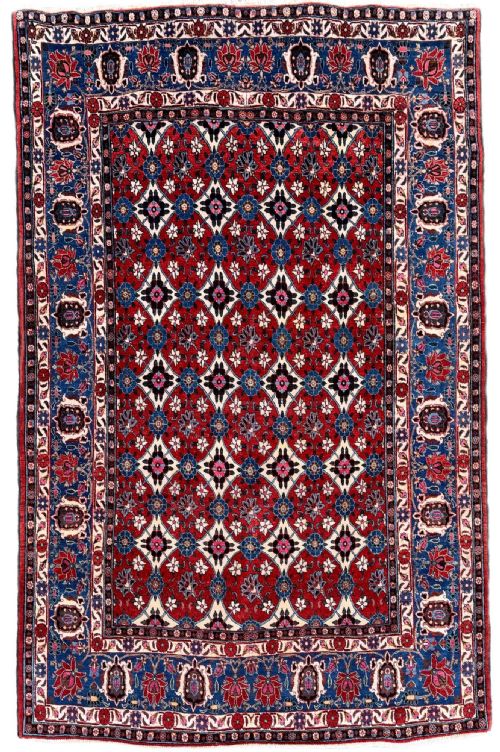
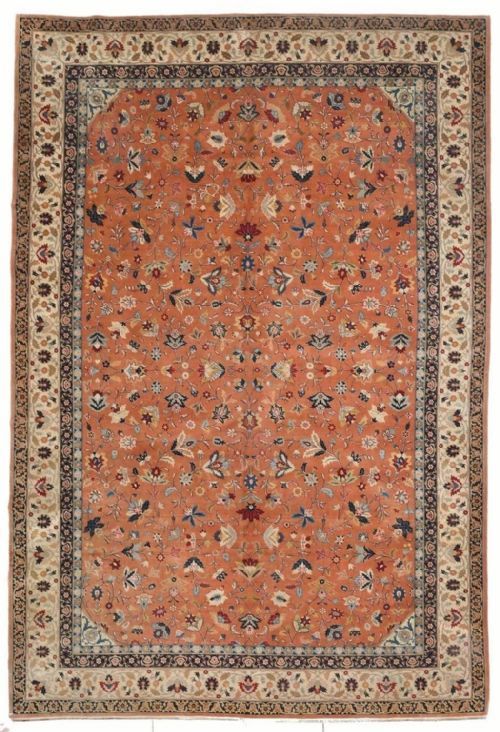
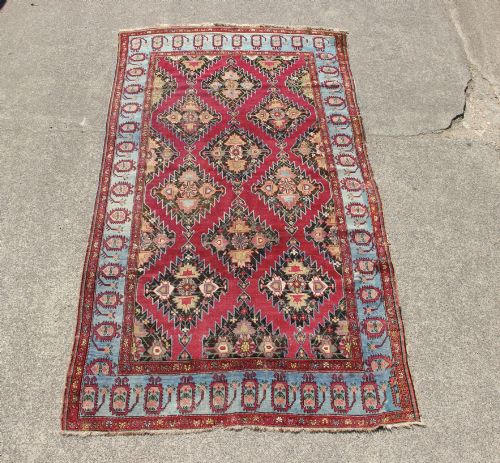
The version most frequently met on this page is the Persian carpet, encompassing regional types such as Tabriz, Sultanabad, Heriz, Kashan, Mahal, Veramin, Sarouk, Fereghan, Isfahan, Qum, Kirman, and Ziegler. These range from intimate area rugs to large carpets suitable for substantial reception spaces.
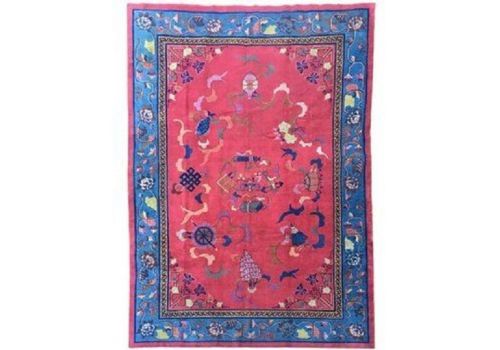
Alternative origins appear alongside these Persian works, including French Aubusson carpets, Turkish Ghiordes prayer rugs, Chinese Art Deco carpets, and Bessarabian kilims. Each brings distinct regional weaving techniques and decorative vocabularies to the category.
How traditional floral border rugs were made
The construction of these rugs relies primarily on wool, cotton, and silk, utilised as pile, warp, and weft materials. Weavers knotted or flat-wove these natural fibres by hand, building dense piles on cotton foundations or weaving flat structures in the manner of Bessarabian kilims.
Dyes derived from natural sources imparted deep terracotta, blue, and neutral tones that mellow gracefully over decades of use. Skilled artisans executed complex floral and geometric borders by hand, requiring precise planning and execution across large scales.
Some antique rugs retain the subtle irregularities of hand-spinning, where wool thickness shifts just enough to tell you a human hand shaped the yarn.
What varies in quality
Quality in these rugs rests upon knot density, the fineness of the spin in the wool or silk, and the sophistication of the dye palette. Tighter knots allow for sharper definition in botanical motifs and intricate border details, marking out superior workshops from standard production.
Proportional harmony between the central field and the floral border dictates the visual success of a piece. Skilled execution by master weavers results in balanced compositions that retain their structural integrity and aesthetic impact over generations.
The Traditional Floral Border Rug Glossary
- Field
- The central background area of a rug enclosed by the border. It often contains medallion designs or overall floral sprays.
- Medb
- A central ornamental motif positioned in the middle of the rug field. It is characteristic of many classical Persian designs.
- Warp
- The vertical threads stretched lengthwise on the loom before weaving begins. The fringe of the rug is typically formed from these exposed threads.
- Weft
- The horizontal threads passed across the warp threads to secure the knots in place. Together, warp and weft form the foundation of the textile.
- Kilim
- A flat-woven carpet or rug produced without a pile. Bessarabian examples represent this technique within European traditions.
Traditional Floral Border Rug: Frequently Asked Questions
How do I choose the right size rug?
Consider the dimensions of your room and furniture placement to determine whether an area rug or a large carpet is appropriate. Measure the floor space carefully, ensuring adequate exposed flooring remains around the perimeter.
Larger carpets anchor principal reception rooms, while smaller formats suit intimate spaces or specific seating zones. Match the scale of the rug to the proportions of the furniture resting upon it.
Where should I place a floral border rug?
These rugs suit drawing rooms, dining spaces, and libraries where traditional interior schemes benefit from classical patterns. High-traffic thoroughfares require durable wool construction to withstand regular movement.
Keep delicate silk or antique examples away from direct sunlight and excessive moisture to preserve the natural fibres. Use appropriate underlays to prevent slipping and reduce friction against hard floors.
How can I tell different regional styles apart?
Regional styles reveal themselves through specific colour palettes, floral motifs, and border arrangements. Persian variants like Heriz display geometric interpretations of floral designs, whereas Tabriz pieces often feature refined curvilinear patterns.
Turkish, Chinese, and European examples introduce distinct regional weaving structures and ornamentations. Examining the foundation materials and knotting style provides further clues to geographic origin.