

Traditional Floor Light
A traditional floor light brings warmth and height to a room, offering both practical illumination and period character.
Traditional Floor Light
A traditional floor light provides ambient room illumination through tall, upright standards designed to stand directly on the floor. Buyers searching for a traditional floor light encounter vertical lamps spanning from the Victorian era through the Edwardian period and into the early twentieth century. These pieces encompass standard lamps, floor lamps, and floor standing lamps in styles ranging from Arts and Crafts to Neoclassical.
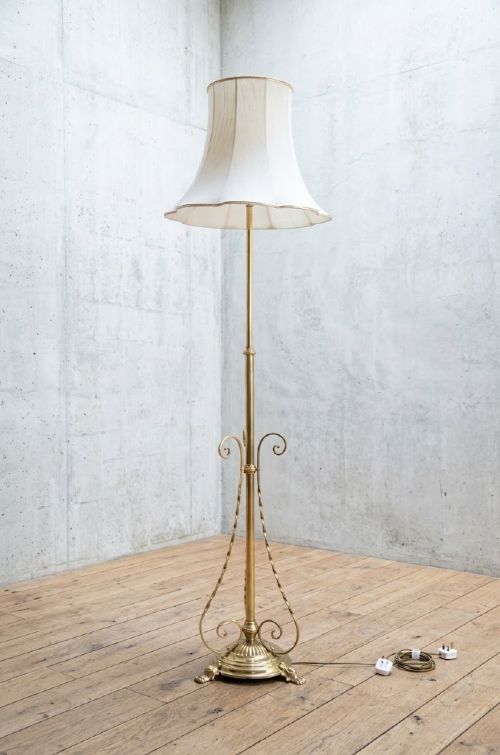
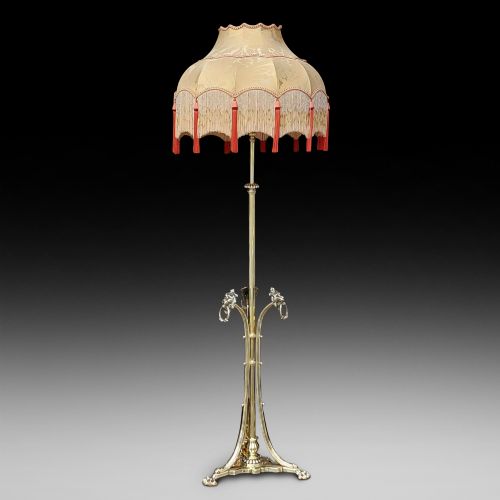
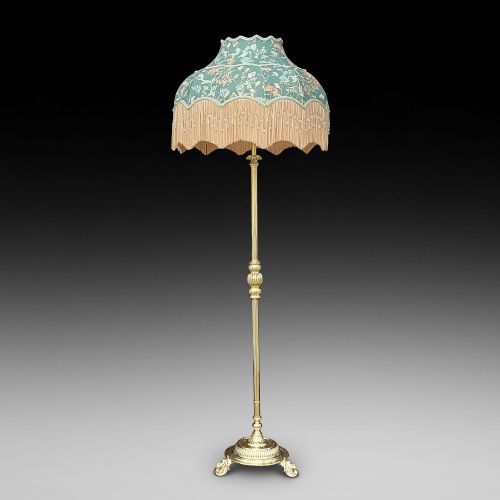
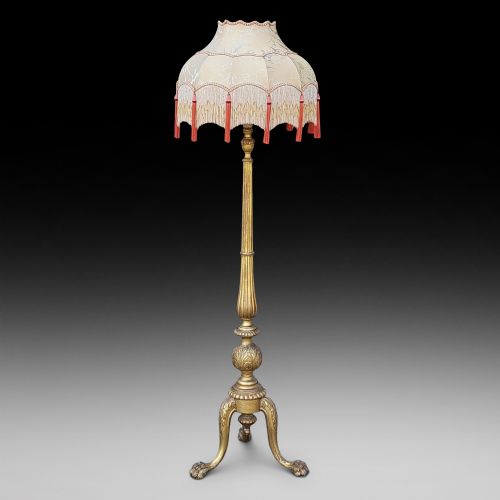
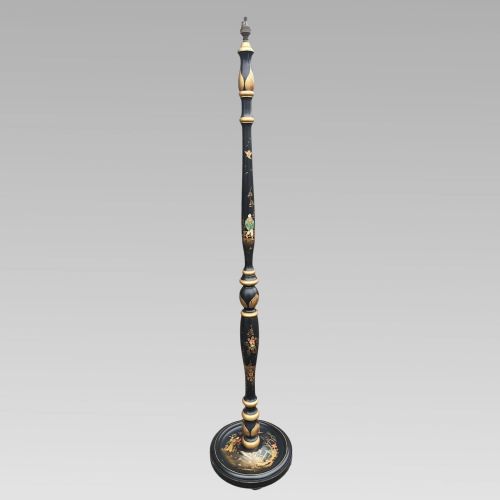
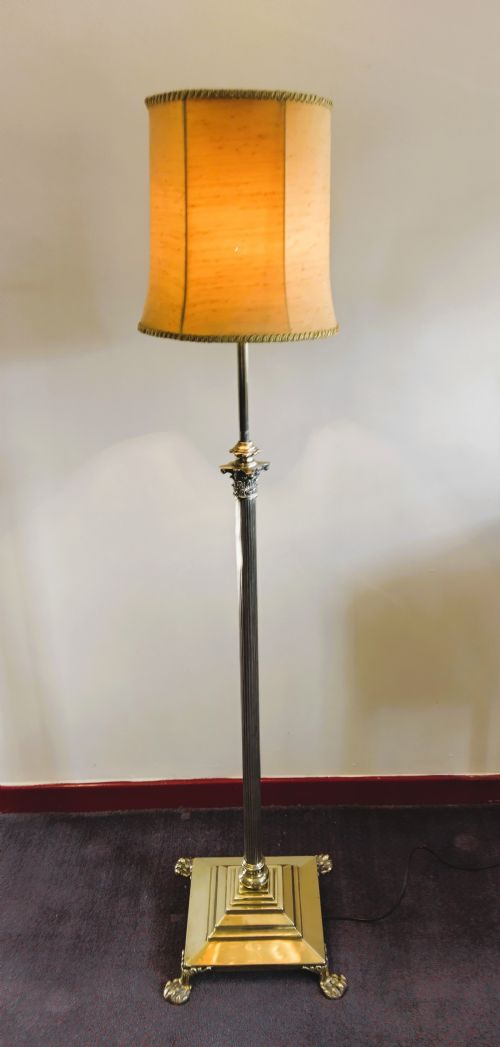
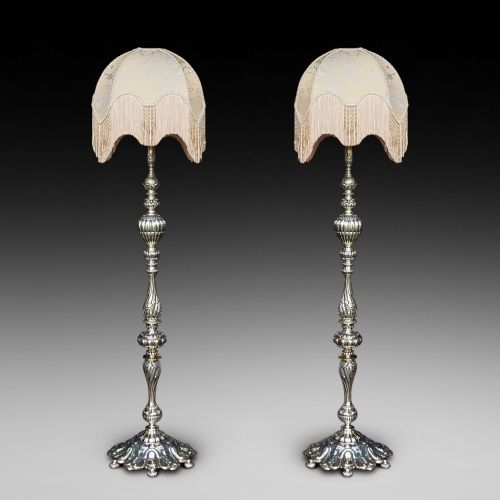
The most common examples met on this page are heavy brass standard lamps, often featuring adjustable heights or telescopic stems derived from Victorian oil lamps. Alongside these metal designs, standard lamps in carved mahogany, limed oak, and giltwood appear frequently. The selection ranges from plain brass columns to ornate Chinoiserie lacquer and Art Nouveau forms.
Materials and construction
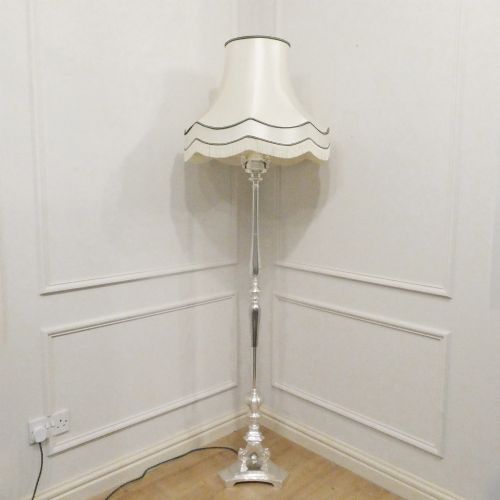
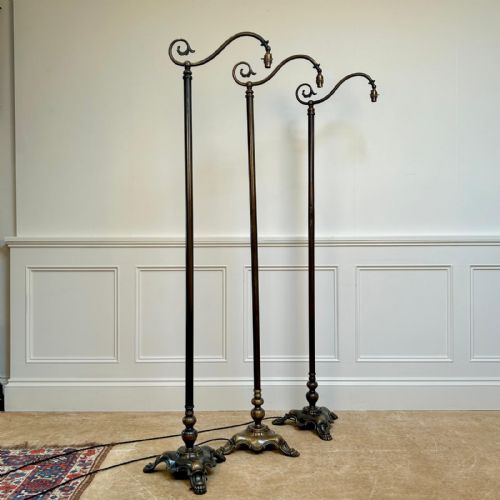
Metal standards rely heavily on brass, often cast with heavy weighted bases to ensure stability for tall stems. Many incorporate adjustable mechanisms, allowing the height or arm to move via sliding stems and thumbscrews. Patinated brass, wrought iron, and silver finishes also form the basis of metal floor lighting.
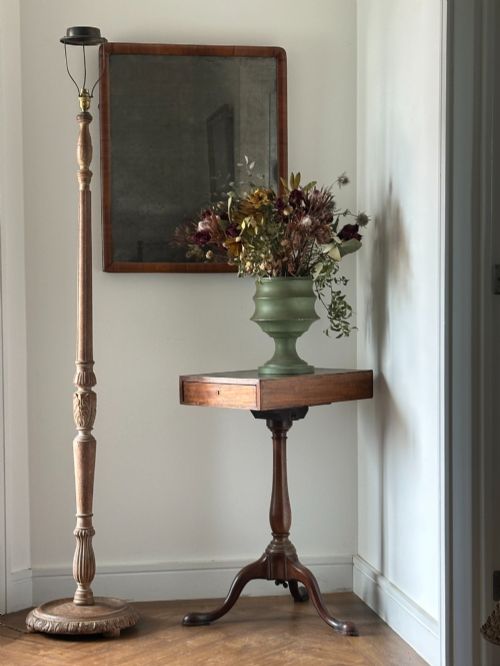
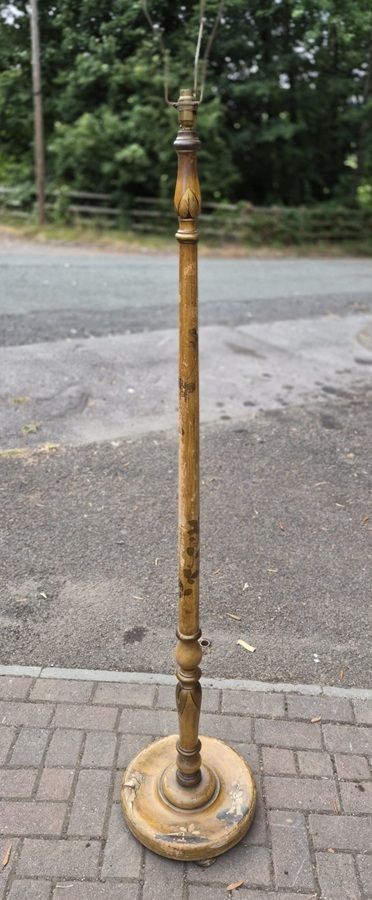
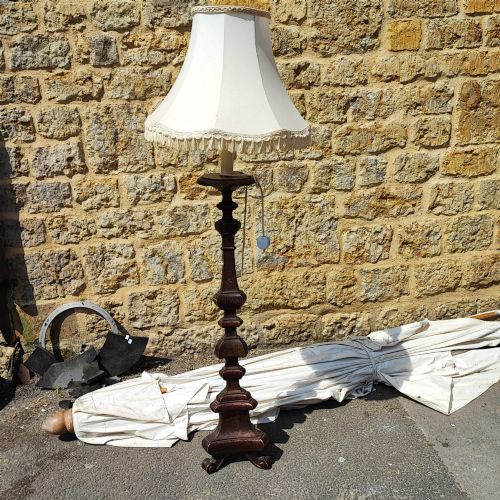
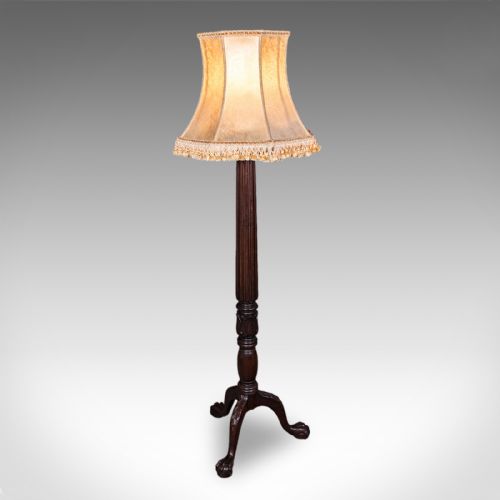
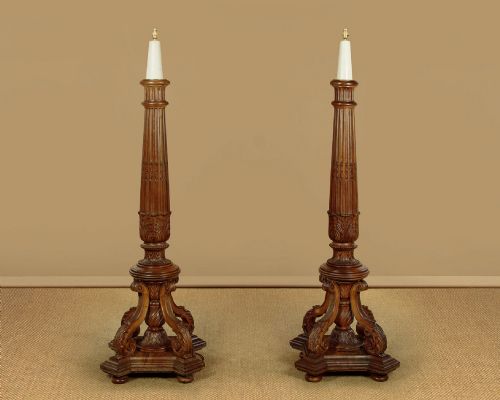
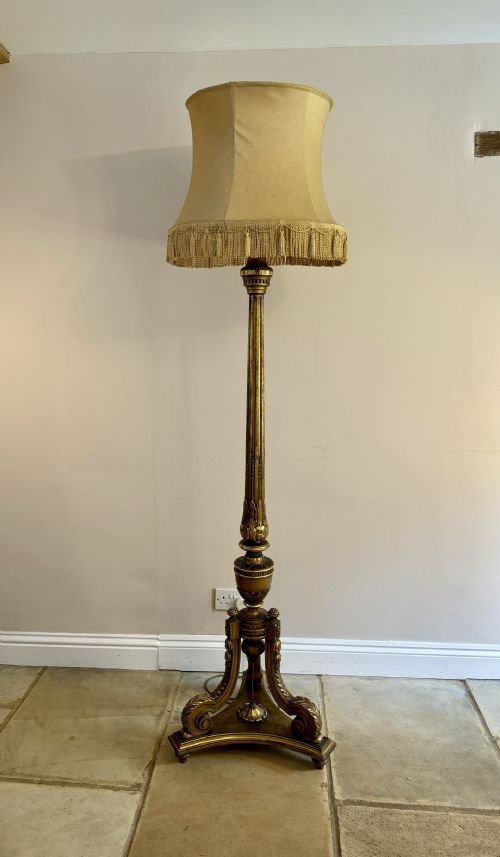
Wooden examples utilise timber such as mahogany, oak, walnut, and carved wood, sometimes finished with giltwood or parcel gilt. Craftsmen shaped these timbers through turning and hand carving, producing fluted columns, Corinthian capitals, and tripod or circular bases.
Listings feature standard lamps spanning the Victorian era, Edwardian period, and the 1920s in brass, mahogany, oak, and giltwood.
Distinctions in quality
Quality rests in the weight of the casting and the stability of the base. Heavy brass columns with solid foundations and smooth telescopic adjustment mechanisms sit at the top of the range, while lighter, unweighted stands feel less secure.
Carving depth and finish define wooden examples. Crisp hand carving on mahogany, oak, or giltwood separates superior pieces from simpler turned poles, as does the subtlety of decorative finishes like Chinoiserie lacquer.
The Traditional Floor Light Glossary
- Standard lamp
- An alternative term for a floor lamp, describing a tall vertical light fixture standing on a base. This term predominates in British antique lighting terminology.
- Telescopic
- An adjustable stem design allowing the height of the lamp to extend or lower. This mechanism often originates from conversion of Victorian oil lamps.
- Corinthian column
- A classical architectural column style featuring an ornate capital decorated with acanthus leaves. This motif frequently caps brass floor lamp standards.
- Chinoiserie
- European decorative style reflecting Chinese artistic traditions, often featuring hand-painted black lacquer or gilt decoration. These finishes appear on select twentieth-century floor lamps.
- Giltwood
- Wood that has been treated with gold leaf or gold paint to give a metallic sheen. This finish defines Neoclassical and revival standard lamps.
Traditional Floor Light: Frequently Asked Questions
What is a standard lamp?
A standard lamp is simply the traditional British term for a floor lamp. These tall fixtures were designed to hold a light source at eye level or above.
Most antique examples date from the late nineteenth or early twentieth century and were originally built for electric bulbs or converted from oil lamps.
How do I date an antique floor lamp?
Dating relies on examining the materials, construction methods, and stylistic details of the base and column. Brass pieces with telescopic mechanisms often date to the Victorian era.
Turned mahogany and oak examples frequently point toward Edwardian or 1920s workshops, while decorative motifs like Chinoiserie lacquer indicate the interwar period.
Are these lamps safe to use today?
Many period floor lamps have been rewired for modern electrical safety standards while retaining their vintage brass or wooden components. It remains wise to check the wiring upon purchase.
The heavy weighted bases of standard lamps ensure they remain stable when fitted with modern shades and bulbs.
Where should I place a standard lamp?
A floor light suits corners of reception rooms, beside reading chairs, or flanking larger pieces of furniture. Their height introduces vertical balance to a room scheme.
Adjustable models work particularly well beside seating where direct illumination is required.