

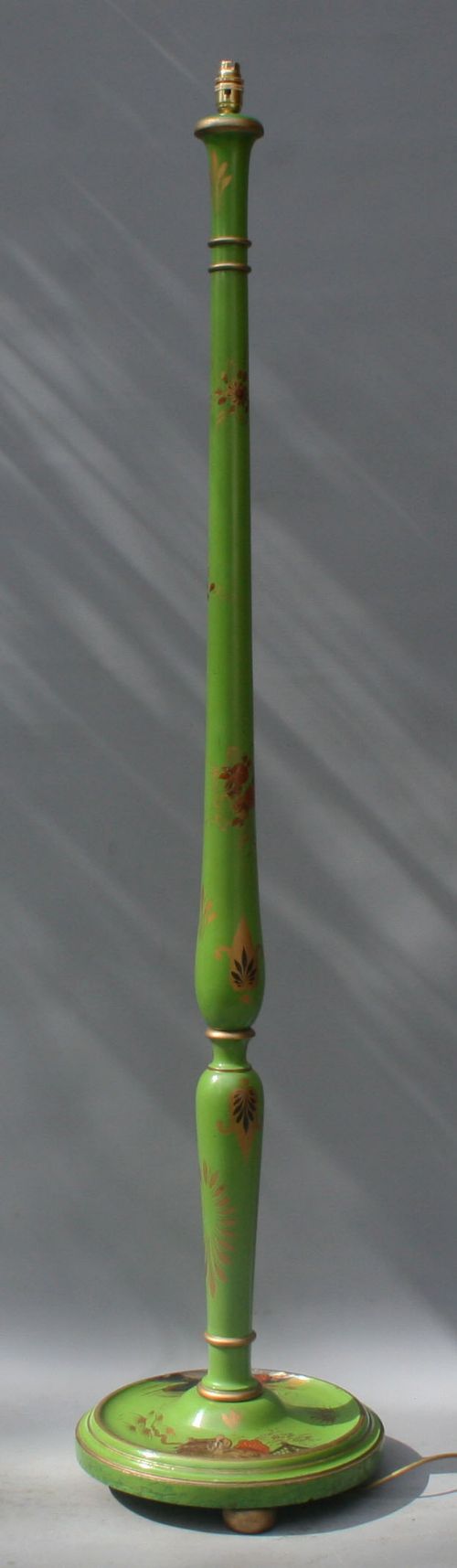


Hand Painted Standard Lamp
A hand painted standard lamp brings strong colour and period character to a room, offering tall illumination with distinct decorative surfaces.
Hand Painted Standard Lamp
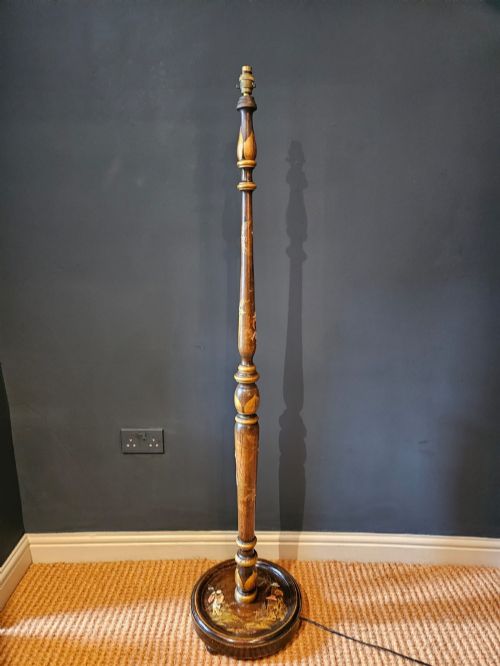
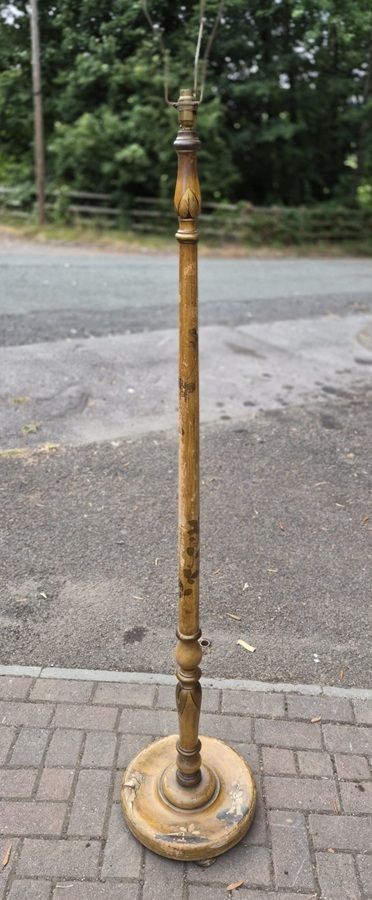
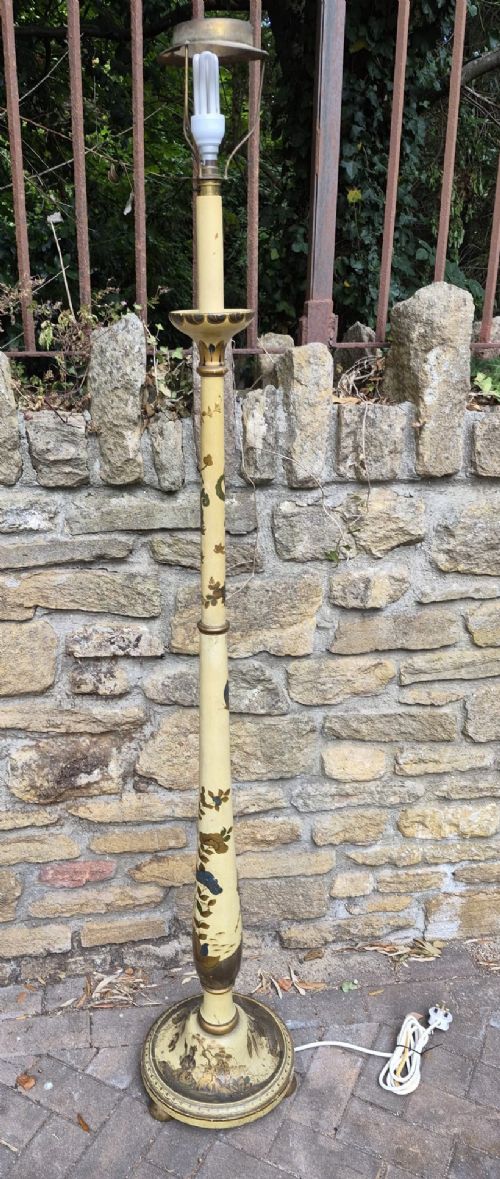
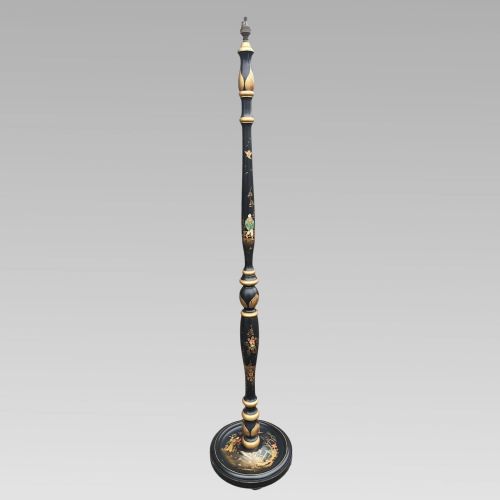
A hand painted standard lamp is a tall floor standing lighting piece designed to illuminate a room while adding significant decorative presence. The pieces seen here primarily date from the Edwardian period through to the nineteen thirties, capturing a distinct interwar and early twentieth century aesthetic. Floor lamps and standard lamps dominate the selection, bringing height and painted detail to living spaces.
Chinoiserie emerges as the defining decorative style across these listings, featuring oriental motifs on lacquered and painted surfaces. Buyers encounter standard lamps finished in black lacquer, painted wood, and gilt accents that reflect early twentieth century tastes for exoticism. Table lamps also appear in the record, sharing the same lacquered finishes and hand painted vocabulary as their taller counterparts.
How they were made
These lamps rely on wood, brass, and fabric as their primary construction and finishing materials. Wood provides the structural form for the columns and bases, which are then coated in paint, lacquer, or gilt. Brass components often secure the fittings, while fabric completes the piece in the form of shades.
The decorative surfaces utilise lacquer and hand applied paint to build up Chinoiserie scenes and motifs. Craftsmen applied multiple layers of lacquer to wooden bases before executing painted oriental designs by hand. Gilt highlights are frequently added to enhance the decorative depth of the lacquered ground.
Materials recorded in the archive span brass, fabric, and painted wood finished with lacquer and gilt.
What varies in quality
Quality in these pieces rests upon the execution and preservation of the painted and lacquered surface decoration. Superior examples display crisp, finely detailed hand painting that remains stable and vibrant across the wooden column. Lesser pieces may show simplified brushwork or wear to the lacquered ground that diminishes the decorative impact.
The coherence of the overall design and material combination dictates the standing of an individual standard lamp. Stronger pieces integrate the wood turning, brass hardware, and painted motifs into a unified aesthetic from the Edwardian era or the nineteen thirties. Consistency in the finish across both the base and any associated shade marks the distinction between standard production and finer output.
The Hand Painted Standard Lamp Glossary
- Chinoiserie
- A decorative style reflecting European interpretations of Chinese and East Asian artistic traditions. This aesthetic manifests on furniture and lighting through painted motifs on lacquered grounds.
- Standard lamp
- A term for a tall floor standing lamp designed to provide ambient room illumination. These pieces feature a weighted base, a vertical column, and a top fitting for a shade.
- Lacquer
- A clear or coloured varnish applied in multiple coats to wood surfaces to produce a hard, durable, and lustrous finish. It forms the smooth black ground typical of Chinoiserie lighting.
- Gilt
- A thin layer of gold leaf or gold paint applied to surfaces to provide metallic highlights. This technique accentuates the painted details on wooden lamp standards.
- Edwardian
- A historical period spanning the reign of King Edward VII, noted for decorative arts that often revived earlier styles with lighter proportions. Pieces from this era frequently adopt refined Chinoiserie ornamentation.
Hand Painted Standard Lamp: Frequently Asked Questions
What is a hand painted standard lamp?
A hand painted standard lamp is a tall floor standing lighting fixture featuring decorative painted surfaces, often executed in a Chinoiserie style.
These pieces combine functional illumination with the visual presence of ornamental woodwork and lacquered finishes.
How do I date a standard lamp?
Dating relies on observing the stylistic characteristics, material choices, and construction methods associated with periods such as the Edwardian era or the nineteen thirties.
Changes in turning styles and decorative motifs help distinguish early twentieth century production from later decades.
Where should I place a floor lamp?
A standard lamp functions effectively in corners or beside seating areas where it can provide ambient vertical light without obstructing movement.
Its height and decorative finish allow it to act as a focal point within a room's interior scheme.
What materials are used in these lamps?
The construction typically involves wood for the main standard, finished with paint, lacquer, and gilt details.
Brass hardware provides structural support and fittings, while fabric is utilised for the shades that complete the lighting assembly.