


Oriental Painted Floor Lamp
An oriental painted floor lamp brings height and painted decoration into a room, shaped by Chinoiserie taste.
Oriental Painted Floor Lamp
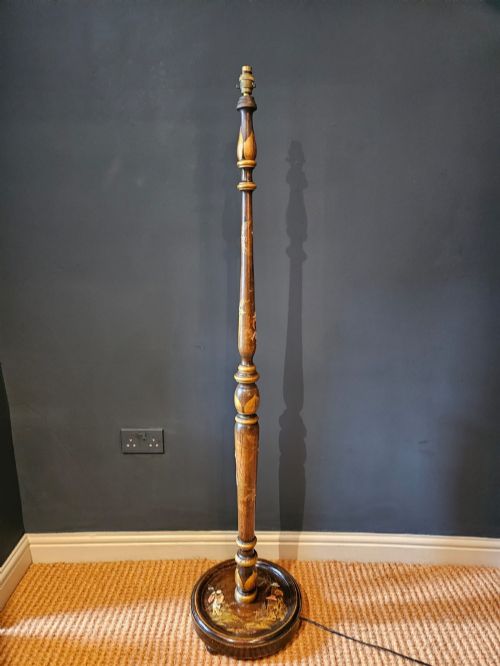
An oriental painted floor lamp stands as a tall vertical lighting piece, often referred to as a standard lamp in the titles on this page. These pieces date from the Edwardian period through to the 1930s, alongside examples from the eighteen hundreds and the nineteen tens and twenties.
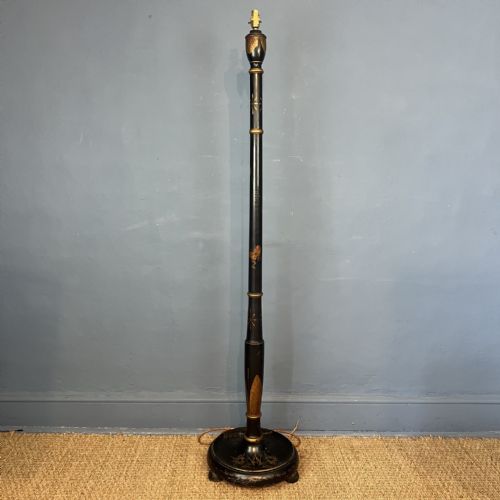
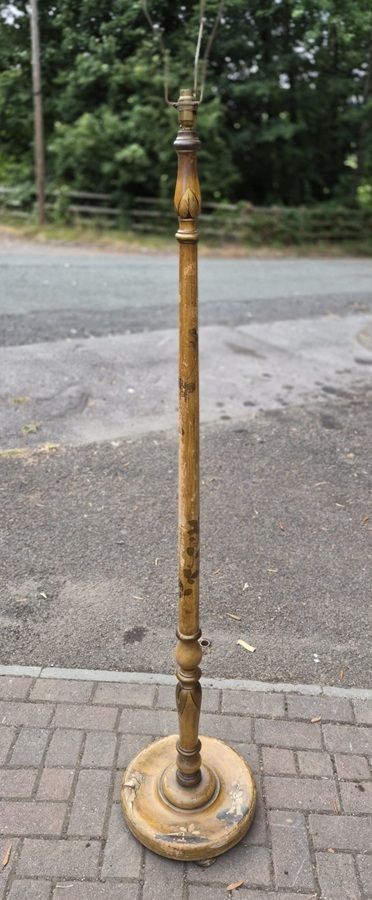
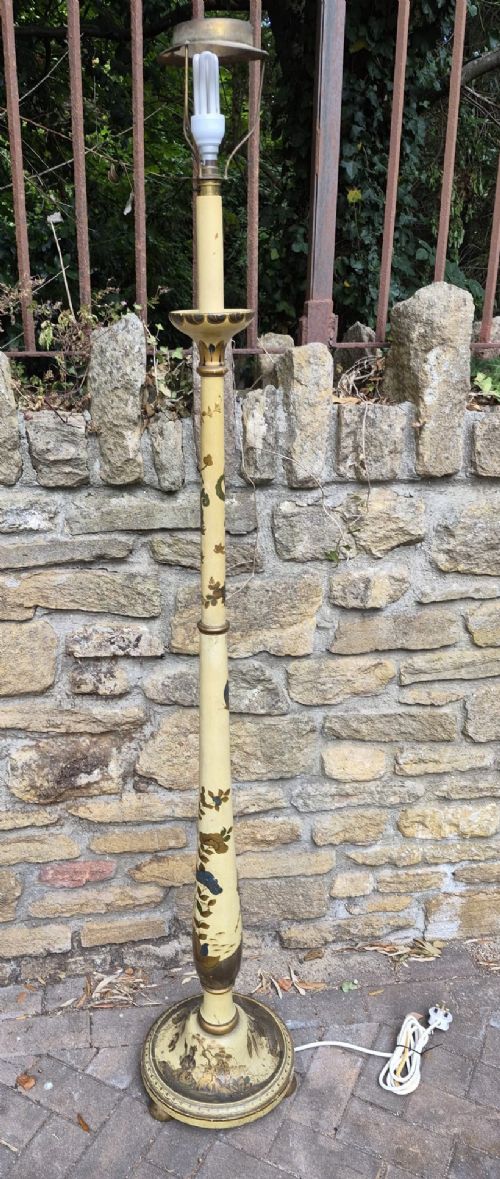
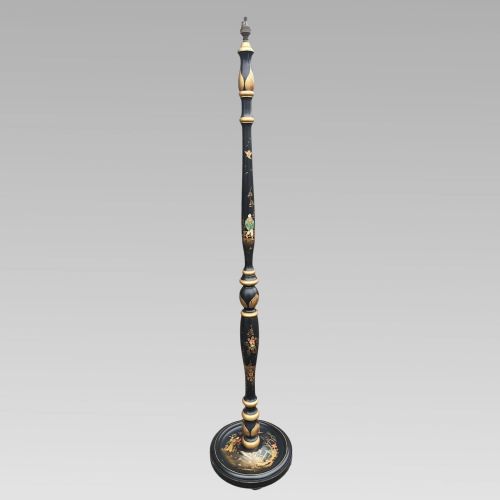
Buyers seeking an oriental painted floor lamp encounter standard lamps shaped by Chinoiserie, Edwardian Chinoiserie, and Victorian Chinoiserie styles. The forms combine height with decorated columns, frequently finished in black lacquer, crimson paint, or gilt highlights.
Most examples on this page date to the Edwardian era and the nineteen twenties or thirties, carrying painted decoration directly onto wood surfaces. They serve to illuminate a corner while introducing traditional decorative motifs to an interior.
How they were made
Makers utilised wood as the primary structural material, shaping standard lamp columns and bases before applying paint or lacquer. Painted wood and lacquered wood surfaces received decorative Chinoiserie schemes using pigment and gilt details.
Fittings incorporate brass components alongside the wooden framework, providing structural stability and functional lamp holders. Fabric shades frequently complete the ensemble, paired with the painted standards to diffuse light.
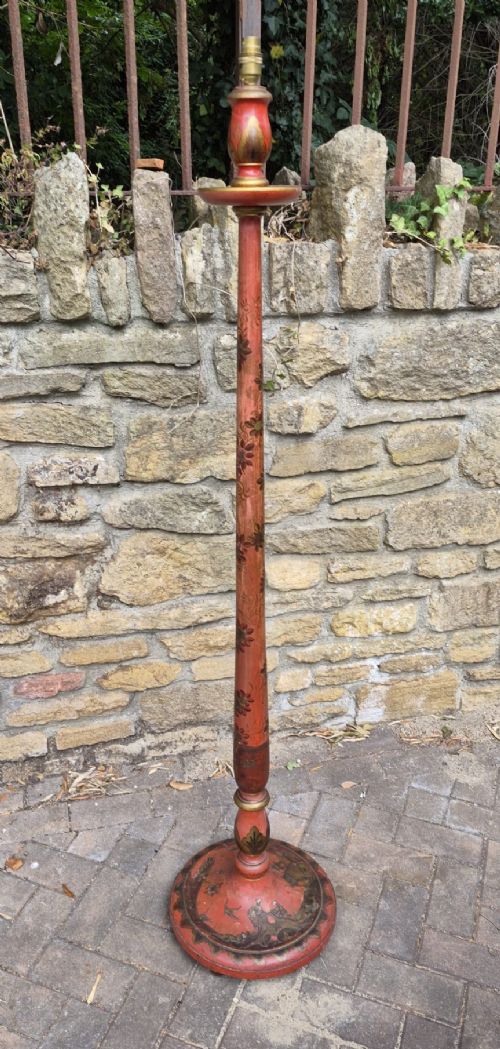
One crimson standard lamp from nineteen ten stands out among the sea of black lacquer.
What varies in quality
The sophistication of the painted decoration separates standard examples from finer pieces within the Chinoiserie tradition. Depth of lacquer finish and the application of gilt work determine the visual richness of the surface.
The integrity of the turned wooden standard and the balance of the base dictate the physical stability of the floor lamp. Preservation of the original paint layers directly influences the character of each piece.
The Oriental Painted Floor Lamp Glossary
- Chinoiserie
- European interpretation of Chinese and East Asian artistic motifs, popular in furniture and decorative arts. This style defines the painted ornamentation seen across the standards on this page.
- Standard lamp
- A traditional British term for a floor-standing lamp designed to illuminate a room from a fixed vertical position. These objects provide elevated lighting combined with decorative wooden columns.
- Lacquer
- A durable resin or varnish finish applied in multiple layers to wood surfaces to create a smooth, glossy coating. Black lacquer provides the dark ground for many painted Chinoiserie designs.
- Gilt
- Application of gold leaf or gold-coloured pigment to highlight carved details or painted scenes. Gilt accents catch the light and define the edges of decorative panels.
Oriental Painted Floor Lamp: Frequently Asked Questions
What periods do these lamps date from?
The pieces span from the nineteenth century up through the Edwardian era and into the nineteen twenties and thirties.
Edwardian examples and those from nineteen ten and nineteen twenty appear frequently alongside items from eighteen hundred and nineteen thirty.
Are they called standard lamps or floor lamps?
Both terms appear interchangeably in the titles and descriptions.
Victorian and Edwardian makers generally recorded them as standard lamps, while modern terminology often uses floor lamp.
What materials make up the construction?
Wood forms the primary body, finished with paint, lacquer, and gilt decoration.
Brass elements appear in the construction and fittings, while fabric is used for the accompanying shades.
How do Chinoiserie styles differ?
Styles range from Victorian Chinoiserie through to Edwardian Chinoiserie interpretations.
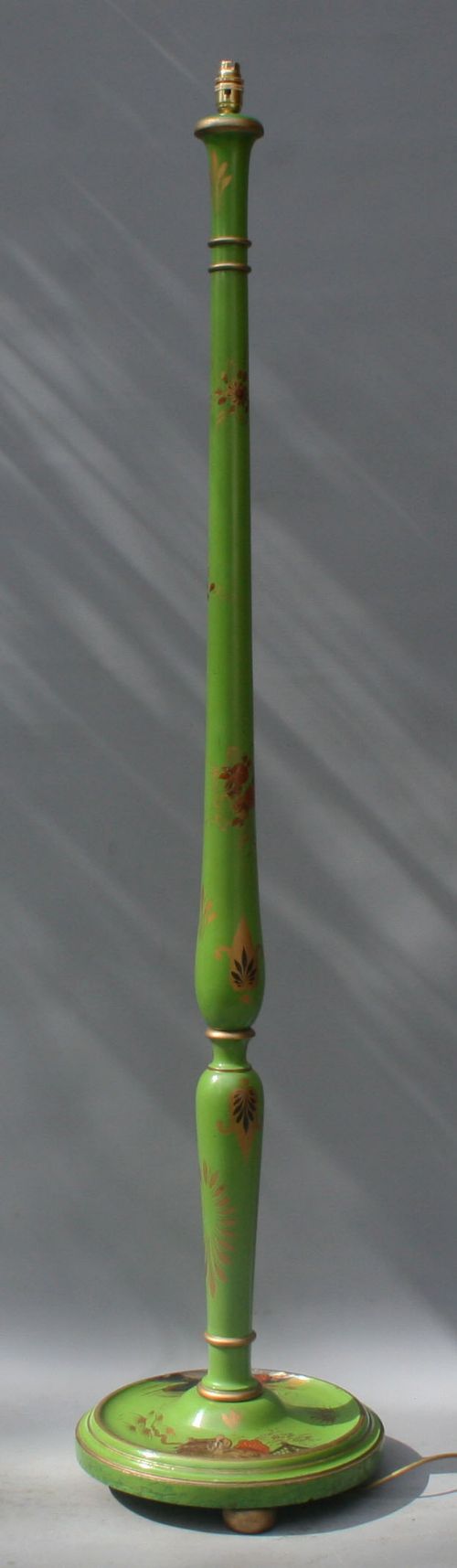
Colour palettes vary from black lacquer grounds to crimson painted finishes, decorated with traditional oriental motifs.