


Traditional Fishing Boat Art
Traditional fishing boat art captures maritime heritage through oil paintings and watercolours depicting coastal scenes from the nineteenth and twentieth centuries.
Traditional Fishing Boat Art
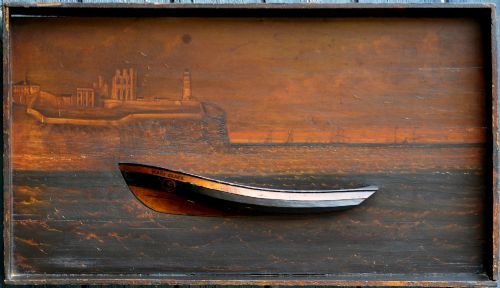
Traditional fishing boat art encompasses oil paintings and watercolours focusing on coastal harbours, stormy seas, and working vessels.
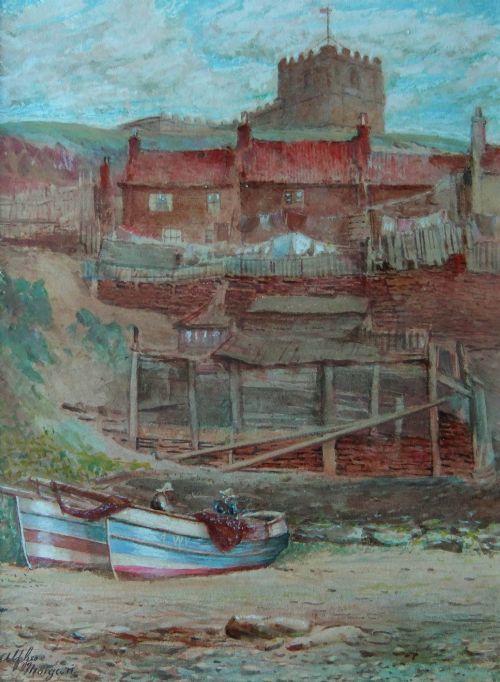
Buyers encounter Victorian marine art alongside twentieth-century depictions of Cornish and Yorkshire fishing ports.
Most examples originate from British and Dutch coastal locations, rendered in styles ranging from Victorian impressionism to mid-century maritime realism.
How traditional fishing boat art was made
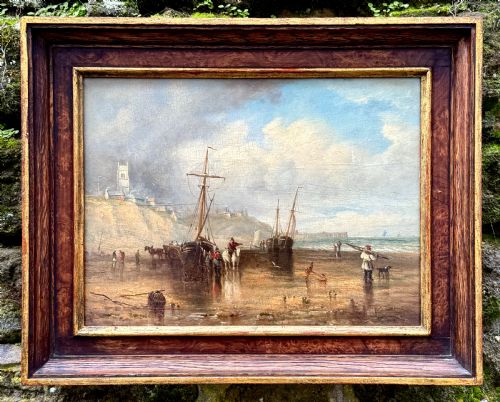
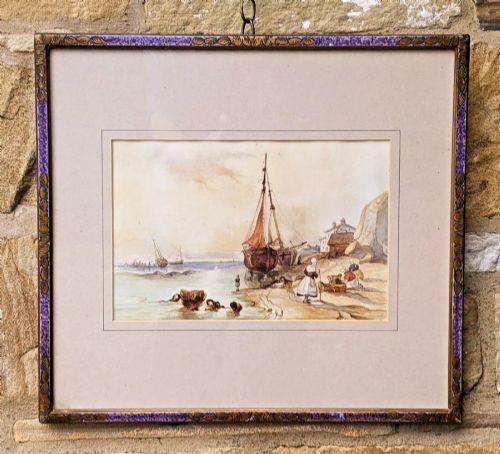
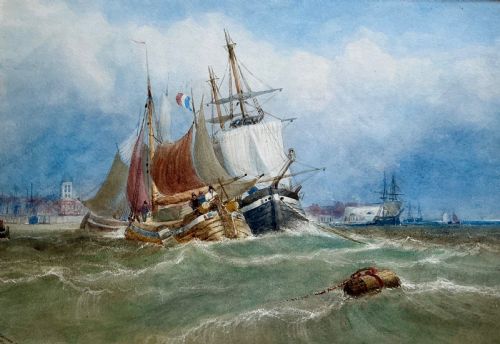
Artists painted primarily in oil on canvas or board, and watercolour pigment on paper, applying colour to capture changing sea conditions.
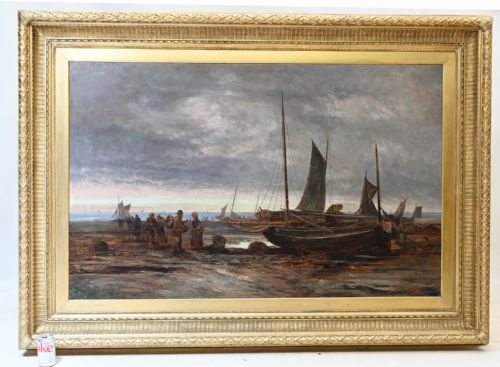
Many works utilise traditional wooden framing, occasionally enhanced with gilded wood or giltwood surrounds.
Several paintings include tiny fishermen hauling catch on pebbled beaches, oblivious to the grandeur of their future frames.
What varies in quality
Quality rests in the precision of the maritime detail and the handling of light on water.
Works by established marine painters demonstrate greater dexterity in capturing coastal atmosphere than anonymous studio pieces.
Thomas Creswick·Alfred G Morgan·Henry Barlow Carter·George Shaw·John Bell·Ernest F Hill·George Henry Knight·Paul H Ellis·Walter Sweet·William Edward Webb·Robert Leslie Howey·Pieter Cornelis Dommersen·George Marks
The Traditional Fishing Boat Art Glossary
- Watercolour pigment
- A colour medium suspended in a water-soluble binder, applied to paper to achieve translucent washes.
- Giltwood
- Wood carved and coated with gold leaf or a gold-coloured finish, commonly used for traditional picture frames.
- Maritime realism
- An artistic style focused on accurate depiction of ships, seas, and coastal topography without romantic exaggeration.
- Victorian impressionism
- A nineteenth-century approach emphasising light and brushwork over rigid academic finish in outdoor scenes.
Traditional Fishing Boat Art: Frequently Asked Questions
What periods do these paintings cover?
The works span from the nineteenth century through the Edwardian era and into the mid-twentieth century. Most pieces reflect Victorian and early twentieth-century coastal traditions.
Dates range from the eighteen-sixties up to nineteen-sixty, capturing shifting styles in marine painting over a century.
Where were these coastal scenes painted?
Locations include British fishing ports such as Whitby, Scarborough, St Ives, Mousehole, and Brixham, alongside continental shores.
Artists frequently set up along the North Sea and English Channel coasts to record local fishing fleets and harbour life.
How should I display a marine oil painting?
Keep paintings away from direct sunlight and damp environments to protect both the canvas and the traditional wooden frame.
Position them at eye level on a stable wall where room temperature remains relatively constant.
What is the difference between oil and watercolour works?
Oil paintings feature heavy pigment on canvas or board, offering rich textures and deep tones suited to stormy seas.
Watercolours utilise pigment on paper, providing lighter, more translucent depictions of coastal light and harbour atmospheres.