


Traditional Fireside Coal Bucket
A traditional fireside coal bucket is a sturdy hearth container designed to hold fuel, combining practical utility with period metalwork.
Traditional Fireside Coal Bucket
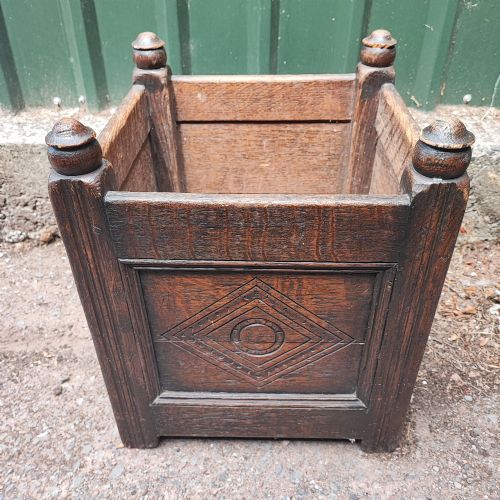
Traditional fireside coal buckets encompass a range of hearth storage vessels designed to hold solid fuel such as coal, logs, or peat near the fireplace. The selection spans robust country oak log boxes, coopered fire buckets, and refined metal scuttles.
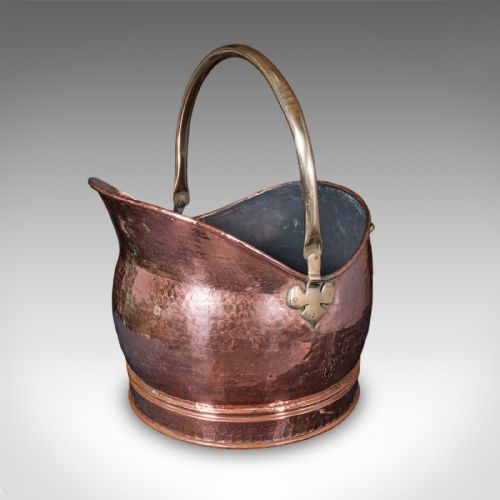
The version most frequently encountered on this page is the Victorian copper or brass helmet coal scuttle, alongside Georgian and later examples in wood and iron. These pieces often arrive with matching shovels or swing handles to aid daily hearthside use.
How they were made
Metal vessels rely on sheet copper and brass, frequently shaped into helmet forms or bins with riveted seams and applied brass banding. Iron and metal components provide structural rigidity for daily hearth labour.
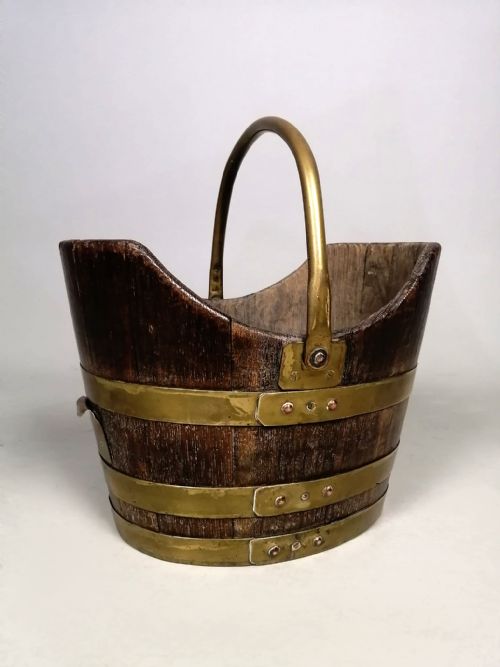
Wooden examples utilise traditional coopered construction in oak, mahogany, fruitwood, and other timbers. Staves are joined closely and secured by metal hoops to hold dry fuel securely without leakage.
Several vintage coal scuttles arrive ready with their original metal shovels, having miraculously survived decades of enthusiastic hearth tending.
What varies in quality
Quality separates through the weight of the metal sheet, the crispness of hand-finishing on brass and copper, and the retention of original components like shovels and swing handles. Heavier gauges of metal and well-fitted wooden staves indicate superior craftsmanship.
Design nuance distinguishes standard utilitarian bins from decorative parlour pieces. Subtle details such as ribbed timber forms, brass banding, and hand-beaten finishes elevate certain examples above everyday hearth accessories.
The Traditional Fireside Coal Bucket Glossary
- Helmet coal scuttle
- A traditional hearth bucket featuring a flared rim resembling a medieval helmet, designed for pouring coal cleanly.
- Coopered
- A method of construction where curved wooden staves are bound together with metal hoops, typical of buckets and log bins.
- Purdonium
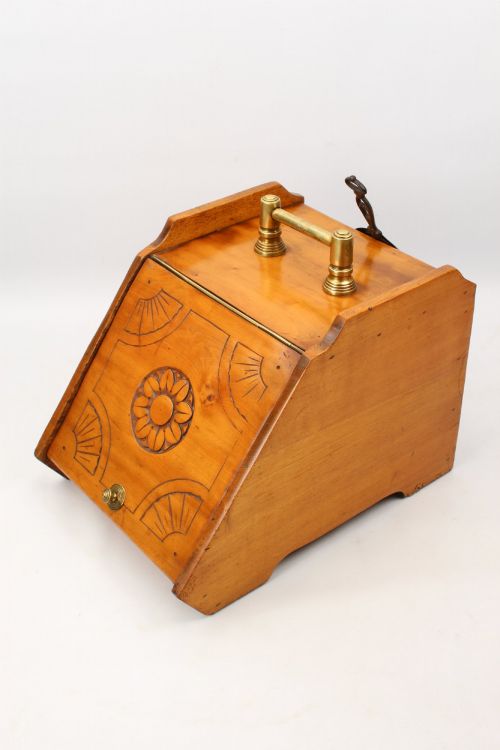
- A box-shaped coal container with a sloping front lid and an internal metal liner, popular in Victorian interiors.
- Peat bucket
- A deep wooden vessel traditionally used in Irish hearths for storing dried peat sods rather than coal.
Traditional Fireside Coal Bucket: Frequently Asked Questions
What is a helmet coal scuttle?
A helmet coal scuttle is a metal hearth bucket featuring a distinct flared lip and a swinging handle. This shape was designed to direct coal cleanly into the grate.
Most examples appear in polished copper or brass, frequently accompanied by a matching shovel stored in a bracket at the rear.
How do I clean an antique copper bucket?
Antique copper and brass benefit from gentle dusting with a soft cloth to preserve their surface character. Harsh chemical polishes strip away aged patination that collectors value.
If cleaning is necessary, use a mild, traditional metal cleaner applied sparingly to maintain the warm metallic finish.
Can I use these for logs instead of coal?
Many traditional fireside buckets and bins accommodate logs, peat, or kindling alongside coal. Oak log boxes and coopered wooden buckets are particularly well suited for larger pieces of firewood.
Metal scuttles function effectively for smaller fuel types, though heavy logs fit better in open bins.
How do I tell Victorian from Georgian coal buckets?
Georgian coal buckets often feature coopered timber construction in mahogany, oak, or fruitwood with brass banding. They lean towards simpler, functional forms or refined decorative lines.
Victorian pieces frequently utilise bright copper and brass helmet shapes, often displaying more ornate hand-finished detailing and matching shovels.