





Traditional Fireplace Coal Bucket
These traditional fireplace coal bucket examples span the Georgian and Victorian eras, offering solid hearth utility in brass, copper, and timber.
Traditional Fireplace Coal Bucket
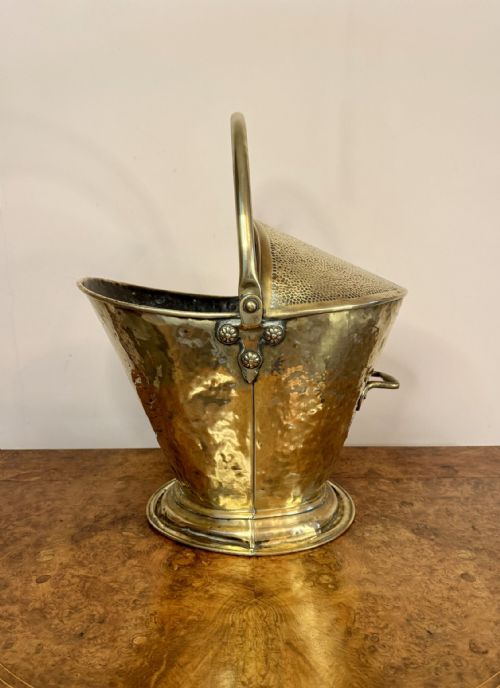
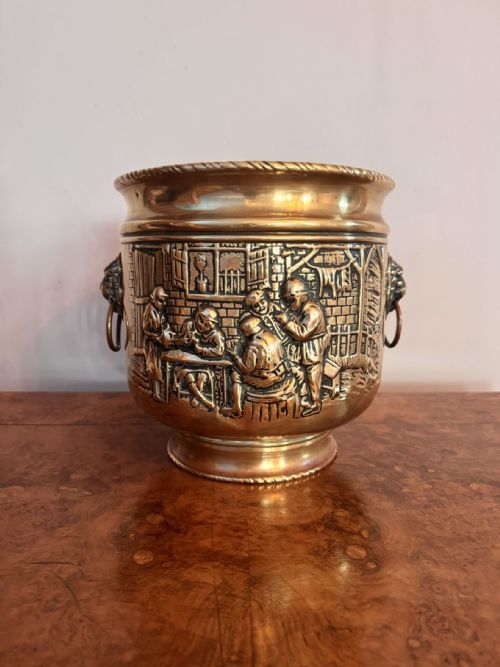
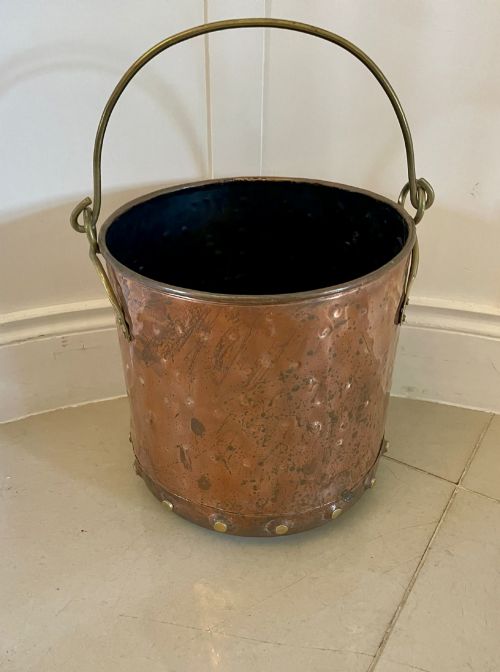
A traditional fireplace coal bucket encompasses coal scuttles, log bins, and hearth buckets designed to hold fuel near the fire. You encounter helmet-shaped vessels most frequently on this page, alongside oval peat buckets and cylindrical log boxes.
The materials span glowing metals and substantial timbers, reflecting domestic requirements across the eighteenth and nineteenth centuries. Brass and copper dominate the metalwork, whilst oak, mahogany, walnut, and ebonised wood represent the wooden vessels.
Origins stretch from Georgian workshops to late Victorian factories, taking in rustic country styles as well as Art Nouveau and Arts and Crafts designs. English and Irish makers produced these pieces to serve as both functional containers and decorative hearth accessories.
Materials and construction methods
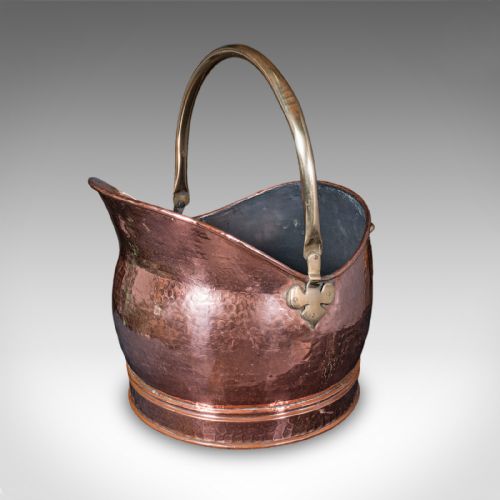
Metal vessels utilise sheet brass and copper, often shaped into helmet forms with riveted seams and rolled rims. Handles typically employ cast brass or swing iron fixings, whilst associated shovels match the primary metal.
Wooden bins rely on traditional cooperage techniques, binding staves of oak, mahogany, or walnut with brass bands or iron hoops. Ebonised wood and rustic country planks appear in specific regional or period interpretations.
Traditional Fireplace Coal Bucket Retail Price Guide 2026
Typical asking prices for traditional fireplace coal bucket among the pieces listed under this phrase on Sellingantiques today, from the lower quarter to the upper quarter. They describe what is for sale here now, not the wider market.
Listings on this page span the 18th Century, Georgian, Victorian, and Edwardian periods, utilising brass, copper, oak, and mahogany.
Distinctions in quality and execution
The gauge of the metal and the substance of the timber determine the structural integrity of a bucket. Heavier copper and thick oak staves indicate higher grade manufacture compared to thinner, lighter alternatives.
Detailing in the handle mountings, riveted joints, and original shovel pairings separates standard utilitarian vessels from finer examples. Untouched surfaces and crisp period styling distinguish the best survivals.
The Traditional Fireplace Coal Bucket Glossary
- Helmet scuttle
- A coal container featuring a high, sloping back and a pointed spout resembling a classic helmet, designed for easy pouring. This shape is characteristic of nineteenth-century brass and copper examples.
- Peat bucket
- A deep vessel originally intended for holding turf or peat briquettes near an Irish or British hearth. These often take an oval or ribbed form in mahogany or walnut.
- Log bin
- A large floor-standing container built from timber or heavy metal to store logs for an open fire. They frequently incorporate iron fittings or brass bands.
- Ebonised wood
- Timber treated with a dark stain or finish to imitate expensive ebony. It appears on Victorian decorative items.
- Cooperage
- The traditional craft of making wooden stoved vessels bound by metal hoops. This method created nineteenth-century log buckets and peat bins.
Traditional Fireplace Coal Bucket: Frequently Asked Questions
What is a helmet coal scuttle?
A helmet coal scuttle is a metal vessel with a flared spout and raised back designed to transport coal cleanly to a grate.
Such shapes made tipping fuel onto a fire straightforward while containing dust within the body of the bucket.
How do I use a log bin?
A log bin sits beside the fireplace to store firewood and keep fuel within arm's reach of the hearth.
These sturdy wooden or metal containers manage heavier logs without damaging domestic flooring.
How do I date a brass coal bucket?
Dating relies on observing construction methods, handle fixings, and stylistic details such as Georgian proportions or Victorian ornamentation.
Thick hand-beaten copper and heavy brass castings generally point towards earlier nineteenth or eighteenth-century manufacture.